
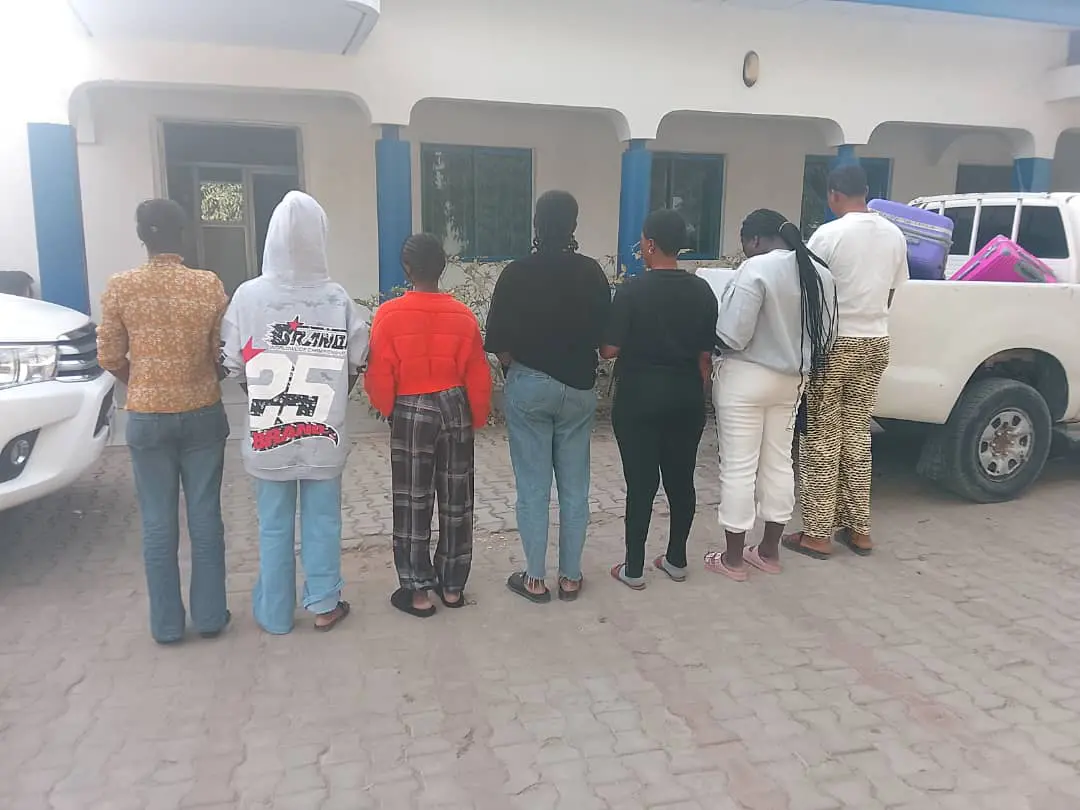
The National Agency for the Prohibition of Trafficking in Persons (NAPTIP) has rescued seven young women who were allegedly being prepared for trafficking to Iraq. The women were freed during a raid on a hotel in the Sabon Gari area of Kano State.
The operation was carried out by the Kano Zonal Command of NAPTIP after the agency received credible intelligence about suspicious activities at the hotel. Acting quickly on the information, operatives stormed the location on Thursday and rescued the victims, who are between the ages of 21 and 24.
Two suspects were arrested during the raid. Officials say investigations are ongoing, while efforts are being made to arrest other members of the trafficking network who are currently on the run.
Speaking on the development, the NAPTIP Zonal Public Relations Officer in Kano, Mohammed Habib, said the victims were trafficked from the southern part of Nigeria. Kano, he explained, was being used as a transit point before their planned movement to Baghdad, Iraq, where they were to face labour exploitation.
According to Habib, preliminary investigations revealed that the young women were recruited with promises of good-paying jobs overseas. They were allegedly sponsored by a woman believed to be the main suspect in the case. The woman reportedly worked with a male accomplice who is currently at large.
The victims told investigators that the arrangement required them to repay all expenses spent on their travel and documentation after securing work in Iraq. The repayment was to include additional profit for the traffickers. Such arrangements are common in trafficking cases, where victims are placed under heavy debt and forced to work under harsh conditions to pay off what they owe.
NAPTIP said the rescued women are currently in its custody in Kano. They are receiving counselling, medical care, and other support services as part of the agency’s rehabilitation process. The agency assured that once investigations are completed, the suspects will be charged to court.
Human trafficking remains a major problem in Nigeria. Over the years, many young Nigerians, especially women, have fallen victim to fake promises of jobs abroad. Traffickers often target people from poor backgrounds, offering them opportunities in countries in the Middle East and Europe. In many cases, victims end up working in difficult and abusive conditions, especially as domestic workers or labourers.
Iraq has recently become one of the destinations for trafficked Nigerian women. Reports have shown that some of these women are subjected to long working hours, poor living conditions, and in some cases, physical and emotional abuse. Because they are in a foreign country and may not have proper documents, many find it difficult to seek help.
NAPTIP, which was established in 2003, is the federal government agency responsible for preventing human trafficking, rescuing victims, and prosecuting offenders. The agency has offices across the country and works with security agencies, civil society groups, and international partners to fight the crime.
In recent years, NAPTIP has stepped up efforts to break trafficking networks operating within and outside Nigeria. The agency regularly carries out raids based on intelligence and public tips. It also runs awareness campaigns to educate Nigerians about the dangers of irregular migration and fake overseas job offers.
The Kano rescue highlights the role of transit cities in trafficking operations. Kano, being a major commercial hub in northern Nigeria, is sometimes used by traffickers as a temporary stop before moving victims across borders or to airports for international travel. By intercepting the victims before they left the country, NAPTIP may have prevented them from facing severe hardship abroad.
Mohammed Habib urged members of the public to remain vigilant and report suspicious movements or activities in their communities. He stressed that human trafficking often happens quietly, with victims sometimes unaware that they are being deceived until it is too late.
He also advised young Nigerians to verify any overseas job offer through the appropriate authorities before making payments or handing over personal documents. According to him, genuine employers do not demand large sums of money upfront or force workers into debt arrangements.
Community leaders and parents have also been encouraged to educate young people about the risks involved in seeking jobs through unverified agents. Economic hardship and unemployment have made many youths desperate for opportunities abroad, making them easy targets for traffickers.
As investigations continue, NAPTIP says it remains committed to dismantling trafficking networks and ensuring that those behind such crimes face justice. The agency called on Nigerians to support its efforts by speaking up and sharing useful information that could help save others from falling victim.