
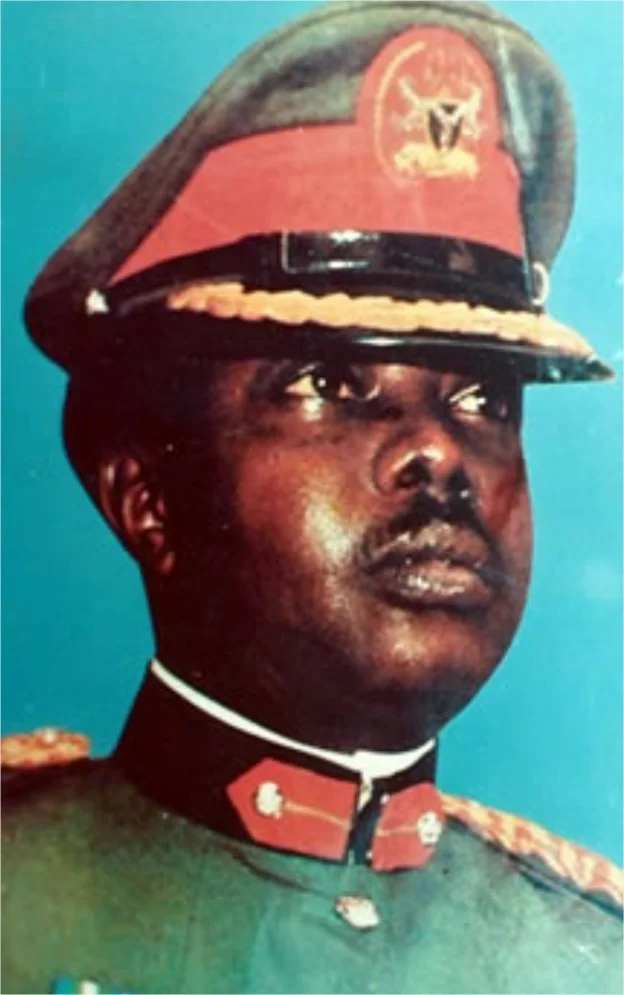
President Bola Ahmed Tinubu has paid glowing tribute to former Head of State, Murtala Muhammed, describing him as a courageous military officer with strong democratic values whose short time in office left a lasting mark on Nigeria and Africa.
Tinubu spoke on Thursday at the 50th Murtala Muhammed International Lecture and Leadership Conference held in honour of the late leader. The event brought together past and present leaders, scholars and diplomats to reflect on Muhammed’s life and contributions to national development and African liberation.
The President was represented at the event by the Secretary to the Government of the Federation, Senator George Akume. In his address, Tinubu said the late Head of State had “democratic blood in his veins” despite being a military ruler.
According to a statement signed by the Head of Information and Public Relations at the Office of the Secretary to the Government of the Federation, Dewan Goshit, Tinubu praised Muhammed for starting a transition programme aimed at returning Nigeria to presidential democracy.
“He was not just a Nigerian; he was a man who loved his country deeply,” the President said. “He took on corruption headlong and fought it with all the skills and talents given to him by God.”
Tinubu added that the anti-corruption measures introduced by Muhammed during his short time in office are still respected and remembered by Nigerians today.
General Murtala Muhammed became Nigeria’s Head of State on July 29, 1975, after a bloodless military coup that removed General Yakubu Gowon from power. At the time, Nigeria was under military rule, and many Nigerians were frustrated with corruption and slow progress after the civil war.
Muhammed quickly became popular among citizens because of his bold decisions and simple lifestyle. Within months of taking office, he dismissed more than 10,000 public officials accused of corruption, inefficiency or misconduct. Though the move was controversial, many Nigerians saw it as a strong stand against corruption in public service.
During his 200 days in office, Muhammed also created seven new states to bring government closer to the people and promote development. His administration began the process of moving Nigeria’s capital from Lagos to Abuja, a decision that was later carried out under civilian rule.
He also announced plans for a transition to civilian government, promising that the military would hand over power. Sadly, he did not live to complete this plan. On February 13, 1976, he was assassinated during an attempted coup in Lagos, barely six months after assuming office. His death shocked the nation and led to days of national mourning.
President Tinubu also highlighted Muhammed’s strong support for the liberation of African countries from colonial and minority rule. During the 1970s, many African nations were still fighting for independence or majority rule.
Nigeria under Muhammed played a leading role in supporting liberation movements in Angola, Mozambique, Namibia, Zimbabwe and Guinea-Bissau. The country also supported the struggle against apartheid in South Africa.
Tinubu noted that Muhammed’s foreign policy helped position Nigeria as a strong voice in Africa. He said the late leader believed that Nigeria’s freedom was not complete until other African nations were also free.
At the lecture, former President Olusegun Obasanjo, who served as Chairman of the Board of Trustees of the Murtala Foundation, spoke about the personal impact Muhammed had on his life.
Obasanjo, who succeeded Muhammed as Head of State after his assassination, said one of the greatest lessons he learned from him was the importance of preparing a successor. According to him, many leaders fail because they do not groom those who will take over from them.
He explained that Muhammed’s commitment to returning the country to civilian rule influenced him to complete the transition programme. In 1979, under Obasanjo’s leadership, the military handed over power to an elected civilian government, marking the beginning of Nigeria’s Second Republic.
Former Vice President Yemi Osinbajo also spoke at the event. He said the vision of an “Africa coming of age,” which Muhammed strongly believed in, is gradually becoming a reality.
Osinbajo pointed to the African Continental Free Trade Area (AfCFTA) agreement as a major step forward. The agreement aims to boost trade among African countries and reduce dependence on imports from outside the continent.
He said many African nations are now moving from being mainly importers to becoming exporters of goods and services. He also noted that Africa is making progress in entrepreneurship, innovation and manufacturing.
According to him, with good leadership and cooperation among countries, Africa can compete strongly in the global economy.
Also speaking at the lecture was former President of Malawi, Joyce Banda. She described Murtala Muhammed as her hero and a proud son of Africa whose life was devoted to serving his people.
Banda said Muhammed did not use his position to enrich himself but focused on national and continental development. She added that his Pan-African beliefs helped inspire freedom movements across the continent.
Fifty years after his death, many Nigerians still remember Murtala Muhammed as a leader who acted quickly and boldly. Though his time in office was short, his reforms shaped Nigeria’s political direction.
His announcement of a transition to civilian rule laid the foundation for the eventual return to democracy. The relocation of the capital to Abuja, which was later completed in 1991, remains one of the most significant decisions in Nigeria’s history.
The annual Murtala Muhammed International Lecture has become an important platform for discussing leadership, governance and Africa’s future. This year’s 50th edition not only honoured his memory but also reminded Nigerians of the need for integrity, courage and service in public life.
As Nigeria continues to face economic and political challenges, speakers at the event urged leaders to draw inspiration from Muhammed’s example. They said his life shows that even a short period in office can make a big difference when driven by clear vision and love for country.
For many Nigerians, the name Murtala Muhammed remains a symbol of bold leadership and national pride. Five decades after his assassination, his legacy continues to shape conversations about democracy, accountability and Africa’s place in the world.