
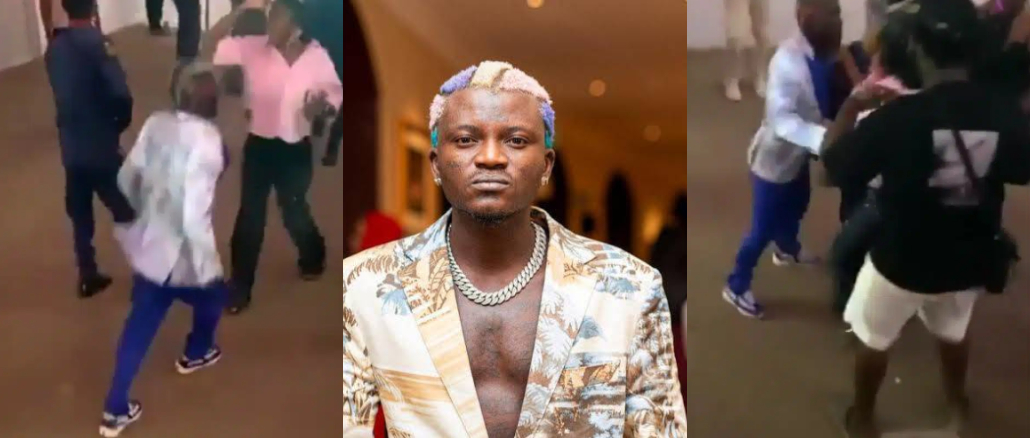
Controversial Nigerian singer, Portable, has reacted strongly to allegations that he has been blacklisted by top figures in the country’s music industry, insisting that he remains bigger than those behind the claims and does not need their support to thrive.
Portable, whose real name is Habeeb Okikiola Badmus, made the remarks in a video shared online amid growing controversy over comments by popular influencer Tunde Perry, who claimed that leading music executives had taken a collective decision to sideline the singer over alleged misconduct.
The development has stirred fresh debate about discipline, mentorship, and the relationship between established music figures and emerging artists in Nigeria’s entertainment industry.
Allegations of Blacklisting
Perry had earlier sparked reactions after revealing that he attended a meeting where some top industry executives allegedly agreed to blacklist Portable. According to him, the decision was based on what he described as the singer’s “gross misconduct” and repeated controversial behaviour.
He further claimed that Portable’s actions have had wider consequences beyond his personal career, affecting opportunities for other up-and-coming artists seeking support from established names in the industry.
Perry also referenced popular rapper and music executive, Olamide, suggesting that his experience with Portable has made him more cautious about supporting new talents.
Portable rose to prominence in 2021 after being featured by Olamide on the hit track Zazu Zeh, which quickly became a street anthem and launched his career into the spotlight.
However, the relationship between both artists has since appeared strained, with Portable publicly criticising Olamide on several occasions.
Portable’s Reaction
In a defiant response, Portable dismissed the claims of blacklisting and criticised both Perry and those allegedly involved in the decision.
“I am bigger than them. Who are those who want to blacklist?” the singer said in the video.
He questioned the influence of industry executives over his career, arguing that his success is driven by his fan base rather than institutional backing.
“Are you guys my fans or my God? Are you feeding me? I have my own fans,” he said.
The singer also warned against what he described as attempts to use past support as leverage against him.
“Anyone who wants to help you won’t stress you. Don’t use the assistance you gave me in the past to stress me. Are you the only one who has ever assisted me?” he added.
Rising Tensions in the Industry
Portable’s comments highlight ongoing tensions within Nigeria’s fast-growing music industry, where the balance between artistic freedom and professional conduct remains a recurring issue.
Since his breakout, Portable has built a reputation for his energetic street-style music and unpredictable public behaviour, often making headlines for controversial statements and clashes with industry figures.
While his supporters view him as a raw and authentic voice from the streets, critics argue that his conduct undermines professionalism and could discourage collaboration with established artists and brands.
Perry’s claim that some executives are reconsidering their willingness to mentor new talents points to a broader concern within the industry. Many established artists have historically played a key role in discovering and promoting emerging acts, helping to sustain Nigeria’s global music success.
Industry observers warn that if relationships between mentors and new artists become strained, it could slow down the development of fresh talent.
Debate Over Influence and Independence
Portable’s insistence that he does not need industry backing reflects a growing trend among some artists who rely heavily on social media and direct fan engagement to build their careers.
Digital platforms have made it easier for musicians to reach audiences without traditional gatekeepers such as record labels and executive networks. However, industry insiders maintain that mentorship, structure, and professional relationships remain crucial for long-term success.
The singer’s claim that he is “bigger than” those allegedly blacklisting him has also generated mixed reactions online, with some fans praising his confidence while others see it as further evidence of the behaviour that may have led to the alleged fallout.