
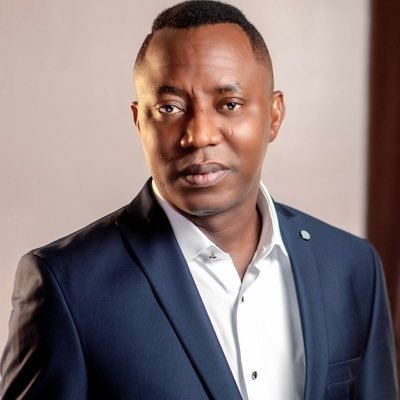
A Federal High Court sitting in Lagos has awarded N30 million in damages to activist and former presidential candidate, Omoyele Sowore, over his unlawful declaration as a wanted person by the Nigeria Police Force.
The judgment, delivered on Friday by Justice M. Kakaki, ruled that the actions of the police leadership in Lagos were unconstitutional and violated Sowore’s fundamental human rights.
The court specifically faulted the Lagos State Commissioner of Police, Moshood Jimoh, and the Inspector-General of Police, Kayode Egbetokun, for their roles in the matter.
The case arose from events that took place in late 2025. According to court documents, the Lagos police leadership allegedly warned Sowore on October 27, 2025, to stay away from Lagos State. A few days later, on November 3, he was declared wanted by the police.
Sowore challenged the decision in court. He argued that the police had no legal right to bar him from entering Lagos or to declare him wanted without following due process.
In a judgment that lasted over an hour, Justice Kakaki carefully reviewed the facts of the case and the legal arguments presented by both sides.
The judge held that the police acted outside their lawful authority. He said there was no constitutional basis for the directive asking Sowore to stay away from Lagos.
The court also ruled that declaring him wanted without a valid court order amounted to an abuse of power.
According to the judge, no Nigerian citizen can be lawfully declared wanted without following due process. This includes obtaining a court warrant and showing evidence that the person is avoiding lawful investigation or prosecution.
Justice Kakaki stressed that the rule of law must guide the actions of security agencies at all times.
The court further held that the police actions violated Sowore’s fundamental rights as guaranteed under the 1999 Constitution of the Federal Republic of Nigeria.
These rights include freedom of movement, freedom of expression and the right to peaceful civic engagement.
Freedom of movement allows every Nigerian citizen to travel freely and reside in any part of the country. The court stated that no authority can restrict this right without clear legal backing.
Freedom of expression also protects the right of citizens to speak, criticise government policies and participate in public debate without fear of intimidation.
Sowore is widely known for his activism and political involvement. He was the presidential candidate of the African Action Congress in the 2019 and 2023 general elections. Over the years, he has been vocal in criticising government policies and has participated in several protests.
His supporters argue that he represents lawful dissent, while critics say his style of activism is confrontational. However, the court made it clear that disagreement with a citizen’s views does not justify unlawful action by security agencies.
Justice Kakaki also held the Inspector-General of Police vicariously liable for the conduct of the Lagos State Commissioner of Police. This means the IGP, as head of the Nigeria Police Force, is legally responsible for the actions of officers under his command.
The judge said the violations in this case were serious and required strong judicial response. As a result, the court awarded N30 million in damages against the two senior police officers.
Reacting to the judgment, Sowore’s lawyer, Tope Temokun, described the ruling as a landmark decision for constitutional democracy in Nigeria.
He said the verdict sends a strong message that state power must not be used to intimidate or silence citizens.
According to him, the judgment goes beyond his client and represents a victory for all Nigerians who value civil liberties.
“This decision reinforces the principle that civil liberties and lawful dissent must be protected against arbitrary state action,” he said.
Human rights groups have often raised concerns about the misuse of security agencies to harass critics and opposition figures. In the past, courts in Nigeria have awarded damages in cases involving unlawful detention, arrest and violation of rights.
Nigeria operates a constitutional democracy where the powers of government are divided among the executive, legislature and judiciary. The judiciary plays a key role in checking excesses by other arms of government.
By ruling against the police, the court has once again affirmed its independence and its duty to protect citizens’ rights.
Security agencies, including the police, are empowered by law to maintain order and prevent crime. However, their powers are not unlimited. They must act within the framework of the law and respect constitutional safeguards.
The declaration of a person as “wanted” is a serious action. It can damage reputation and expose the individual to public hostility or arrest. For this reason, courts insist that such declarations must follow strict legal procedures.
As of the time of filing this report, there has been no official statement from the police authorities on whether they intend to appeal the judgment.
For many Nigerians, the case highlights the ongoing tension between security enforcement and civil rights. While citizens expect the police to fight crime, they also demand accountability and respect for the law.
The N30 million award may not erase the controversy surrounding the events of late 2025, but it stands as a clear warning that constitutional rights cannot be ignored.
For Sowore and his supporters, the ruling is seen as a personal and political vindication.
For the wider public, it serves as a reminder that in a democracy, no authority is above the law.