
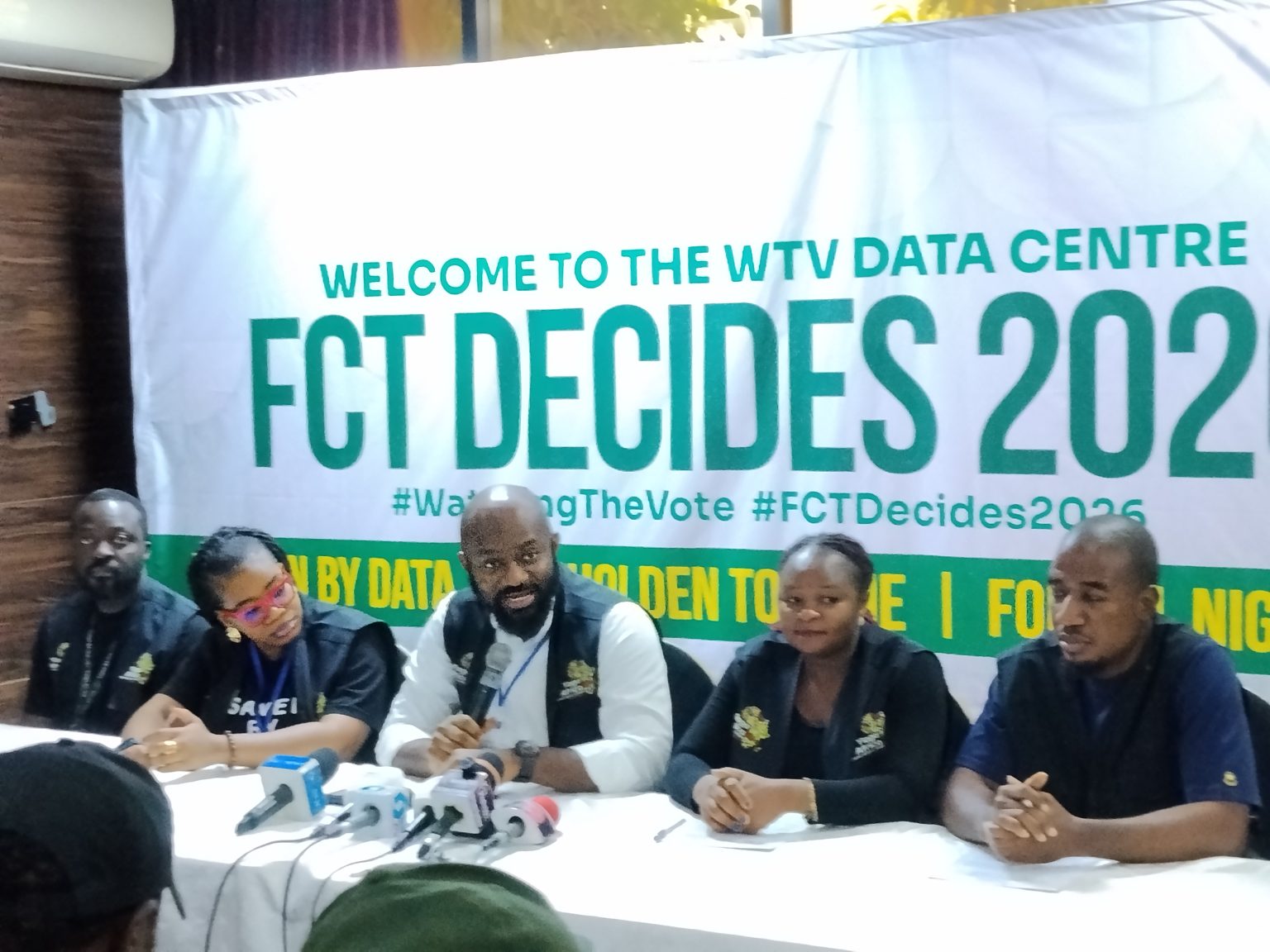
A civil society organisation, Yiaga Africa, has said that vote buying and logistical problems affected the 2026 Federal Capital Territory (FCT) Area Council elections held on Saturday.
The group released its preliminary report after monitoring the conduct of the polls across the six area councils of the FCT. It said that while the elections were largely peaceful, several issues raised concerns about the quality of the process.
The Independent National Electoral Commission (INEC) conducted elections for chairmanship positions in the six area councils and for 62 councillorship seats across the FCT.
Yiaga Africa said it deployed trained and accredited roving observers to monitor the elections. According to the group, its observers were on ground by 7:30 a.m. and covered polling units across the 62 wards of the FCT.
The observers were mandated to monitor key stages of the process, including the opening of polling units, accreditation of voters, voting, counting, and announcement of results.
In its preliminary findings, Yiaga Africa said the election was conducted in a largely peaceful atmosphere. It noted that voters who arrived at polling units were allowed to cast their votes without widespread violence or major disruption.
However, the group added that voter turnout was generally low. Many polling units recorded poor attendance, raising concerns about citizens’ participation in local elections.
Local government elections in the FCT often attract less attention than presidential or governorship elections. Analysts say this may be due to limited awareness about the powers of area councils or a lack of interest among voters.
Yiaga Africa reported that many polling units opened late due to logistical delays. As of 9:00 a.m., set-up activities were still ongoing in most polling units observed. This means that essential preparations were not completed within the time stated in INEC guidelines.
The group said that in the Abuja Municipal Area Council (AMAC), especially in Wuse and Gwarinpa wards, several polling units opened well behind schedule. In many cases, accreditation and voting did not begin until around 10:00 a.m.
According to the report, delays were caused by late arrival of personnel and election materials. In some cases, security-related issues also contributed to the late start.
Yiaga Africa said that although critical materials such as the Bimodal Voter Accreditation System (BVAS) machines and voter registers were eventually deployed in most polling units, there were gaps in some locations.
For example, at Polling Unit 004 in Wuse Ward, Zone 2 Primary School, the voter register was not initially available. It was only provided after observers and voters raised concerns.
In Abaji Area Council, some polling units reportedly did not have voting cubicles. An ink pad required for voting was also said to be missing at one location.
The group said such lapses can reduce public confidence in the process and may discourage participation.
Yiaga Africa also raised concerns about the relocation of some polling units. It said some voters were reassigned to newly created polling units without adequate prior notice.
Although INEC reportedly sent SMS messages to affected voters, many of these messages were delivered on election day, sometimes hours after polling had started.
As a result, many voters spent more than an hour trying to find their correct polling units. This caused confusion and overcrowding in some locations.
The group warned that poor communication about polling unit changes could lead to voter disenfranchisement. When voters cannot easily find their assigned units, they may decide to leave without voting.
It also noted that there were noticeable differences in the number of voters assigned to polling units within the same area. Some units were crowded while others had very few voters. According to Yiaga Africa, such imbalance raises concerns about the planning and management of polling unit expansion.
Another issue highlighted in the report was the early closure of some polling units. INEC guidelines state that polling units should remain open until 2:30 p.m. or until the last person on the queue has voted.
However, observers reported that some units closed before the official time, even when voting had started late.
Yiaga Africa also observed heavy security presence in certain areas. While security is important to maintain order, the group said that in some instances, security personnel restricted access to polling units and limited the movement of accredited observers.
The report stated that a strong security presence created barriers for some citizens who wanted to vote.
One of the most serious concerns raised by Yiaga Africa was the issue of vote buying. The group said its observers documented incidents of monetary inducement at various polling units.
Vote buying has been a recurring problem in Nigerian elections. In recent years, civil society groups and election observers have repeatedly called for stronger enforcement against those who offer or accept money in exchange for votes.
Yiaga Africa said that despite assurances by INEC and directives to security agencies to arrest offenders, the practice continued in several locations during the FCT polls.
The group described vote buying as a serious threat to democracy, as it undermines the will of the people and reduces elections to financial transactions.
The FCT Area Council elections are important because they determine leadership at the grassroots level. Area councils are responsible for local services such as primary education, health centres, markets, and sanitation.
Yiaga Africa said it will release a more detailed final report after reviewing additional data from its observers.

