
The Federal Government has warned Nigerians to be careful of fake overseas job offers used by traffickers to lure victims into forced labour and cybercrime.
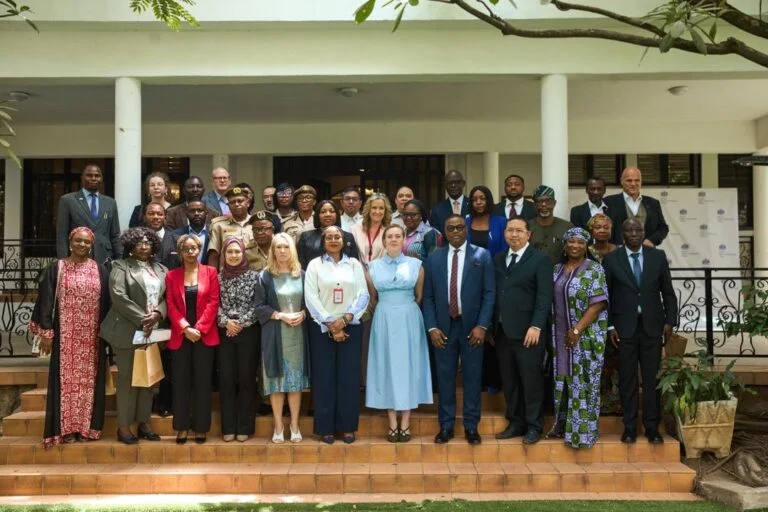
The warning was issued on Monday in Abuja by the National Agency for the Prohibition of Trafficking in Persons (NAPTIP) in partnership with the British High Commission.
The alert came during a survivor-centred event themed “Confronting the Global Scam Centre Crisis: Perspectives of Nigerian Survivors.” The event focused on the growing problem of trafficking Nigerians to Southeast Asia, where they are forced to work in illegal online scam centres.
Officials said traffickers often promise high-paying jobs abroad but instead transport victims to countries such as Myanmar, Laos, Cambodia, and Thailand. Once there, victims are forced to carry out online fraud, including romance and investment scams.
The event followed a recent trafficking case involving Nigerian victims in Thailand.
According to NAPTIP, a joint rescue operation led to the safe return of 23 Nigerians who had been trafficked to Southeast Asia. The operation involved the Ministry of Foreign Affairs, the Nigerian Embassy in Bangkok, and a British non-governmental organisation known as EDEN.
Officials said the rescue required coordination at the Thai–Myanmar border and welfare visits at Bangkok’s Immigration Detention Centre. The victims were later repatriated to Nigeria.
The British Deputy High Commissioner in Abuja, Gill Lever, said the United Kingdom is working closely with Nigerian authorities to support survivors.
“We are here to listen to survivors, who have shown remarkable bravery in sharing their experiences. Their courage will help prevent others from being harmed,” she said.
Lever described the scam-centre crisis as a global security problem. She noted that criminal networks defraud victims worldwide of more than 64 billion US dollars every year. According to her, British citizens alone lost an estimated 11.4 billion euros to scams in 2024.
At the event, several survivors shared painful accounts of their experiences.
They said they were promised well-paid jobs and better living conditions abroad. Instead, they were held in guarded compounds and forced to work long hours carrying out online scams.
Some survivors said they worked up to 18 hours daily, sending messages to strangers on dating platforms and posing as fake investment agents. They were ordered to convince victims to send money.
One survivor said those who failed to meet targets were beaten or punished. Another said victims were sometimes electrocuted and denied food. One account described the death of a fellow captive after repeated torture.
“I was promised a good job and a better life but instead, I was trapped and forced to live in constant fear,” one survivor said.
The Director of Public Enlightenment at NAPTIP, Mrs. Kehinde Akomolafe, who represented the agency’s Director-General, said these stories show the true nature of the crime.
“This is trafficking, whether it happens in a factory, a brothel, or behind a computer screen. Survivors are victims, not criminals,” she said.
She stressed that many people wrongly assume those involved in online scams are willing participants. In many cases, she explained, they are forced into the activity under threat and violence.
The problem of forced scam operations has become a serious concern across Southeast Asia.
A 2026 report by the United Nations Office of the High Commissioner for Human Rights (OHCHR), titled “A Wicked Problem,” states that at least 120,000 people are currently held in forced scam operations in Myanmar alone. Across Southeast Asia, more than 300,000 people are believed to be affected.
The report indicates that victims come from at least 66 countries. Between 2020 and 2025, about 74 per cent of those trafficked were promised high-paying jobs before being taken to the region.
Officials said many victims travel on tourist visas, believing they will later receive proper work permits. However, once they arrive, their passports are seized and they are forced into illegal activities.
NAPTIP and the British High Commission warned that legitimate employers do not recruit through random social media messages, demand upfront payments, or require people to travel on tourist visas for work.
They advised Nigerians to verify job offers through official channels and consult government agencies before travelling abroad.
Participants at the Abuja event called for stronger cooperation between countries to tackle trafficking networks. They also stressed the need for public awareness campaigns to prevent more Nigerians from falling victim.
The Federal Government has continued to work with international partners to combat human trafficking. NAPTIP has carried out several rescue and awareness programmes in recent years. However, officials admit that traffickers are becoming more organised and sophisticated.
Gill Lever said the UK remains committed to supporting Nigeria and other African Commonwealth countries in confronting the threat.
“This is a rapidly evolving problem. We must work together to stop criminal networks and protect vulnerable people,” she said.
As global scam centres continue to expand, authorities are urging Nigerians to remain cautious. They advise job seekers to check company websites, confirm job offers with embassies, and avoid sending money to unknown recruiters.
For survivors, the journey to recovery may take time. Officials said they are receiving trauma-informed care and support to help them rebuild their lives.
The warning from the Federal Government and its partners serves as a reminder that not all overseas opportunities are genuine. Behind some attractive job offers may lie exploitation, abuse, and loss of freedom.
Authorities say public awareness is one of the strongest tools in preventing trafficking and protecting Nigerians from falling into dangerous traps abroad.

