
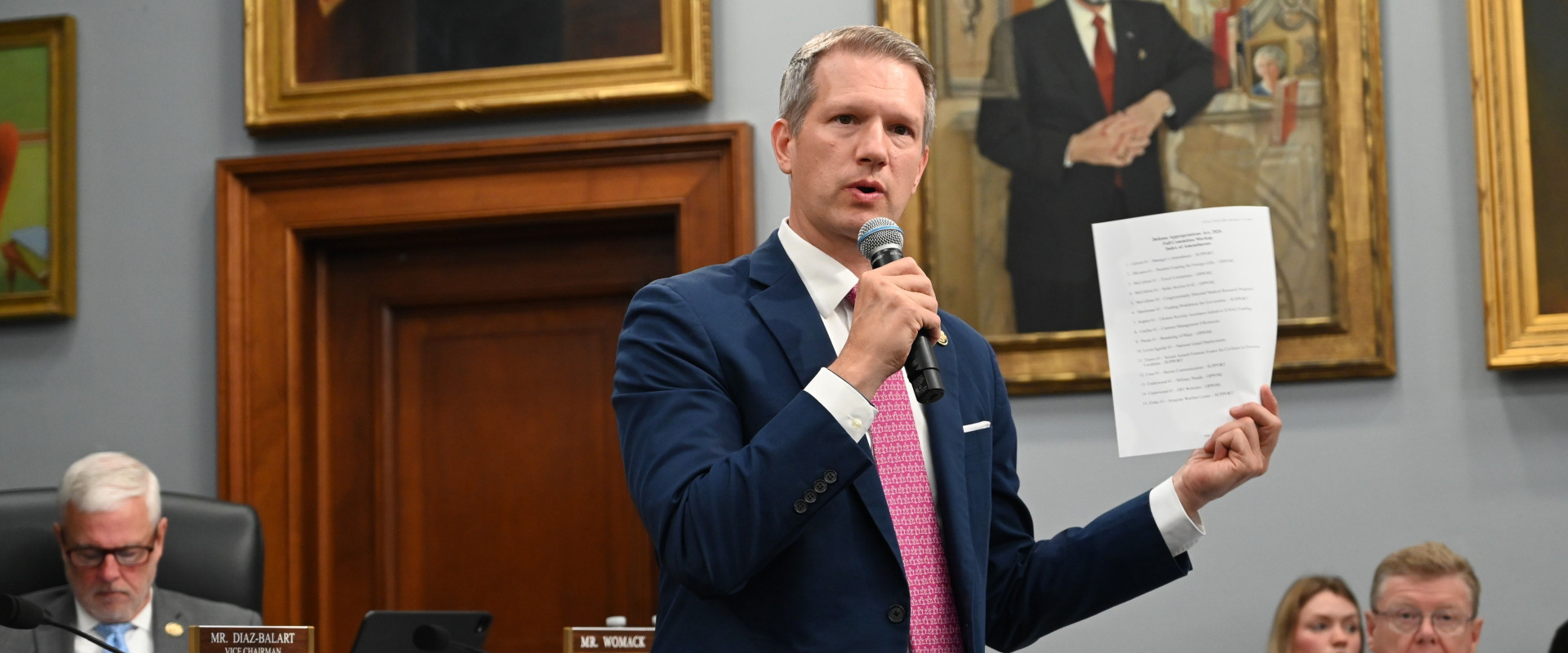
Riley M. Moore, a member of the United States Congress, has presented a detailed report to the White House on the killing and persecution of Christians in Nigeria. The report recommends strong actions, including possible aid cuts, sanctions and visa bans against individuals accused of religious persecution.
Moore met with senior officials at the White House alongside members of the U.S. House Committees on Appropriations and Foreign Affairs. The meeting comes shortly after former U.S. President Donald Trump redesignated Nigeria as a Country of Particular Concern (CPC) on October 31, 2025.
A Country of Particular Concern is a designation by the U.S. government for countries accused of engaging in or tolerating serious violations of religious freedom. Nigeria was first placed on the list in 2020, later removed, and has now been redesignated under Trump’s new directive.
According to Moore, the report is the result of several months of investigation. President Trump asked him and House Appropriations Committee Chairman Tom Cole to lead a comprehensive review of the situation facing Christian communities in Nigeria.
Moore said the investigation included a bipartisan fact-finding trip to Nigeria. During the visit, members of the U.S. Congress met with religious leaders, security officials and senior members of the Nigerian government. They also held discussions with Internally Displaced Persons (IDPs) who have fled violence in different parts of the country.
The delegation also organised hearings in the United States. Experts on religious freedom, counter-terrorism and African affairs were invited to give testimony. Moore said the aim was to get a full picture of the security challenges in Nigeria and the experiences of Christian communities affected by violence.
Nigeria has faced years of insecurity linked to armed groups such as Boko Haram, Islamic State West Africa Province (ISWAP), and armed bandits operating mainly in the North-East and North-West. In the Middle Belt, clashes between farming communities and armed Fulani herders have also led to thousands of deaths and widespread displacement.
While Nigerian authorities often describe the violence as driven by terrorism, banditry and competition over land and resources, some international groups have argued that Christians are being deliberately targeted in certain areas.
The report submitted by Moore outlines several recommendations aimed at pressuring the Nigerian government and addressing insecurity.
First, it calls for a new bilateral security agreement between the United States and Nigeria. According to Moore, such an agreement would focus on protecting vulnerable Christian communities and dismantling jihadist networks operating in the region.
Second, the report suggests withholding certain U.S. funds unless the Nigerian government takes clear and measurable steps to stop violence against Christians. The United States provides security assistance, humanitarian aid and development support to Nigeria. Any reduction in funding could affect ongoing programmes.
Third, the report proposes sanctions and visa restrictions against individuals and groups found responsible for or complicit in religious persecution. This could include freezing assets in the United States and denying entry visas.
Another recommendation is for the U.S. government to provide technical support to help Nigeria tackle violence linked to armed Fulani militias. The issue of Fulani herders has remained sensitive in Nigeria, with many communities accusing some herders of carrying out attacks, while others argue that the conflict is more complex and rooted in land disputes and climate change.
The report also demands the repeal of Sharia and blasphemy laws in parts of northern Nigeria. Several northern states operate Sharia law alongside civil law, mainly for Muslim residents. Blasphemy laws in some states have led to controversial arrests and prosecutions in recent years.
In addition, Moore urged the United States to work with international partners such as France, Hungary and the United Kingdom to address security and religious freedom concerns in Nigeria.
Speaking after the White House meeting, Moore thanked President Trump for redesignating Nigeria as a Country of Particular Concern. He said the U.S. administration is committed to protecting Christians and addressing broader security challenges in Nigeria.
Moore said he personally witnessed what he described as “horrific atrocities” during his visit to Nigeria. He noted that the report is based on direct meetings with Internally Displaced Persons, religious leaders and Nigerian officials.
According to him, the document provides “concrete steps” to impose accountability, counter radical Islamic terrorism and work in cooperation with the Nigerian government to improve security for all Nigerians.
He also called on the Nigerian government to use the opportunity to strengthen its relationship with the United States. Moore said closer cooperation would benefit both countries.
Nigeria is Africa’s most populous country, with more than 200 million people. The country is almost evenly divided between Christians and Muslims, with religious communities living side by side in many states.
For over a decade, the North-East has been affected by insurgency from Boko Haram and ISWAP. The violence has killed tens of thousands and displaced millions. In the North-West, bandit groups have carried out mass kidnappings and attacks on villages and schools.
In the Middle Belt, long-standing tensions between farmers and herders have led to deadly clashes. Analysts say the causes include population growth, desertification, weak law enforcement and political tensions. However, religious identity often overlaps with these conflicts, making them more sensitive.
The Nigerian government has repeatedly denied claims that it supports or tolerates religious persecution. Officials have argued that the violence is criminal and terrorist in nature, not a government policy against any religious group.
Human rights organisations have called for stronger action from Nigerian authorities to protect all citizens, regardless of religion or ethnicity.
It remains unclear how the White House will act on Moore’s recommendations. The redesignation of Nigeria as a Country of Particular Concern could lead to diplomatic pressure, sanctions or other measures under U.S. law.
Any move to cut aid or impose sanctions may affect diplomatic relations between Nigeria and the United States. Nigeria is a key partner of the U.S. in West Africa, especially in counter-terrorism, trade and regional stability.
For many Nigerians, the priority remains improved security, justice for victims and lasting peace in affected communities. As international attention returns to the issue of religious freedom in Nigeria, both governments may face growing pressure to show results.
Moore said the world is now watching and urged Nigerian leaders to take decisive steps to end violence against Christians. Whether this new report will lead to real change on the ground remains to be seen.