
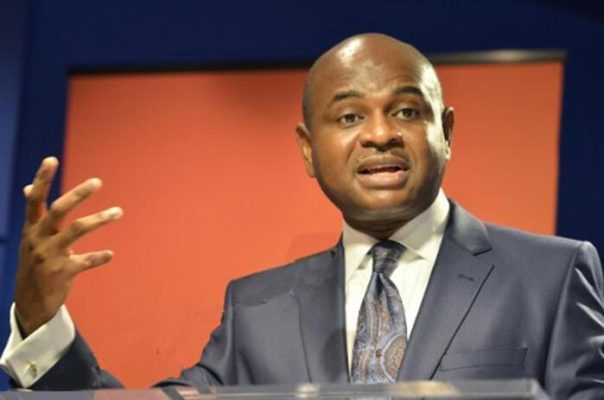
Former presidential aspirant and ex-Deputy Governor of the Central Bank of Nigeria, Kingsley Moghalu, has said that stepping away from Nigerian politics remains the best decision he has ever made, citing personal fulfilment, family priorities and deep frustration with the country’s political system.
Moghalu made the disclosure in a reflective message shared on social media, where he spoke about his brief but intense involvement in partisan politics and why he eventually decided to return to his international professional career.
The former presidential candidate explained that he entered politics in 2018 after leaving his academic position abroad because of what he described as repeated calls from Nigerians urging him to help fix the country.
According to him, he contested the 2019 presidential election and later made another attempt to become a candidate ahead of the 2023 polls.
However, he said he withdrew after experiencing what he described as betrayal by political actors.
He said, “I decided it wasn’t worth the bother… so I ended my brief foray into politics and returned to international professional life. Best decision I ever made.”
Moghalu added that since leaving partisan politics, his life has become more peaceful and fulfilling.
He said the decision allowed him to focus on his health, family and professional career.
He noted that his political journey took a heavy toll on his personal life.
The economist said he sacrificed time, health, family resources and income during his political ambitions.
He said many of the resources he used were earned from honest labour, not from political patronage.
He added that despite leaving politics, he continues to contribute to national development through public policy discussions.
He emphasised that he no longer belongs to any political party and does not engage in partisan commentary.
According to him, he now provides occasional non-partisan insights on economic and governance issues.
Moghalu also responded to the common statement from supporters that “Nigeria needs you.”
He said the responsibility of building the country should not be placed on one individual.
He said, “It needs you too, and all of us, not just me.”
The former presidential aspirant described Nigeria’s political and governance system as deeply troubled.
He argued that meaningful change will only happen when citizens recognise their collective power.
He called on Nigerians to demand accountable leadership and credible elections.
According to him, democracy will only work when citizens insist that their votes truly count.
He warned that without such action, Nigeria risks remaining trapped in poor governance.
Moghalu said the country’s challenges go beyond politicians and require active participation by the people.
He pointed to examples from other countries where citizens led the struggle for reform and democratic accountability.
He stressed that political transformation must come from the grassroots.
The comments have sparked debate among political observers and analysts across Nigeria.
Some say his remarks reflect growing frustration among technocrats and professionals who attempted to enter politics but later withdrew.
Others say his experience highlights structural barriers facing new entrants in Nigeria’s political system.
Observers note that many professionals complain about the high cost of elections, political godfatherism and weak internal democracy within parties.
These factors often discourage reform-minded individuals.
Moghalu’s political journey attracted attention because of his background as a global economist, former CBN deputy governor and academic.
He contested the 2019 presidential election under the Young Progressive Party.
He was seen by some as a symbol of a new generation of leadership.
However, like many third-party candidates, he struggled against the dominance of established political parties.
Analysts say Nigeria’s political environment remains difficult for independent-minded candidates.
They cite issues such as vote buying, weak institutions and the influence of money.
The former banker’s remarks also come at a time when discussions about political reforms, electoral credibility and governance are intensifying ahead of the 2027 general elections.
Nigeria has faced increasing pressure to strengthen democratic institutions, improve transparency and restore public trust.
Public frustration has grown over economic hardship, insecurity and corruption.
Many Nigerians are calling for leadership reforms and citizen participation.
Moghalu’s comments therefore resonate with wider national debates.
Political experts say his withdrawal from politics reflects a broader trend among reform-oriented individuals who prefer to influence policy from outside government.
Some argue that technocrats may achieve greater impact through global institutions, academia and advisory roles.
Others believe such individuals should remain engaged in politics to drive change from within.
Despite leaving partisan politics, Moghalu continues to advocate economic reforms and institutional strengthening.
He has spoken on issues such as fiscal discipline, governance and electoral reforms.
His position reflects a growing focus on civic responsibility and citizen-driven change.
Observers say this aligns with global trends, where social movements and civil society play increasing roles in democratic reforms.
The development has also triggered conversations about the future of Nigeria’s political leadership.
Some analysts believe the country needs a balance between experienced politicians and professionals.
Others say structural reforms are more important than individual leaders.
Moghalu’s message also highlights the emotional and personal cost of political engagement in Nigeria.
Many politicians face intense pressure, public scrutiny and financial strain.
Some experts say these challenges discourage credible candidates.
The debate also raises questions about how Nigeria can attract capable leaders while strengthening democratic processes.
As Nigeria moves towards the next electoral cycle, issues such as electoral transparency, party reform and citizen participation are expected to dominate political discussions.
For many Nigerians, Moghalu’s experience serves as both a caution and a lesson.
It underscores the complexity of the country’s political system.
It also highlights the importance of collective action in building strong institutions.
For now, the former presidential aspirant says he remains committed to national development from outside partisan politics.
He maintains that change is possible if citizens take responsibility and demand accountability.
His remarks are likely to continue shaping conversations about leadership, governance and the future of democracy in Nigeria.
As political realignments begin ahead of 2027, observers say voices like Moghalu’s will remain relevant in debates about reform and national renewal.

