
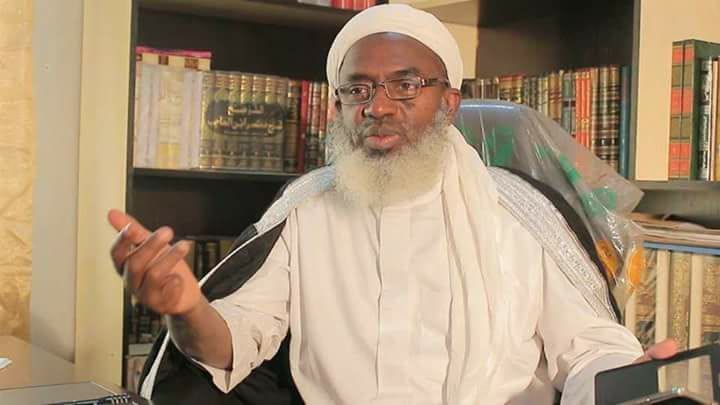
Islamic cleric, Sheikh Ahmad Gumi, has reacted to the reported death of Iran’s Supreme Leader, Ayatollah Ali Khamenei, describing him as “a lucky soul” who “died in jihad.”
In a post shared on his Facebook page on Sunday, Gumi said Khamenei died “in jihad against killers of innocent children and women in Gaza and elsewhere.”
The cleric added that the late Iranian leader’s blood “will fuel the change in the ummah,” saying he stood firmly for justice and did not hide in bunkers.
Gumi wrote: “Ayatollah Ali Khamenei: A lucky soul, he died in Jihad against killers of innocent children and women in Gaza and elsewhere.
“His blood will fuel the change in the ummah. He stood firmly for Justice and didn’t hide in bunkers. For those who killed him or assisted in killing him, let us see what they will live to do in this world.”
Reports from the Middle East said Khamenei died on Saturday following an Israeli strike in Tehran. The development has increased tension in the region, which has been facing renewed violence linked to the ongoing war in Gaza.
Khamenei had served as Iran’s Supreme Leader since 1989. He was one of the most powerful figures in the Islamic Republic of Iran and had the final say in major state matters, including foreign policy and military decisions.
As Supreme Leader, he controlled the armed forces and played a key role in shaping Iran’s position against Israel and the United States. Over the years, he openly supported Palestinian groups and strongly criticised Israeli military actions in Gaza.
The reported Israeli strike that led to his death is seen by analysts as a major turning point in the long-standing conflict between Iran and Israel. Both countries have been engaged in a shadow war for years, involving cyber attacks, air strikes, and proxy groups across the Middle East.
Khamenei became Iran’s Supreme Leader after the death of Ayatollah Ruhollah Khomeini in 1989. Under his leadership, Iran expanded its influence in countries such as Iraq, Syria, Lebanon and Yemen.
He was widely known for his strong anti-West stance and his support for what he described as resistance movements in the region. His speeches often focused on defending Muslim lands and standing against foreign interference.
In recent months, the conflict in Gaza has drawn sharp reactions from leaders across the Muslim world. Iran has been one of the strongest supporters of Palestinian groups fighting against Israel. Khamenei repeatedly condemned Israeli military operations, which he said targeted innocent civilians.
The war in Gaza has led to thousands of deaths and has triggered protests in many countries, including Nigeria. Religious and political leaders in Nigeria have expressed different opinions on the crisis, reflecting the country’s diverse religious and political views.
Sheikh Gumi’s reaction has sparked debate among Nigerians, especially on social media. While some supporters praised his statement as a defence of oppressed people, others criticised it, saying religious leaders should promote peace and dialogue.
There are concerns that the situation may lead to further escalation between Iran and Israel. In the past, attacks on senior figures have led to retaliation, raising fears of a wider regional conflict.
Nigeria has strong diplomatic and economic ties with several Middle Eastern countries. Any major crisis in the region can affect global oil prices, which in turn impacts Nigeria’s economy. As an oil-producing nation, Nigeria closely watches developments in the Middle East.
As of the time of filing this report, there has been no detailed official statement from Iranian authorities confirming further details surrounding the strike. However, international media continue to monitor the situation closely.
Khamenei’s death marks the end of an era in Iran’s political history. For over three decades, he shaped the country’s direction and remained a central voice in regional politics.
For Sheikh Gumi, his passing represents what he called martyrdom in defence of Muslims facing violence. For others, it raises questions about the future of Iran and the growing tensions in the Middle East.

