
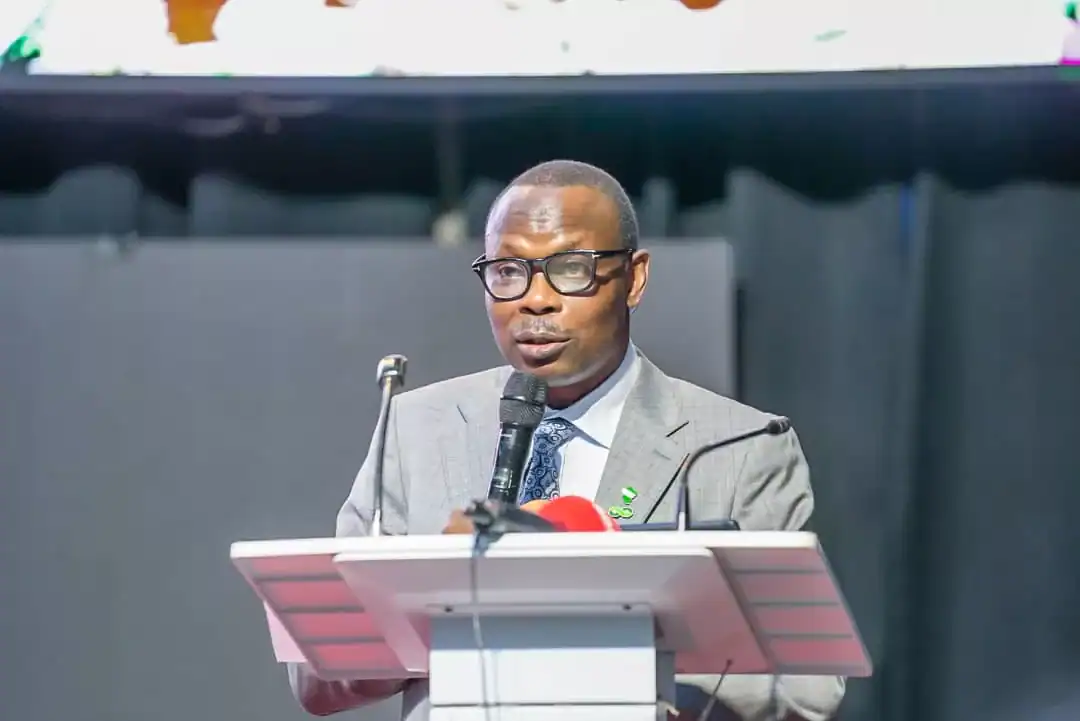
Nigeria is facing a growing health crisis as more doctors and other medical workers continue to leave the country in search of better opportunities abroad, a trend widely known as “japa.” The Minister of State for Health and Social Welfare, Iziaq Salako, has warned that the situation is putting serious pressure on the country’s already weak healthcare system.
Speaking on Monday at the 2026 United Kingdom Global Health Summit held at the Royal College of Physicians, Salako said the mass migration of health professionals has worsened manpower shortages across Nigeria. He described the situation as urgent and called for both local reforms and international support.
According to the minister, Nigeria currently has about four doctors for every 10,000 people. This is far below the standard set by the World Health Organisation, which recommends at least 10 doctors per 10,000 people. This gap, he said, shows how serious the shortage has become in Africa’s most populous country.
Salako explained that the problem is not limited to Nigeria alone but affects many African countries. He noted that while Africa carries more than a quarter of the global disease burden, it has less than three per cent of the world’s health workforce. This imbalance, he said, is a major challenge for the continent.
However, he stressed that Nigeria’s situation is particularly worrying. With a population of over 220 million people, the country needs a strong healthcare system to meet the needs of its citizens. Instead, many hospitals are struggling due to a lack of doctors, nurses, midwives, and other health professionals.
The migration of healthcare workers has made the situation worse. Salako cited data from the United Kingdom showing that about 13,609 Nigerian health workers moved to the UK between 2021 and 2022. This makes Nigeria one of the top sources of foreign-trained medical staff in the UK.
He also referred to a 2023 survey by NOI Polls and Nigeria Health Watch, which found that 57 per cent of Nigerian doctors had already taken steps to leave the country. This includes applying for jobs abroad, writing professional exams, or processing travel documents.
The minister pointed out that training a doctor in Nigeria requires a huge investment. According to him, it can cost more than $200,000 to train just one medical doctor. When such professionals leave the country, it means Nigeria loses both skilled manpower and the money spent on their training.
“Every doctor who leaves Nigeria represents a loss of public resources,” Salako said. “In many cases, these resources end up benefiting richer countries where the doctors eventually work.”
He described the situation as unfair and called it a global issue that needs cooperation between countries. He urged developed nations to adopt fair recruitment practices and support countries like Nigeria that train health workers who later migrate.
Nigeria’s healthcare system has faced many problems over the years. These include poor funding, weak infrastructure, and a heavy reliance on out-of-pocket payments by patients. Many hospitals lack basic equipment, and rural areas often have little or no access to qualified medical staff.
In recent years, the government has tried to improve the system, but progress has been slow. The administration of Bola Tinubu has introduced reforms aimed at strengthening healthcare delivery.
One of these efforts is the Nigeria Health Sector Renewal Investment Initiative. Salako explained that the program is designed to improve coordination in the health sector through a unified approach. It is based on the idea of “One Plan, One Budget, and One Conversation,” which aims to ensure better use of resources and accountability.
To address the shortage of health workers, the government has also increased the number of students admitted into medical schools. Between 2023 and 2025, Nigeria recorded about a 160 per cent rise in medical school admissions. There has also been expansion in the training of nurses, pharmacists, and laboratory scientists.
In addition, the government is strengthening the role of community health workers and introducing policies that allow certain medical tasks to be shared among different categories of health staff. This approach, known as task-shifting, is expected to help improve healthcare delivery, especially in underserved areas.
Despite these efforts, experts say more needs to be done to stop the steady flow of health workers leaving the country. Poor salaries, lack of modern equipment, limited career growth, and insecurity are among the main reasons many professionals choose to relocate.
Salako also spoke about the role of Nigerian health workers living abroad. He said the government is working to engage them in efforts to improve the healthcare system at home. According to him, more than 150,000 Nigerian health professionals are currently working in different parts of the world.
He described them as a valuable resource that Nigeria can tap into. As part of this effort, seven Nigerian healthcare diaspora associations from countries such as the UK, the United States, Canada, Germany, Australia, and South Africa are planning a joint medical mission to Nigeria between April and July this year.
The mission will focus on sharing knowledge, training local professionals, and supporting health institutions across the country. Salako said this kind of collaboration could help reduce the impact of the manpower shortage.
Beyond workforce issues, the minister also highlighted other global challenges affecting healthcare systems. These include economic instability, climate change, and political tensions between countries.
He noted that the International Monetary Fund has projected global economic growth of between 2.7 and 3.1 per cent in 2026. This is lower than levels recorded before the COVID-19 pandemic and could limit how much governments spend on healthcare.
Climate change is also having a growing impact on health. Reports such as the 2025 Lancet Countdown on Health and Climate Change show that heat-related deaths have increased by 23 per cent since 1999. Extreme weather conditions have also led to food shortages in many parts of the world.
In Nigeria, environmental problems like desertification in the North, flooding in the South, and pollution in oil-producing areas are contributing to disease outbreaks and displacement of communities.
Salako warned that these challenges make it even more important for countries to work together. He said no country can solve the global health workforce crisis alone.
“The next health emergency will not respect borders,” he said. “Strengthening healthcare systems in developing countries is not charity, it is a matter of global security.”

