
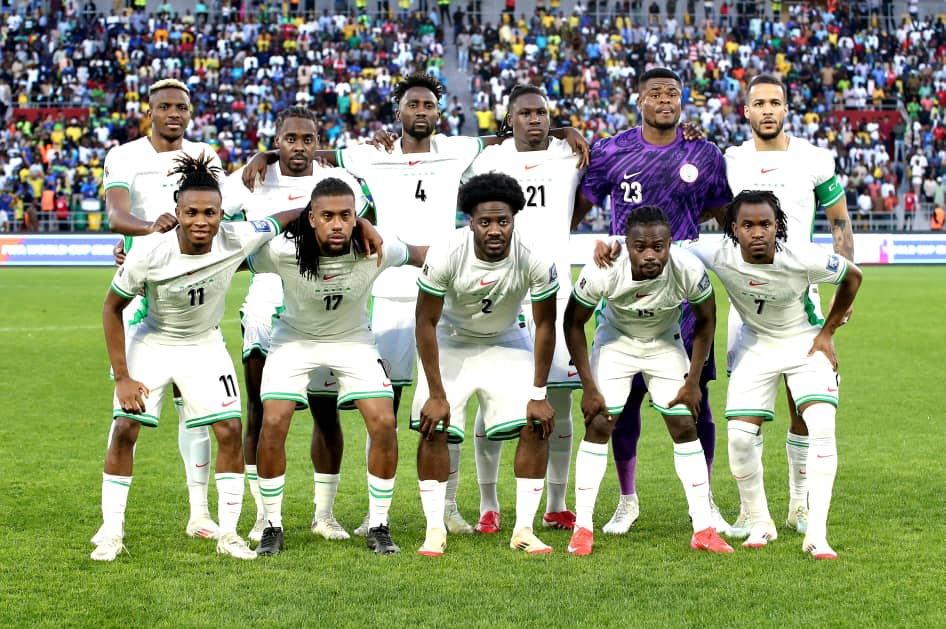
The Nigeria Football Federation (NFF) has announced plans to challenge a decision by world football governing body FIFA after its protest against the Democratic Republic of Congo (DR Congo) was dismissed.
The dispute stems from a dramatic 2026 FIFA World Cup qualifying play-off match held in Rabat, Morocco, last November, where Nigeria’s senior national team, the Super Eagles, lost 4-3 on penalties to DR Congo. The defeat ended Nigeria’s hopes of progressing further in the qualification process, sparking disappointment among fans and officials.
Following the match, the NFF filed a formal petition to FIFA, raising concerns about the eligibility of some DR Congo players who featured in the game. According to the federation, there were alleged irregularities in the issuance of passports used by certain players to qualify for the match.
The issue of player eligibility is a serious matter in international football. FIFA rules require that players must meet strict nationality requirements before representing a country. These rules are meant to ensure fairness and prevent countries from fielding ineligible players.
For months, the case remained under review by the FIFA Disciplinary Committee, which is responsible for handling disputes, rule violations, and other disciplinary matters in global football. Nigerian football followers waited anxiously for the outcome, hoping the decision might favour the Super Eagles.
However, FIFA has now ruled against Nigeria, rejecting the NFF’s petition and effectively upholding the result of the match. The decision means that DR Congo’s victory stands, and Nigeria’s elimination from that stage of the qualifiers remains unchanged.
Reacting to the development, NFF General Secretary, Dr Mohammed Sanusi, expressed dissatisfaction with the outcome. He confirmed that the federation has already begun the process of appealing the decision through the appropriate legal channels.
“We have received the decision of the FIFA Disciplinary Committee on our petition, but we are not satisfied with the decision, which rejected our petition,” Sanusi said.
“I want to assure Nigerians that the NFF has immediately commenced the process of appealing the decision.”
The move to appeal signals the NFF’s determination to pursue the matter further, even as the chances of overturning such decisions are often limited. Appeals in football disputes are typically handled by higher bodies within FIFA or, in some cases, by the Court of Arbitration for Sport (CAS), which serves as the highest authority in resolving sports-related legal issues.
The controversy has once again highlighted the intense competition involved in World Cup qualification, particularly in Africa, where many countries are eager to secure limited spots at the global tournament. The Super Eagles, one of Africa’s most successful teams, have a strong history in the FIFA World Cup, having participated in multiple editions since their debut in 1994.
Missing out on qualification or progression is often seen as a major setback, not only for the team but also for fans and the broader football community in Nigeria. Football remains the most popular sport in the country, and the national team enjoys massive support from millions of Nigerians both at home and abroad.
The loss to DR Congo was particularly painful because it came after a closely contested match that ended in a penalty shootout. Such outcomes are often unpredictable, and the tension of penalties can make them difficult for even the most experienced teams.
Beyond the immediate result, the situation has raised broader questions about governance and transparency in international football. Issues related to nationality and player eligibility have been a recurring topic in the sport, with several countries in the past facing sanctions for fielding ineligible players.
For Nigeria, this is not the first time football authorities have had to deal with administrative or legal challenges. Over the years, the NFF has been involved in disputes ranging from coaching contracts to player eligibility and governance issues. These challenges have sometimes affected the performance and stability of the national team.
Meanwhile, reactions from Nigerian football fans have been mixed. Some supporters believe the federation is right to challenge the decision, arguing that every effort should be made to ensure fairness. Others, however, feel it may be time to move on and focus on rebuilding the team.
The government and sports authorities have yet to make detailed public statements on the issue, but it is expected that they will support the NFF’s efforts, given the importance of football to national identity and unity.
As the appeal process begins, attention will be on how the case unfolds and whether new evidence or arguments will be presented. Legal proceedings in sports disputes can take time, and the outcome is often uncertain.
For now, DR Congo’s victory remains officially recognised, and Nigeria’s exit from that stage of the World Cup qualifiers stands. However, the NFF’s decision to continue the fight shows that the matter is far from over.
The coming weeks and months will determine whether Nigeria can overturn the decision or if the focus will shift fully to future competitions. Regardless of the outcome, the episode serves as a reminder of the challenges and complexities involved in international football.