
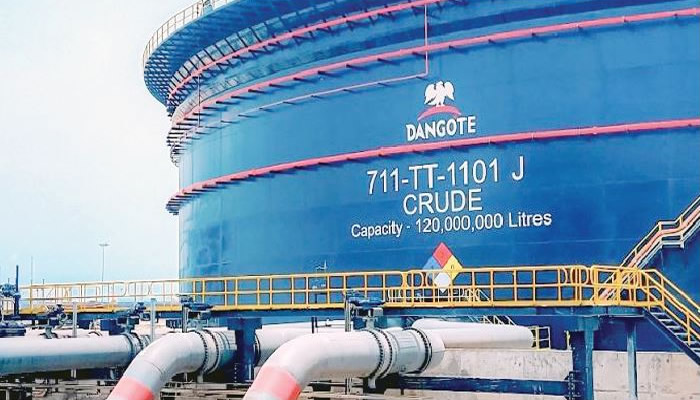
Nigeria’s fuel market faced fresh pressure on Saturday as Dangote Refinery announced another increase in the price of Premium Motor Spirit (PMS), raising its gantry price to ₦1,275 per litre. This marks the fifth price adjustment in March alone and highlights ongoing instability in the country’s downstream petroleum sector.
The new price, which took effect from midnight on March 21, 2026, replaced the earlier rate of ₦1,245 per litre announced just hours before. In a notice sent to marketers and customers, the refinery instructed stakeholders to disregard previous pricing templates, stating that the updated rates now apply to all pending and unloaded fuel volumes.
According to the notice, the increase reflects changing market conditions. The refinery also raised its coastal price from ₦1,512,648 to ₦1,646,748 per metric tonne, representing an increase of ₦134,100 or about 8.9 per cent. The company said the adjustment was necessary to align with prevailing global realities.
This latest hike means petrol prices at the depot level have climbed sharply within a short period. At the beginning of March, the gantry price stood at ₦774 per litre. Since then, it has risen in stages to ₦874, ₦1,050, ₦1,175, ₦1,245, and now ₦1,275 per litre. In total, the price has increased by ₦501 per litre in less than three weeks, representing a jump of about 64.7 per cent.
Industry observers say the rapid increases show how exposed Nigeria remains to global oil market forces, even with the operation of the large-scale Dangote refinery. Many Nigerians had hoped that the refinery would stabilise fuel supply and reduce dependence on imports. However, recent developments suggest that international crude oil prices, freight costs, and supply disruptions continue to play a major role in determining local prices.
The refinery explained that customers operating under existing credit arrangements would still be able to load products, provided they cover the difference created by the new price. It added that holders of valid bank guarantees could continue transactions under previously approved terms, as long as their credit balances are sufficient.
The series of price hikes has raised concerns among transport operators, businesses, and households. Analysts expect the latest increase to trigger a new round of pump price adjustments at filling stations across the country. This could lead to higher transport fares and increased prices for goods and services, worsening the cost-of-living challenges already faced by many Nigerians.
Fuel prices are a key driver of inflation in Nigeria, affecting transportation, food supply, and production costs. Any increase at the depot level usually reflects quickly at the pump, with ripple effects across the economy. For many citizens, the steady rise in petrol prices has become a major concern, especially in the absence of strong income growth.
The situation is further complicated by rising demand for fuel from other African countries. Reports indicate that nations such as South Africa, Ghana, and Kenya have shown strong interest in sourcing petroleum products from the Dangote refinery. This growing regional demand is putting additional pressure on supply.
At the same time, global supply chains have been disrupted by geopolitical tensions, including the ongoing Iran war. These disruptions have affected traditional fuel supply routes, particularly from the Middle East, leading to increased costs for shipping and refined products worldwide.
The rapid price changes within a single day also point to intense volatility in the market. On Friday, March 20, the refinery first announced an increase to ₦1,245 per litre, only to revise it again to ₦1,275 per litre later the same night. Such frequent adjustments create uncertainty for marketers and distributors, who must constantly update their pricing and logistics plans.
For consumers, the impact is immediate and visible. Transport fares in major cities are already rising, while traders warn that the cost of moving goods from farms to markets will increase. This could lead to higher food prices in the coming weeks, adding to existing economic pressures.
Despite the concerns, the refinery maintains that its pricing decisions are based on external factors beyond its control. It noted that global crude prices, shipping costs, and foreign exchange rates all influence the final price of petrol.