
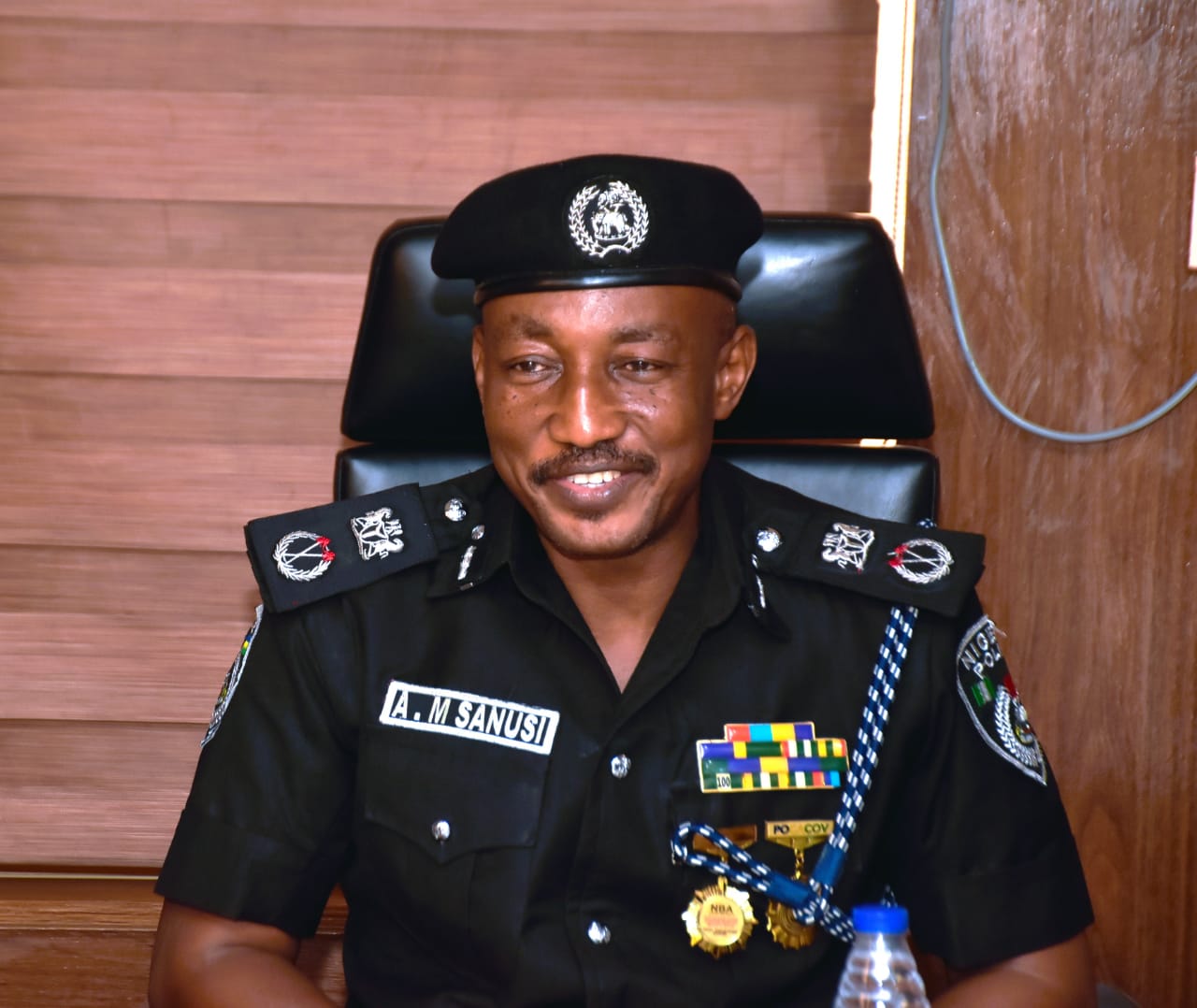
A new Commissioner of Police has taken charge of security operations in Nigeria’s Federal Capital Territory, as Ahmed Sanusi officially assumed duty on Tuesday.
Sanusi becomes the 35th Commissioner of Police in the FCT, taking over at a time when security remains a major concern for residents of Abuja and surrounding areas.
The development was confirmed in a statement issued in Abuja by the Police Public Relations Officer in the FCT, Josephine Adeh.
According to the statement, Sanusi’s appointment follows the promotion of his predecessor, Miller Dantawaye, to the rank of Assistant Inspector-General of Police.
Dantawaye has since been redeployed to another strategic role within the Nigeria Police Force.
The change is part of a wider reshuffle approved by the Inspector-General of Police, Olatunji Disu, who recently ordered the redeployment of several senior officers across key commands and departments.
In a separate statement, the Force Public Relations Officer, Anthony Placid, explained that the redeployment is aimed at strengthening operations and improving service delivery nationwide.
He said the changes are designed to enhance leadership capacity and ensure that the police respond more effectively to security challenges.
Sanusi brings years of experience to his new role. According to police authorities, he has served in different capacities across the country and built a reputation for professionalism.
Born on May 20, 1972, Sanusi hails from Lokoja Local Government Area of Kogi State.
He joined the Nigeria Police Force in May 2000 as a Cadet Assistant Superintendent of Police. After completing his training, he was deployed to Niger State, where he began his policing career.
Over the years, he has held several positions and gained experience in both field operations and intelligence work.
Before his latest appointment, Sanusi served as Commander of the Intelligence Response Team (IRT), a specialised unit of the police known for handling serious crimes such as kidnapping, armed robbery, and terrorism.
His experience in intelligence and crime-fighting is expected to play a key role in addressing security concerns in the FCT.
As he assumed duty, Sanusi pledged to strengthen existing security systems and improve cooperation between the police and the public.
According to Adeh, the new commissioner is committed to enhancing community policing, a strategy that encourages closer ties between security agencies and local residents.
Community policing has been promoted in recent years as a way to build trust and improve information sharing between citizens and law enforcement.
Security experts believe that stronger cooperation between the police and the public can help prevent crime and improve response times.
Sanusi’s approach is expected to focus on both enforcement and engagement, ensuring that residents feel safer while also supporting police efforts.
The Federal Capital Territory, which includes Abuja, is the political and administrative centre of Nigeria.
While it is generally considered safer than many other parts of the country, the FCT has in recent years faced growing security challenges.
These include cases of kidnapping along major highways, armed robbery, and occasional attacks in satellite towns.
Residents have often called for stronger security presence, better intelligence gathering, and quicker response to emergencies.
The appointment of a new police commissioner is therefore seen as an important step in addressing these concerns.
The Nigeria Police Force has been undergoing reforms aimed at improving efficiency and restoring public confidence.
One of the key strategies has been the regular redeployment of senior officers to different commands. This is intended to bring fresh ideas, reduce complacency, and ensure that officers remain accountable.
Under the leadership of the Inspector-General of Police, there has been a focus on modern policing methods, including the use of technology, intelligence-led operations, and community engagement.
The redeployment that brought Sanusi to the FCT is part of these broader efforts.
Residents of the FCT are expected to closely watch the performance of the new commissioner in the coming months.
Many are hopeful that his experience, especially in intelligence operations, will lead to improved security across the territory.
At the same time, there are expectations that the police will address issues such as slow response to distress calls, alleged misconduct by officers, and the need for better communication with the public.
According to police authorities, Sanusi is known for his dedication to duty and commitment to professionalism.
He is described as a devout Muslim, married, and blessed with children. Colleagues say he is passionate about policing and focused on achieving results.
While personal details may not directly affect his official duties, they help to present a fuller picture of the man now in charge of policing the nation’s capital.
The police have called on residents of the FCT to support the new commissioner in his efforts to maintain law and order.
Adeh urged members of the public to cooperate with the police by providing useful information and reporting suspicious activities.
Without public support, it becomes difficult for law enforcement agencies to detect and prevent crime.
As Sanusi settles into his new role, attention will be on how quickly he can make an impact.
The challenges are clear, but so are the opportunities to improve security and build trust between the police and the public.
For residents of Abuja and the surrounding areas, the hope is that the new leadership will bring renewed energy and practical solutions to long-standing problems.