
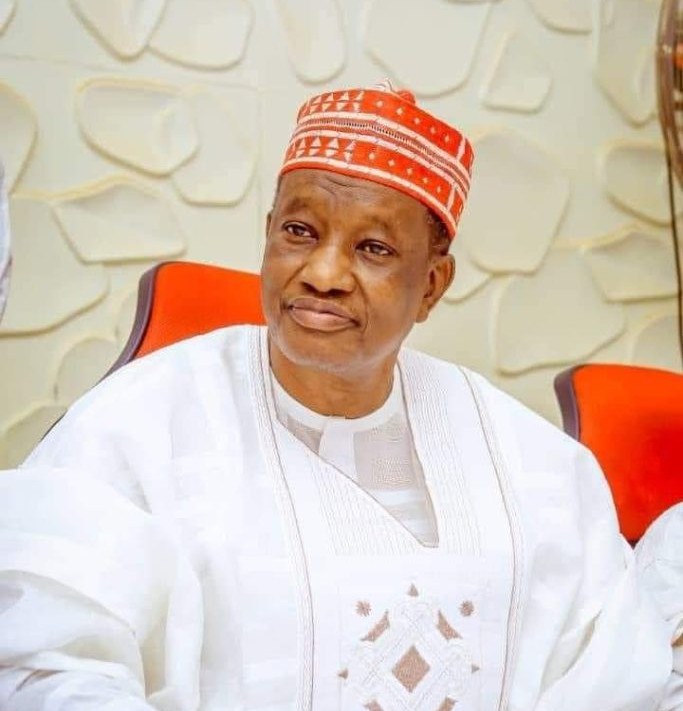
The immediate past Deputy Governor of Kano State, Aminu Abdussalam Gwarzo, has explained the reasons behind his sudden resignation, saying the decision was taken to protect peace and ensure stability in the state.
Gwarzo, who stepped down from office on Friday, broke his silence just hours after news of his resignation became public. His exit had earlier been confirmed by his spokesperson, but no details were given at the time, leading to widespread speculation.
In a resignation letter addressed to Governor Abba Kabir Yusuf, the former deputy governor said his action followed careful thought and consultations with key stakeholders. He stressed that his decision was guided by the need to allow the government to function smoothly without distractions.
“I hereby tender my voluntary resignation from office, with effect from 27th March 2026,” Gwarzo wrote in the letter, citing the relevant provision of the Nigerian Constitution that allows public officials to resign from their positions.
He explained that the situation in the state had made it difficult for him to continue effectively in office. According to him, stepping aside was the best way to support the administration and maintain focus on governance.
“In view of the prevailing circumstances, I have taken this step in the spirit of responsibility and statesmanship, to allow the government and the State to move forward without undue distractions,” he said.
His resignation came shortly after reports of tension between him and the Kano State House of Assembly. Lawmakers had raised allegations against him in recent days, including claims related to misconduct and concerns about how he carried out his official duties.
There were also indications that the Assembly was considering disciplinary measures, a move that observers believed could have led to a major political crisis in the state. However, Gwarzo has firmly denied any wrongdoing.
He made it clear in his statement that his resignation should not be seen as an admission of guilt. Instead, he described it as a voluntary decision taken in good faith and in the interest of the public.
“This resignation is made voluntarily and in good faith. It should not be construed as an admission of any wrongdoing,” he said.
Gwarzo also pointed to his record in public service, noting that he had always acted in line with democratic values and respect for institutions. He described his decision to resign as a necessary sacrifice aimed at protecting the integrity of governance in Kano State.
The development comes at a time of major political changes in Kano, one of Nigeria’s most influential states. In recent weeks, the political landscape has shifted following the defection of Governor Yusuf to the All Progressives Congress (APC).
The move marked a significant change from his earlier political alignment with the New Nigeria Peoples Party (NNPP), which had played a key role in his emergence as governor. The defection has led to new alliances and adjustments within the state government.
As part of efforts to reposition the administration, the governor has made several changes in key positions. These include the removal of the Head of Service and the dismissal of a commissioner, actions that were described as part of a broader plan to improve efficiency and strengthen governance.
In his statement, Gwarzo expressed gratitude to the governor, members of the State Executive Council, and the Kano State House of Assembly for their support during his time in office. He also thanked the New Nigeria Peoples Party for giving him the platform to serve.
“I remain deeply grateful to the good people of Kano State for the honour and privilege of serving,” he said.
He assured the public that his resignation does not mark the end of his service to the state. According to him, he will continue to contribute to the development of Kano in other ways.
Gwarzo’s exit marks a significant moment in Kano politics. As deputy governor, he played a key role in supporting the administration and helping to manage the affairs of the state. His resignation now leaves a gap that must be filled in line with constitutional provisions.
Under Nigerian law, the governor is expected to nominate a new deputy governor, subject to approval by the State House of Assembly. This process will be closely watched, especially given the recent tensions between the executive and legislative arms of government.
For many residents of Kano State, the main concern is stability and continuity in governance. The recent political changes have raised questions, but there is also hope that the situation will lead to a more focused and effective administration.
As the state moves forward, attention will remain on how the government manages the transition and addresses the issues that led to the current situation. Gwarzo’s explanation has provided some clarity, but it also highlights the challenges facing political leaders in balancing personal decisions with public expectations.