
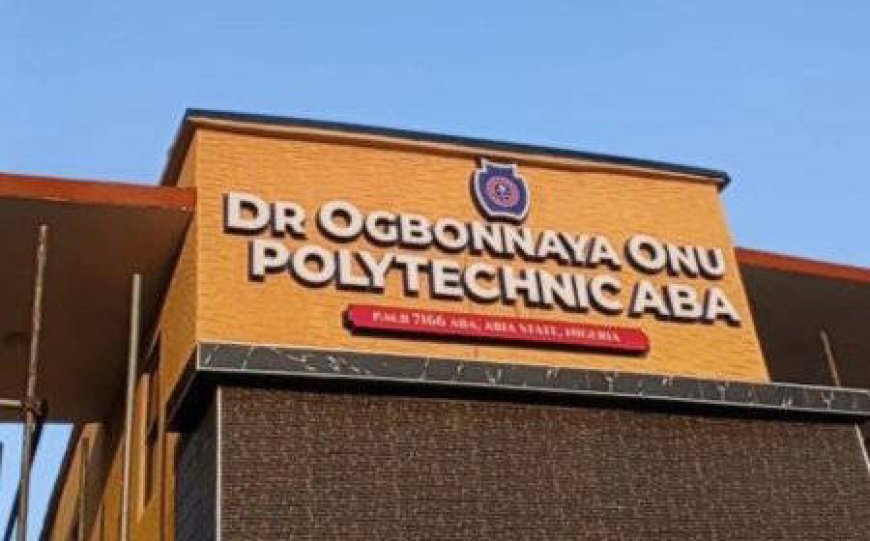
The Ogbonnaya Onu Polytechnic Aba in Abia State has announced plans to introduce new Educational Technology (EdTech) courses as part of efforts to modernise learning and better prepare students for the digital age.
At the same time, the institution has stepped up efforts to tackle drug abuse among students through a new partnership with the National Drug Law Enforcement Agency (NDLEA).
The Rector of the polytechnic, Christopher Okoro Kalu, made these announcements while addressing members of the Academic Board at the institution’s auditorium.
Kalu said the introduction of EdTech courses is in line with directives from the Abia State Ministry of Education, which is encouraging schools to embrace modern teaching methods.
According to him, the new courses will focus on helping students learn how to use digital tools in education, design learning materials, and apply modern teaching practices.
He explained that the move is aimed at improving the quality of teaching and learning in the institution.
“With the growing role of technology in education worldwide, it is important that our students are equipped with the right skills to compete,” Kalu said.
Educational Technology, often referred to as EdTech, has become a key part of learning systems across the world. From online classes to digital classrooms, schools are increasingly relying on technology to improve access and efficiency.
In Nigeria, the COVID-19 pandemic highlighted the importance of digital learning, as many schools struggled to continue teaching during lockdowns.
Since then, governments and institutions have been making efforts to strengthen digital education.
The rector assured that all new courses will go through proper accreditation processes before they are fully introduced.
He said the institution is working to ensure that the courses meet national standards and are approved by relevant authorities.
“Before the relocation to Osisioma Campus, these courses must either be fully accredited or have completed the necessary resource verification processes,” he stated.
Accreditation is important in Nigeria’s education system because it ensures that courses meet required standards and that certificates issued by institutions are recognised.
Kalu also gave an update on the planned relocation of the polytechnic to its new campus in Osisioma.
He said work is progressing steadily, with several government ministries involved in the development.
According to him, the Ministry of Public Utilities has started installing a water system at the new campus. The project is expected to be completed within one month and is designed to last for many years.
He added that the Ministry of Works is currently handling the construction of internal roads, covering different phases of the project.
Work has also begun on the administrative building, which is expected to be ready by September.
The rector thanked the Abia State Government for handing over facilities previously built by Abia State University in Uturu, noting that this support will help speed up the relocation process.
Addressing concerns about the relocation, Kalu assured both staff and students that their welfare remains a top priority.
Relocation projects in Nigerian institutions often come with challenges, including transportation, accommodation, and access to facilities.
However, the rector said the management is committed to making the transition smooth and ensuring that learning is not disrupted.
As part of efforts to expand practical learning, the polytechnic has also set up an EYE Content Hub for students studying Film and Multimedia Production.
The hub, which will be located in the institution’s ICT building, is equipped with modern tools to help students gain hands-on experience.
Kalu said the facility is designed to prepare students for careers in the creative industry, which is growing rapidly in Nigeria.
The country’s film and media sector, often referred to as Nollywood, is one of the largest in the world and continues to create jobs and opportunities for young people.
By investing in such facilities, the polytechnic aims to ensure that its graduates are ready to meet industry demands.
In a related development, the institution has strengthened its partnership with the NDLEA to address the growing problem of drug abuse among students.
The NDLEA State Coordinator, Chigbu Odomelam Chilee, visited the school and raised concerns about the increasing use of drugs among young people.
He noted that students are among the most affected group and called for urgent action.
Drug abuse has become a major issue in many parts of Nigeria, with substances such as tramadol, cannabis, and codeine often misused by young people.
Chilee urged the polytechnic to introduce drug education programs, peer awareness campaigns, and activities that promote healthy lifestyles.
In response, Kalu approved a series of training programs for students to educate them on the dangers of drug abuse.
“Nothing destroys a nation quicker than drug abuse. Aside from its impact on mental health, it also contributes to poverty,” the rector said.
He announced that training sessions will take place between May and June, with another round scheduled for November.
The programs will focus on raising awareness, encouraging responsible behaviour, and helping students make better choices.
By educating young people early, schools can reduce the chances of students getting involved in harmful behaviours.
The partnership between the polytechnic and the NDLEA is expected to strengthen these efforts and create a safer learning environment.
The combined focus on digital education and student welfare reflects a broader effort to improve the quality of higher education in Nigeria.
With technology changing the way people learn and work, institutions are under pressure to adapt and provide relevant skills.
At the same time, addressing social issues like drug abuse is essential to ensure that students can succeed both academically and personally.
For the Ogbonnaya Onu Polytechnic Aba, the introduction of EdTech courses and the fight against drug abuse mark important steps toward achieving these goals.
If successful, they could serve as a model for other institutions across the country seeking to balance academic progress with student well-being.