
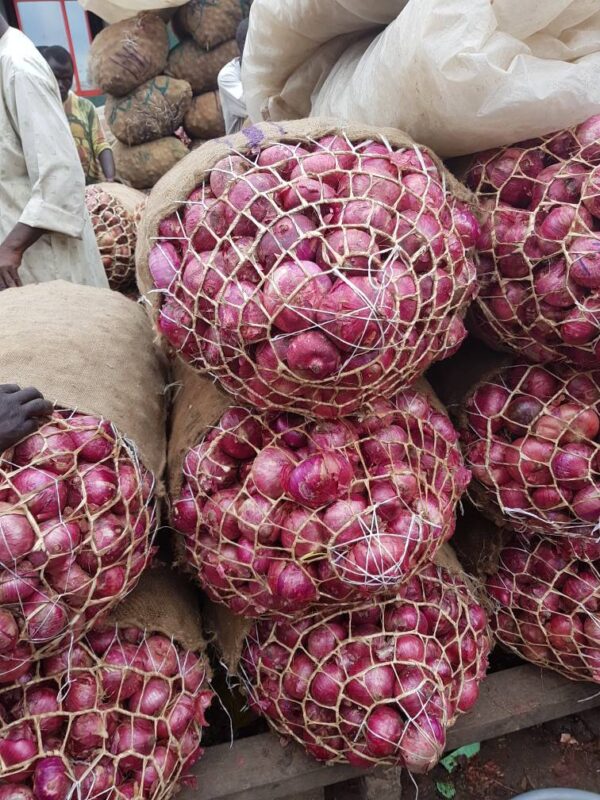
Cross-border onion trade between Nigeria and Ghana has officially resumed after weeks of disruption caused by a dispute that affected the movement of goods and left dozens of trucks stranded along the trade route.
The development was confirmed on Tuesday in a notice issued by the Regional Observatory of Onion in West and Central Africa, which stated that all issues that led to the suspension of trade have now been resolved.
President of the regional body, Aliyu Maitasamu, announced that normal operations would resume immediately, bringing relief to traders, transporters, and businesses affected by the disruption.
“All trucks conveying onions between Nigeria and Ghana are now authorised to move, and those that were held up have been released,” he said.
The resumption follows several weeks of tension along the Ghana trade corridor, where Nigerian exporters had earlier suspended shipments due to reported harassment, trade bottlenecks, and safety concerns.
The dispute had raised serious concerns within the agricultural and trade sectors, as onion exports represent a key part of Nigeria’s regional commerce.
Nigeria is one of the largest producers of onions in West Africa, with major farming activities taking place in northern states such as Kano, Sokoto, and Kebbi. These onions are transported across borders to neighbouring countries, where they are sold in large quantities.
Ghana is one of the main destinations for Nigerian onions, serving as both a major market and a transit point for further distribution to other countries in the region.
The disruption in trade did not only affect Nigeria and Ghana but also had wider consequences across West Africa. Countries such as Côte d’Ivoire and Burkina Faso, which depend on the same supply routes, experienced shortages and delays.
Industry sources estimate that traders were losing billions of naira daily during the period of the shutdown, as perishable goods like onions deteriorated while waiting to cross the border.
Many transporters also reported financial losses due to delays, fuel costs, and spoilage of goods. For small-scale traders, the situation was particularly difficult, as they depend on daily sales to sustain their businesses.
The crisis began when Nigerian exporters raised complaints about the treatment of their goods and drivers along the Ghana corridor. They alleged that unnecessary checkpoints, delays, and other challenges were making it difficult to conduct business.
As a result, exporters decided to suspend shipments in protest, leading to a buildup of trucks along the route and a temporary halt in supply.
In response, authorities and stakeholders from both countries initiated discussions to resolve the issues. According to Maitasamu, the breakthrough came after sustained dialogue and intervention by relevant bodies.
“All outstanding issues that disrupted trade and affected the safety of traders have been addressed,” he said.
He added that new measures have been put in place to ensure that such disruptions do not happen again in the future.
While details of the agreement were not fully disclosed, stakeholders say it includes improved coordination between border officials, better enforcement of trade rules, and measures to ensure the safety of drivers and goods.
The resolution has been widely welcomed by traders and exporters, many of whom described it as a major relief after weeks of uncertainty.
A trader based in Kano said the reopening of the trade route would help stabilise prices and restore normal business activities.
“We have suffered a lot during this period. Goods were spoiling, and we were losing money every day. Now we can go back to work,” he said.
The Economic Community of West African States (ECOWAS) has long promoted free movement of goods and people among member countries. However, challenges such as border delays, inconsistent policies, and security concerns continue to affect trade.
The recent disruption highlights the need for stronger cooperation and better implementation of regional trade agreements.
Maitasamu urged all stakeholders to comply with existing trade regulations as operations resume. He also called on authorities to continue monitoring activities along the corridor to ensure a safe and fair trading environment.
“We encourage traders and transport operators to follow the rules while authorities maintain oversight to prevent future problems,” he said.
With the resumption of trade, attention is now turning to rebuilding trust between traders and authorities, as well as ensuring that supply chains return to normal.
There are also calls for improved infrastructure along trade routes, including better roads and storage facilities, to reduce losses and improve efficiency.
For now, the immediate focus is on clearing the backlog of trucks and restoring steady movement of goods between Nigeria and Ghana.
Officials say they will continue to engage with stakeholders to address any emerging issues and maintain smooth trade relations.
The resolution of the dispute is seen as a positive step for regional trade and cooperation, especially at a time when many African countries are working to strengthen economic ties under frameworks such as the African Continental Free Trade Area (AfCFTA).
As trucks begin to move again along the corridor, traders are hopeful that the lessons learned from the disruption will lead to more stable and predictable trade conditions in the future.
For farmers, exporters, and consumers alike, the reopening of the Nigeria-Ghana onion trade route signals a return to normalcy and a chance to recover from the losses of the past weeks.
Stakeholders say continued dialogue and cooperation will be key to sustaining this progress and ensuring that cross-border trade remains beneficial to all parties involved.