
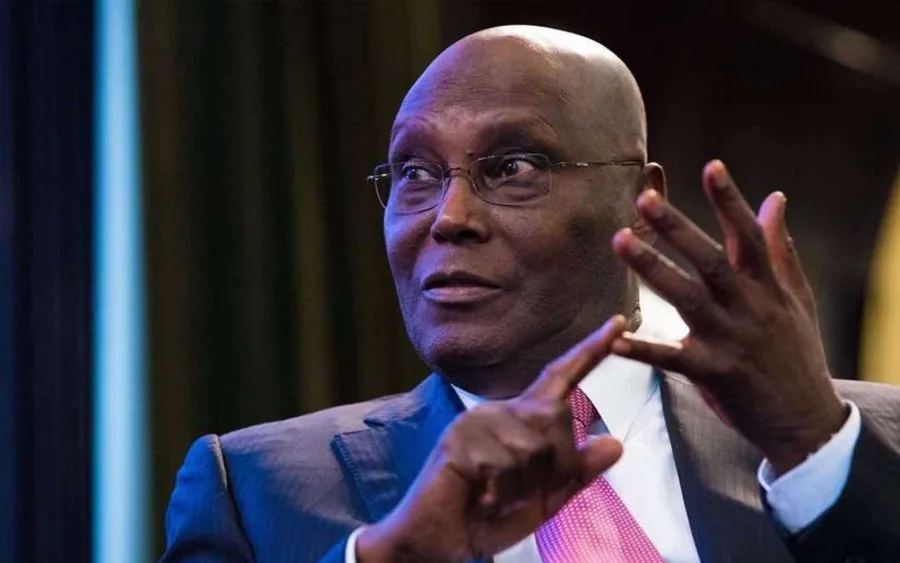
Former Vice President Atiku Abubakar has strongly criticised President Bola Tinubu over recent comments comparing Nigeria’s petrol prices with those of other African countries, saying such comparisons fail to reflect the harsh economic reality faced by ordinary Nigerians.
In a statement issued in Abuja by his media aide, Phrank Shaibu, Atiku argued that while petrol may appear cheaper in Nigeria than in countries like Kenya and South Africa, the overall cost of living and the income levels of citizens tell a different story.
The statement came in response to remarks made by President Tinubu during a recent visit to Bayelsa State, where he urged Nigerians to appreciate the fact that fuel prices in the country are lower than in some other African nations. The President acknowledged that Nigerians are facing hardship due to rising costs but assured citizens that his administration is working on measures to support vulnerable groups.
However, Atiku dismissed the comparison as misleading and incomplete, stressing that fuel price alone cannot be used to measure economic wellbeing.
“It is both curious and troubling that the President would isolate fuel prices as a metric of economic comfort,” Atiku said. “This ignores more important factors such as purchasing power, income levels, and the general cost of living.”
According to Atiku, focusing only on petrol prices without considering how much people earn and what they spend daily creates a false picture of the economy. He warned that such selective comparisons may either show a misunderstanding of the situation or an attempt to shift attention away from deeper economic challenges.
Nigeria has in recent years faced rising inflation, a weakening currency, and increasing cost of basic goods and services. Since the removal of fuel subsidy in 2023, petrol prices have risen sharply, leading to higher transport fares and increased prices of food and other essentials.
While the government has defended the subsidy removal as necessary to save public funds and encourage investment, many Nigerians say their living conditions have worsened.
Atiku pointed out that even if petrol is cheaper in Nigeria, citizens are still worse off because their incomes are significantly lower than those in comparable countries.
He cited economic data to support his argument, noting that Kenya’s GDP per capita is nearly double that of Nigeria. This means that, on average, a Kenyan citizen earns more than a Nigerian.
He also compared minimum wages, stating that a worker in Nairobi earns the equivalent of about ₦170,000 per month, while Nigeria’s minimum wage stands at about ₦70,000.
“In effect, while a Kenyan earns more and pays more, a Nigerian earns far less and is forced to survive under crushing economic pressure,” Atiku said.
For example, even if petrol is cheaper in Nigeria, a person earning a low salary may still find it difficult to afford transportation and other basic needs. On the other hand, someone earning a higher salary in another country may cope better despite higher fuel prices.
Atiku stressed this point, saying that Nigerians are currently facing one of the toughest economic periods in recent history.
“The implication is clear: affordability is not defined by price alone, but by the relationship between income and expenditure,” he said. “On this measure, Nigerians have never had it worse.”
The former Vice President also criticised Nigeria’s wage structure, arguing that it does not reflect the realities of different regions and economic conditions. He suggested that without proper adjustments, many workers will continue to struggle despite government policies.
The exchange between Atiku and President Tinubu reflects a broader national debate about the state of the economy and the impact of recent reforms.
Since assuming office, Tinubu has introduced several policies aimed at stabilising the economy, including the removal of fuel subsidy and efforts to unify exchange rates. While these steps have been praised by some economists as necessary reforms, they have also led to short-term hardship for many citizens.
Food prices have risen sharply, transport costs have increased, and many families say they are finding it difficult to meet basic needs. Small businesses have also been affected, as higher operating costs reduce profits and limit growth.
The government has responded by introducing palliative measures, including cash transfers and support programmes for vulnerable households. However, critics argue that these measures have not been enough to ease the burden.
Atiku said it is important for leaders to show empathy and fully understand the situation of the people.
“It is deeply disappointing that at a time when citizens expect empathy, clarity, and decisive leadership, the President has chosen the path of statistical convenience,” he said.
He warned that relying on selective comparisons could make the government appear disconnected from the realities faced by ordinary Nigerians.
“A government that relies on selective comparisons while its citizens grapple with rising poverty, inflation, and declining living standards risks appearing not only out of touch, but indifferent,” he added.
For many Nigerians, however, the debate goes beyond politics. The real concern is the daily struggle to survive in an economy where prices keep rising while incomes remain low.
As discussions continue, experts say the focus should remain on practical solutions that improve living conditions, increase incomes, and reduce the cost of essential goods.
They also stress the need for clear communication from government officials, so that citizens can better understand policies and their expected impact.
For now, the issue of fuel prices and cost of living remains a major topic across the country, with many Nigerians watching closely to see how the government responds in the coming months.