
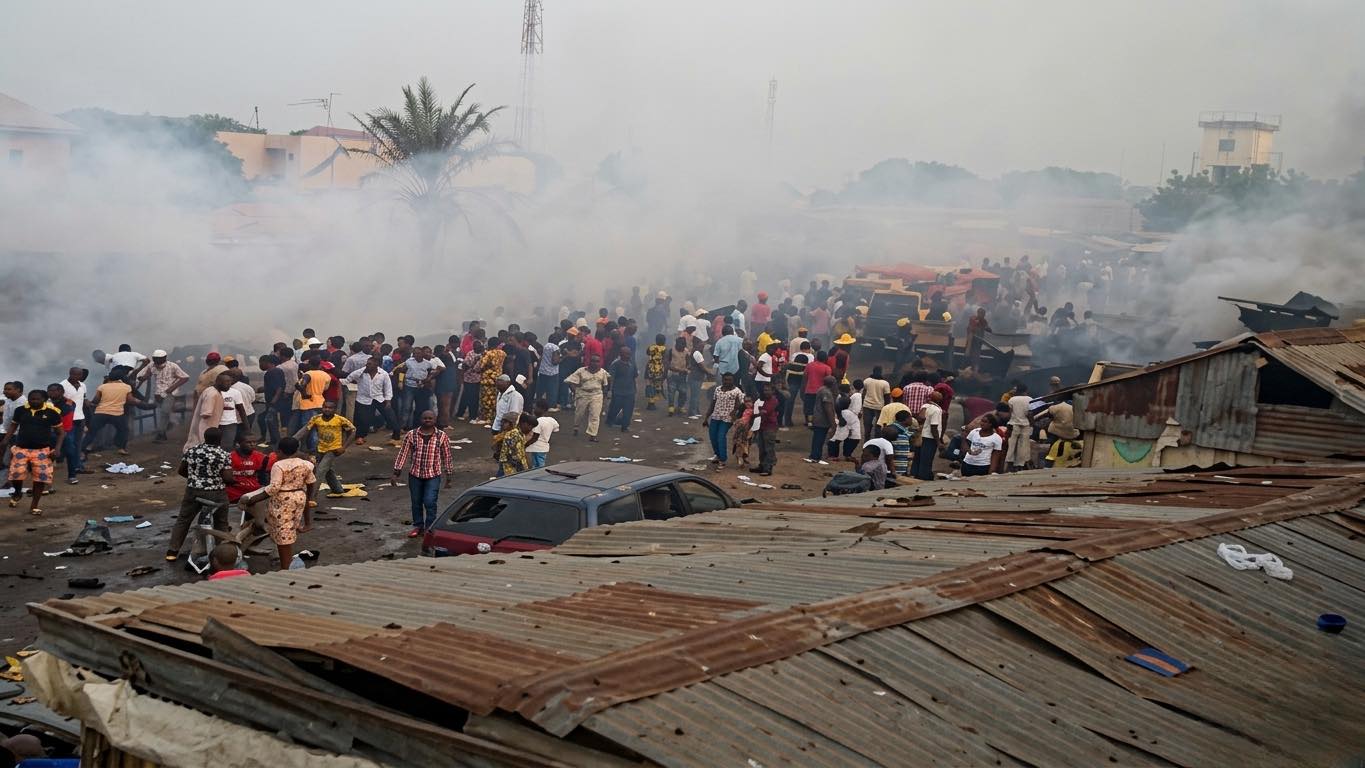
No fewer than 30 people are feared dead after a military airstrike hit a busy weekly market in Jilli village, a border community between Borno and Yobe states, on Saturday evening. The tragic incident has left residents in shock and raised fresh concerns about the safety of civilians in areas affected by the long-running insurgency in Nigeria’s North-East.
The airstrike reportedly occurred around 4:00 p.m. at Jilli Market, a popular trading centre located between Gubio in Borno State and Geidam in Yobe State. At the time of the attack, the market was full of traders, buyers and transporters who had gathered for their usual weekend business.
Eyewitnesses said several explosions rocked the area, sending people running in different directions. Many were unable to escape as bombs hit parts of the crowded market.
One witness, who spoke to local sources, said the number of casualties could be far higher than initial estimates. “I counted 56 corpses myself, and more bodies are still being recovered,” he said. Other residents also described scenes of confusion, fear and destruction, as injured victims cried for help and others searched for missing relatives.
The weekly Jilli Market is known to attract traders from many surrounding communities, including Gubio, Chiweram, Benisheikh, Gurokayeya and Geidam. It serves as an important meeting point for farmers, livestock sellers and small business owners in the region. Because of this, the market is often crowded, especially on weekends.
Sources said the airstrike may have been aimed at suspected Boko Haram insurgents believed to be operating in the area. However, the bombs reportedly missed their intended targets and instead hit the civilian market, leading to heavy casualties.
As of Sunday, there was no official statement from the Nigerian Air Force confirming details of the operation. However, the Special Adviser to the Yobe State Governor on Security Matters, Brigadier General Abdulsalam Dahiru (retd.), confirmed that an incident had taken place. He clarified that Jilli village falls within Gubio Local Government Area of Borno State, even though it lies close to the Yobe border.
The North-East region of Nigeria has faced over a decade of conflict due to the Boko Haram insurgency. The militant group has carried out attacks on villages, markets, schools and places of worship, leading to the loss of thousands of lives and the displacement of millions of people.
In response, the Nigerian military has continued to carry out air and ground operations to target insurgent camps and fighters. While these operations have recorded some successes, there have also been reports in the past of accidental strikes affecting civilians.
Incidents like the one in Jilli have raised serious concerns among residents and human rights groups about the need for better intelligence and more careful planning in military operations, especially in areas where civilians gather.
Local residents say the latest tragedy has deepened fear in communities that are already struggling with insecurity. Many are now worried about visiting markets or attending large gatherings, which are essential for their daily survival.
“This market is where we come to buy food and sell our goods. If it is no longer safe, how will we survive?” one trader asked.
Community leaders are calling on the government and the military to investigate the incident and provide support to victims and their families. There are also demands for compensation for those who lost loved ones or property in the attack.
As rescue efforts continue, many families are still searching for missing relatives. The full number of casualties may not be known until all bodies are recovered and the injured are accounted for.
The incident has once again highlighted the difficult balance between security operations and civilian safety in Nigeria’s conflict zones. For the people of Jilli and surrounding communities, Saturday’s airstrike is a painful reminder of the risks they face daily.