
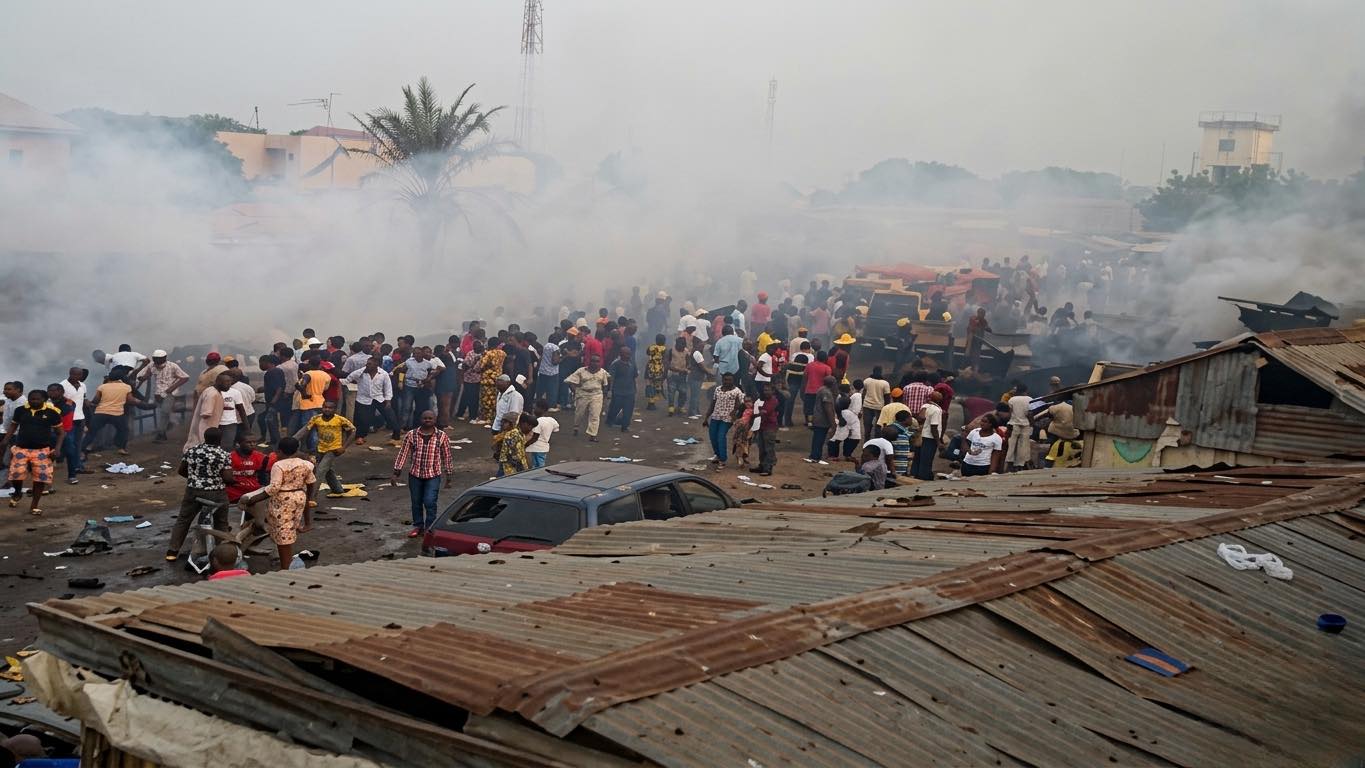
The Nigerian military has defended its recent airstrike on Jilli village market near the Borno–Yobe border, insisting that the location was a known terrorist enclave, even as reports of rising civilian casualties continue to spark public anger and concern.
The strike, carried out on Saturday under Operation Hadin Kai, has drawn reactions from state authorities, local communities, and human rights groups. While the military maintains that the operation was based on credible intelligence, other accounts suggest that many civilians, including traders, may have been caught in the attack.
Local sources initially put the death toll at over 40 civilians. However, other reports indicate that the number could be much higher, reflecting ongoing confusion and the difficulty in verifying figures from remote conflict areas.
Despite the growing backlash, the military has stood by its decision, describing Jilli as a key logistics hub and meeting point for fighters of the Islamic State West Africa Province (ISWAP), a faction of Boko Haram that has remained active in the North-East.
In a statement issued on Sunday, the Media Information Officer of the North-East Joint Task Force, Operation Hadin Kai, Lt. Col. Sanni Uba, said the strike followed weeks of surveillance and intelligence gathering.
According to him, the Air Component of the operation carried out a “carefully planned and intelligence-driven” mission targeting what it described as a terrorist enclave near the abandoned village of Jilli in Gubio Local Government Area of Borno State.
He explained that the Bindul–Jilli axis has long been identified by security agencies as a major corridor for terrorist movement, where fighters, logistics suppliers, and collaborators often gather.
“The operation followed sustained intelligence, surveillance, and reconnaissance missions which tracked the movement of suspected terrorists, including motorcycles and gun trucks, converging on the area,” he said.
Military authorities also linked the strike to recent attacks on troops in the region. In January 2026, an improvised explosive device (IED) attack along the Bindul road reportedly killed eight soldiers and injured several others. More recently, coordinated attacks were recorded in Ngamdu and Benisheik, which the military said were supported by the same network operating around Jilli.
In response to these incidents, the military said it increased aerial surveillance and intelligence gathering in the area. On the day of the strike, officials reported observing multiple motorcycles and vehicles moving towards Jilli, which they believed were carrying insurgents and supplies.
“These movements were confirmed by credible human intelligence sources,” Uba said, adding that a thorough targeting process was carried out before the strike was approved.
He noted that the airstrike was executed after final validation, with surveillance platforms monitoring the operation in real time to assess the outcome.
According to the military, the strike successfully destroyed the targeted location, killing several suspected terrorists and destroying their vehicles. Surviving fighters were said to have fled in different directions.
The military further claimed that intelligence reports showed the group was preparing for coordinated attacks on troop locations in the Gubio area, and that the airstrike disrupted those plans.
“This decisive action has significantly weakened the operational capability of the terrorists,” Uba said.
He also revealed that a suspected logistics courier identified as “Turja Bulu” was arrested in Ngamdu shortly after the strike. According to him, the suspect confessed to participating in a recent attack in Benisheik and was allegedly transporting supplies from Jilli to other insurgent groups in the Magumeri–Gubio axis.
The military used the opportunity to restate its ban on the use of motorcycles in parts of the North-East, especially in Borno and Yobe states. Authorities say insurgents frequently use motorcycles to move quickly, transport weapons, and carry out attacks.
“Any such movements in restricted areas are treated seriously,” Uba warned.
However, despite the military’s explanation, concerns remain high over reports that civilians were among those affected.
The Yobe State Emergency Management Agency confirmed that some victims of the strike were traders from Geidam Local Government Area who had travelled to Jilli for market activities.
In a statement, the agency said it had received reports of casualties involving residents from Yobe State and had deployed emergency teams to assess the situation and support victims.
“The incident reportedly affected traders from Geidam who were at the Jilli Saturday Market,” the statement said.
The agency added that it was working with security officials and health authorities to determine the full extent of the damage and provide assistance to those affected.
Also speaking on the situation, the Special Adviser on Security Matters in Yobe State, Brigadier-General Dahiru Abdulsalam (retd.), confirmed that injured victims had been evacuated to hospitals and were responding to treatment.
The incident has once again highlighted the difficult situation faced by communities in Nigeria’s North-East, where years of insurgency have made daily life uncertain.
Borno State, in particular, has been at the centre of the Boko Haram conflict for over a decade. Thousands of people have been killed, and millions displaced, with many forced to rely on aid or return to fragile communities under military protection.
Markets like Jilli play an important role in the lives of local residents, providing access to food and income. However, such locations have also been identified by security agencies as points where insurgents obtain supplies.
This has led to repeated restrictions, including the closure of some markets and limits on movement. Despite these measures, economic hardship often forces people to continue trading in risky areas.
The latest incident has raised fresh questions about how to balance military operations with the need to protect innocent lives.
As investigations and assessments continue, many Nigerians are calling for greater transparency and improved coordination between the military and local communities.
For now, the people of Borno and neighbouring states remain caught between the need for security and the struggle to survive in a region still dealing with the long effects of insurgency.