
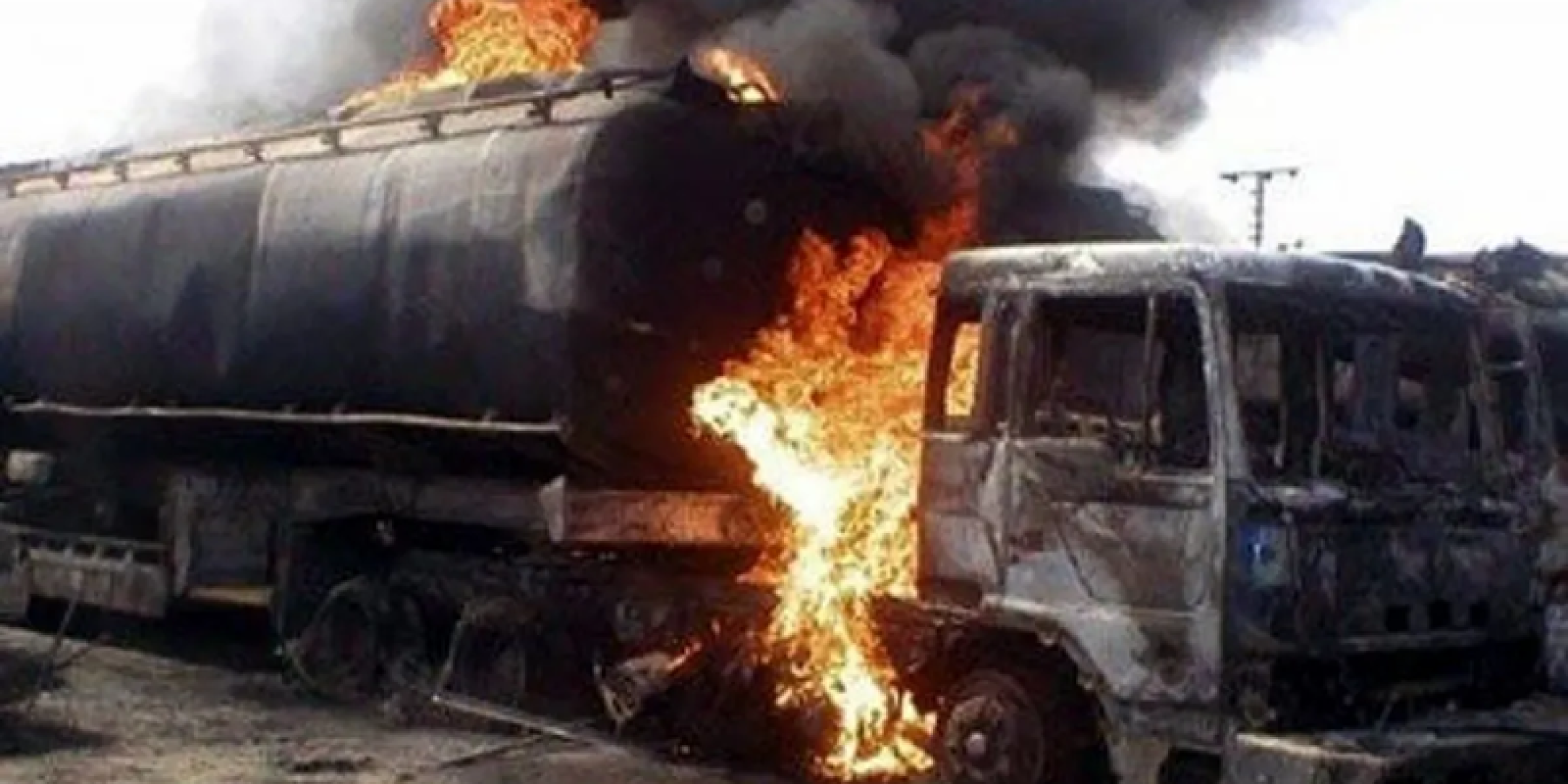
A fuel-laden tanker has exploded in Jigawa State, just weeks after a similar incident in Yobe claimed the lives of 170 people.
The explosion occurred at the Jigawa-Kano border, specifically in the Tsaida, Kwanar Kalle area, near Gamoji village along Maiduri Road.
The incident, which occurred on November 12, 2024, at approximately 10:43 a.m., has raised serious concerns about the dangers posed by fuel tankers and the increasing number of such accidents in northern Nigeria.
The Federal Fire Service in Jigawa was quick to respond to the emergency. Aliyu M.A., the public relations officer for the Federal Fire Service in Jigawa State, confirmed the explosion and provided details of the timely response.
“We received a distress call at about 10:43 a.m. from the Kuho Village Head, Zubairu Ahmad, regarding a tanker accident at Tsaida, Kwanar Kalle, near Gamoji village,” Aliyu said.
He explained that the fire service immediately dispatched its personnel to the scene, arriving just seven minutes later, at 10:50 a.m.
“The fire was contained and brought under control within a short time,” Aliyu added, emphasizing the swift action that prevented the situation from escalating further.
This explosion follows a horrific tragedy in Yobe State, where a fuel tanker explosion claimed over 170 lives just weeks earlier. On October 15, 2024, a petrol-laden truck traveling from Kano to Nguru in Yobe exploded in Majia, Taura Local Government Area. The blast caused widespread devastation, and the death toll has been reported as high as 170.
Reports indicated that at least 105 bodies were recovered immediately after the October explosion, a devastating reminder of the high risks associated with transporting fuel across Nigeria.
The incident in Yobe has shaken the nation, highlighting the dangers posed by the transportation of petroleum products. Many residents and observers have raised concerns about the safety measures in place for handling such volatile materials.
Aliyu’s statement about the Jigawa explosion has sparked a renewed discussion on the need for better regulation of fuel tanker movements and improved safety protocols.
“We are thankful that the situation in Jigawa did not escalate further,” said a local resident, Ibrahim Mohammed.
“However, these accidents are becoming too frequent. We need stronger safety measures to protect our communities.”
Experts have long warned about the risks of fuel tanker explosions in Nigeria, a country that has experienced a series of deadly incidents involving fuel trucks.
In most cases, the explosions occur when tankers are involved in accidents, often spilling flammable liquid onto the roads and causing devastating fires.
The lack of adequate infrastructure for transporting fuel safely has been identified as a key factor contributing to the frequency of such incidents.
Authorities are now under pressure to implement more stringent safety measures to prevent further disasters. The recent explosions in Jigawa and Yobe serve as stark reminders of the potential dangers of fuel tanker accidents.
The Nigerian government and local authorities have faced increasing calls to address the safety standards for transporting hazardous materials across the country.
While the Federal Fire Service in Jigawa acted quickly to control the situation, concerns remain about the adequacy of the response system and the prevention of future incidents.