
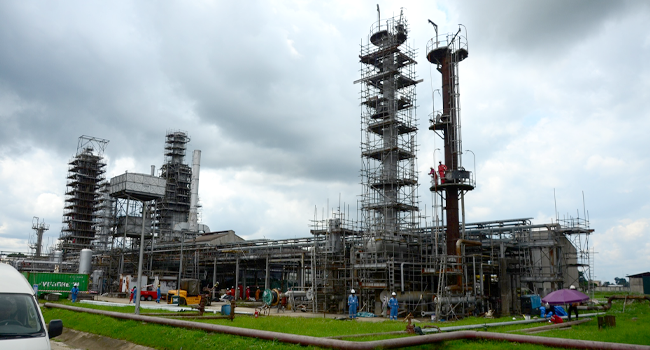
The Presidency has criticized former President Olusegun Obasanjo following the resumption of operations at the Port Harcourt refinery.
This development comes amid ongoing debates about Nigeria’s ability to revive its struggling refineries.
Obasanjo’s Doubts on Refinery Success
In 2023, Obasanjo cast doubt on the viability of Nigeria’s government-controlled refineries.
He expressed skepticism about President Bola Tinubu’s plans to restore full operations at the refineries by December 2024.
He claimed that information from Shell Petroleum Development Company (SPDC) suggested that efforts to make the refineries work would likely fail.
“I told the person the refineries would not work,” Obasanjo said, referencing conversations he had during his presidency. “Today, we are still where we were.”
Presidency’s Sharp Rebuttal
Responding to these comments, Bayo Onanuga, Special Adviser to the President on Information and Strategy, delivered a pointed response.
Onanuga took to X (formerly Twitter) to counter Obasanjo’s assertions.
In a post titled, Never Say Never: A Lesson for All Mortals, Onanuga emphasized that no one has the authority to declare what is possible or not.
“Only Almighty God possesses the divine authority to declare what is achievable or not,” Onanuga wrote.
He highlighted the perseverance and determination that led to the refinery’s reopening despite widespread doubt.
A Lesson in Determination and Faith
Onanuga framed the refinery’s success as a powerful lesson in resilience and collective effort.
“This serves as a profound reminder to all of humanity, including Nigeria’s former leaders, that perseverance and faith can overcome even the harshest challenges,” he stated.
According to him, doubts often create limits that hinder progress.
“Let us learn from this moment that limits are often set by our own doubts,” Onanuga added.
Port Harcourt Refinery’s New Chapter
The resumption of operations at the Port Harcourt refinery marks a significant milestone in Nigeria’s energy sector.
For years, the country’s refineries have struggled with inefficiency, corruption, and lack of maintenance.
The Port Harcourt refinery, in particular, has been a symbol of these challenges.
Now, with trucks loading Premium Motor Spirit (PMS) for distribution, there is renewed hope that the refinery can meet local demand.
This could reduce Nigeria’s reliance on fuel imports and ease the pressure on the economy.
Skepticism and Optimism
Obasanjo’s comments reflect a broader skepticism about government-controlled refineries in Nigeria.
Many critics believe that privatization is the only path to efficiency and profitability.
However, Onanuga’s response suggests a deep belief in the government’s ability to turn things around.
He framed the refinery’s reopening as a victory for those who believed in the project.
“This is a testament to what we can achieve with collective effort and unwavering resolve,” Onanuga concluded.
A Broader Debate on Nigeria’s Refineries
The debate over Nigeria’s refineries is not new.
Obasanjo himself attempted to privatize some refineries during his presidency, but the efforts faced significant pushback.
Many Nigerians believe that government control breeds inefficiency and corruption.
Yet, others argue that with proper management and investment, the refineries can become profitable assets.
Tinubu’s Energy Reforms Under Scrutiny
President Tinubu’s administration has placed a strong emphasis on energy sector reforms.
The plan to revive Nigeria’s refineries is a key part of his economic agenda.
Critics remain cautious, pointing to past failures and ongoing challenges.
However, the Port Harcourt refinery’s progress could signal a shift in fortunes.
If successful, it could pave the way for similar outcomes at other refineries.
Hope for a Self-Sufficient Energy Sector
Nigeria, Africa’s largest oil producer, continues to import the bulk of its refined fuel.
This paradox has strained the economy and led to frequent fuel shortages.
The reopening of the Port Harcourt refinery is seen as a potential game-changer.
With local production ramping up, there is hope for improved energy security and reduced import dependency.