
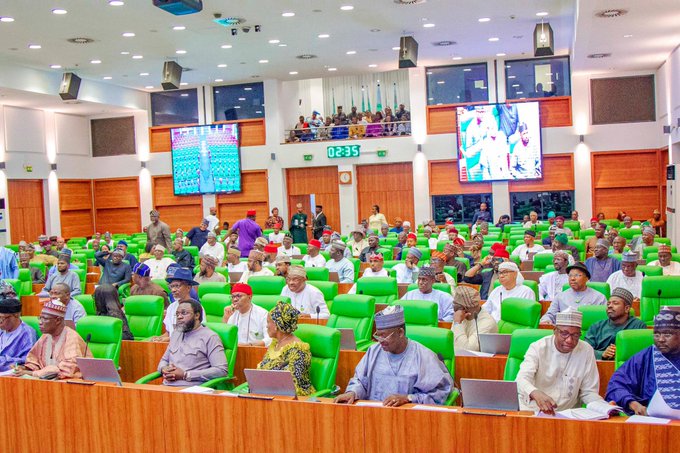
The House of Representatives will hold a crucial national dialogue on local government autonomy on Monday, December 2, 2024, in Abuja.
This announcement was made by the Deputy Speaker, Hon. Benjamin Kalu, during a briefing with the Special Ad-hoc Committee on Constitution Review.
The dialogue aims to gather ideas and strategies to strengthen local government administration in Nigeria.
“This event is a vital platform to consolidate ideas and strategies for achieving a robust local government framework,” Kalu said.
He emphasized the importance of local government autonomy in Nigeria’s constitutional review process.
According to Kalu, the dialogue will set the tone for deeper discussions on Nigeria’s federal structure and democracy.
The national dialogue is part of a broader agenda by the House of Representatives to amend the 1999 Constitution.
Kalu also disclosed that the committee would hold public engagements on tax reforms and political party frameworks as part of the constitutional review.
“As we continue this historic undertaking, let us remain guided by our shared commitment to strengthening our democracy,” Kalu said.
The Deputy Speaker underscored the need for collective efforts in achieving a reformed and inclusive local government system.
He called on lawmakers to mobilize stakeholders across the country to ensure robust participation in the dialogue.
Kalu further announced that zonal public hearings would commence in January 2025.
These hearings will take place in 12 states representing Nigeria’s six geopolitical zones.
The selected states include Gombe and Borno in the North East; Nasarawa and Niger in the North Central; Kaduna and Sokoto in the North West.
In the South East, the hearings will be held in Enugu and Imo, while Bayelsa and Cross River will represent the South-South.
For the South West, Lagos and Ondo will host the engagements.
Kalu stressed the importance of inclusivity in these engagements.
He urged committee members to collaborate with state governors, caucuses, and political stakeholders to ensure full participation.
“Those who are from these states, engage your colleagues in the House, engage your governors, and members of your House of Assembly,” he said.
He directed committee members to draw up comprehensive plans for the engagements and submit them for integration into the overall strategy.
Kalu also highlighted the importance of creating a stakeholder list that includes diverse groups from every part of Nigeria.
“The stakeholder engagement list must be drawn to cut across all relevant stakeholders in the country,” Kalu said.
He warned against discrimination based on religion, tribe, or political affiliation in the participation process.
“No religious biases. No tribal discrimination. Everyone who is a Nigerian should be in that room,” he emphasized.
Kalu urged participants to present their opinions on the 161 areas of the constitution currently under review.
He said this would ensure the process is efficient and comprehensive.
“We don’t want to spend too much time. It’s a lot of work. It’s starting in January,” Kalu added.
The Deputy Speaker’s statements reflect the urgency and importance of the upcoming dialogue and public hearings.
Kalu’s call for inclusivity signals a commitment to ensuring that all Nigerians have a voice in shaping the country’s constitutional framework.
The issue of local government autonomy has long been a contentious topic in Nigeria.
Many stakeholders believe that granting more independence to local governments will enhance grassroots development.
However, others argue that it could lead to increased bureaucracy and inefficiency.
The forthcoming dialogue is expected to address these concerns and chart a path forward.
Political analysts have praised the move, describing it as a step towards deepening democracy in Nigeria.
Observers also note that the dialogue comes at a critical time when the country is facing various governance challenges.
The House of Representatives’ commitment to constitutional reform signals a renewed focus on governance and accountability.
Kalu’s emphasis on stakeholder engagement highlights the importance of public input in the process.
The dialogue and subsequent public hearings are expected to generate significant interest from Nigerians.
Kalu’s leadership in the constitutional review process has been praised for its inclusivity and strategic focus.
The Deputy Speaker’s insistence on broad participation underscores the House’s commitment to democratic principles.
As the nation prepares for the national dialogue on December 2, all eyes will be on Abuja.
The outcome of the discussions could shape the future of local governance in Nigeria.
For many Nigerians, this is a long-awaited opportunity to influence constitutional reforms.
Kalu’s call for unity and collaboration resonates with the broader goals of national development.
The journey towards local government autonomy is a critical aspect of Nigeria’s democratic evolution.
Stakeholders across the country are encouraged to participate actively in the dialogue and public hearings.
The House of Representatives’ efforts to engage diverse voices reflect a commitment to inclusive governance.
As the dialogue approaches, the nation awaits with anticipation, hopeful that meaningful reforms will emerge.