
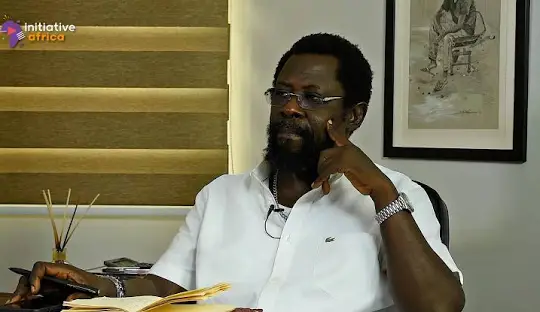
In a scathing response to the recent arrest and alleged harassment of Dele Farotimi, Laolu Akande has condemned the actions of legal giant Chief Afe Babalola.
The controversy centers around Babalola’s decision to pursue criminal defamation charges against Farotimi, which Akande argues was an inappropriate and troubling move.
In a public statement, Akande described Babalola’s actions as “harassment” and called for the dispute to have been handled through civil means rather than criminal prosecution.
“This is not inspiring at all. The matter ought to have been pursued via civil means,” Akande said, citing legal precedence that encourages non-criminal remedies for defamation.
Akande referenced the Nigerian Court of Appeal’s 1982 ruling in the case of Nwankwo vs. State, which emphasized that individuals should not use state instruments to settle personal grievances.
Controversy Over Use of Police Power
Akande’s remarks were particularly pointed regarding the alleged role of Babalola in mobilizing police officers to arrest Farotimi, specifically highlighting the use of the Nigerian Police Force brought from Ekiti to Lagos.
“The use of the Nigerian Police Force, mobilised from Ekiti to Lagos so as to escape from the fact that Lagos State has already decriminalized defamation is so inelegant,” Akande noted.
This reference to the police’s swift action has sparked speculation about behind-the-scenes maneuvers, further complicating the public perception of Babalola’s conduct.
“I truly find it disturbing to discover that our dear Pa. Afe may be behind that harassment of Farotimi—something that we have all seen on video,” Akande added, referring to footage of Farotimi’s arrest, which has circulated widely on social media.
The Legal and Public Backlash
Farotimi, a vocal critic and public figure, had previously engaged in statements against Babalola, which may have led to the legal dispute.
However, Akande suggests that Babalola, known for his extensive legal career, should have approached the situation with more decorum and consideration for the optics of using the police in such a manner.
“The natural assumption, considering the speed and extent to which the police moved against Farotimi, is that there were some behind-the-scenes maneuvers to warrant that,” Akande wrote, alluding to possible political or personal influence.
The public has reacted strongly to the unfolding drama, with many questioning the appropriateness of criminal defamation in a state like Lagos, where such offenses were decriminalized years ago.
Afe Babalola’s Right to Seek Redress
While Akande’s criticism is clear, he acknowledged Babalola’s right to seek redress for any defamation.
“It is his choice to exercise this right in the manner we have all seen, but it is deeply unsettling,” Akande stated, adding that the choice to resort to criminal action instead of civil action left many uncomfortable.
Babalola, a Senior Advocate of Nigeria (SAN), has yet to respond publicly to the allegations made by Akande. However, the public’s attention remains firmly fixed on this legal confrontation, and the broader implications of how defamation cases are handled in Nigeria.
A Tense Moment for Nigerian Legal Ethics
The saga between Babalola and Farotimi has stirred a conversation about legal ethics, the role of the police in personal disputes, and the influence of power dynamics in Nigerian society.
As the situation develops, it has raised concerns about the potential misuse of authority by influential individuals, especially when the instruments of state are involved in what many view as a personal matter.