
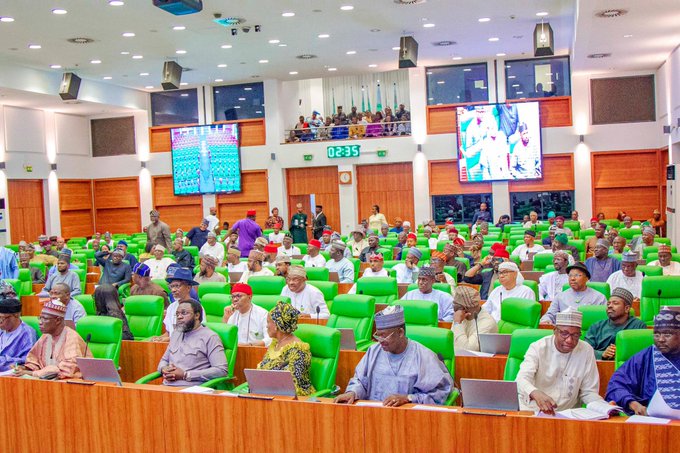
Hon. Ajang Alfred Ilia, a representative of Jos South/Jos East Federal Constituency in Plateau State, has defected from the Labour Party to the All Progressives Congress (APC).
Ilia announced his decision in a letter read by the Speaker of the House of Representatives, Tajudeen Abbas, during plenary.
The lawmaker cited his alignment with President Bola Ahmed Tinubu’s national development agenda as the main reason for his switch to the ruling party.
This defection marks yet another blow to the Labour Party, which has seen six of its members in the House of Representatives cross over to the APC within one week.
Observers are now questioning the stability of the Labour Party, which made significant gains in the 2023 elections but appears to be losing its grip on some of its lawmakers.
Ajang Ilia’s defection follows closely on the heels of five others, including Daniel Chollom, who represents Barkin Ladi/Riyom Federal Constituency, also in Plateau State.
Chollom’s move, announced just days ago, is now being seen as part of a broader trend of Labour Party members abandoning the opposition platform.
Last Thursday, four lawmakers from different states also left the Labour Party to join the APC.
They include Tochukwu Chinedu Okere, Donatus Matthew, Akiba Bassey, and Esosa Iyawe.
This wave of defections has rattled political observers and sparked debates about the Labour Party’s ability to retain its influence in the National Assembly.
A political analyst described the situation as “a wake-up call” for the Labour Party, which is struggling to maintain cohesion in the face of mounting defections.
“The defections reflect deeper internal problems within the Labour Party,” said the analyst.
Many believe that the ruling APC is capitalizing on its majority status and influence to lure opposition lawmakers into its fold.
For Hon. Ajang Ilia, his choice to switch allegiance appears rooted in a desire to align with what he described as the “development vision” of President Tinubu’s administration.
In his letter, Ilia emphasized the need to work with the government to drive progress for his constituents and the nation.
Some critics, however, argue that the defectors may have other motives, including personal political survival and access to opportunities within the ruling party.
A Labour Party supporter expressed disappointment over the defections, accusing the lawmakers of betraying the party’s ideology.
“People voted for them because of the Labour Party’s promise of a new direction. Now they’re jumping ship for personal gain,” the supporter lamented.
The Labour Party, which rose to prominence during the 2023 general elections under the leadership of its presidential candidate, Peter Obi, is facing one of its toughest challenges yet.
Despite its strong performance in the polls, the party appears to be losing ground in the National Assembly.
This raises concerns about its ability to consolidate its gains and maintain a unified opposition to the APC’s dominance.
The APC, on the other hand, seems to be solidifying its position by attracting lawmakers from smaller opposition parties.
For the ruling party, defections like these are a win that strengthens its majority in the House of Representatives.
Speaker Tajudeen Abbas, who read Ilia’s defection letter, did not comment on the issue during plenary.
The Speaker has overseen the reading of multiple defection letters in recent days, reflecting the shifting dynamics within the legislative arm of government.
As more lawmakers leave the Labour Party, questions are being raised about whether the party’s leadership can address the underlying issues driving its members away.
Critics suggest that the party must reassess its strategy and improve internal cohesion to avoid further losses.
For now, the defections highlight the challenges of maintaining loyalty and discipline in Nigeria’s highly fluid political landscape.