
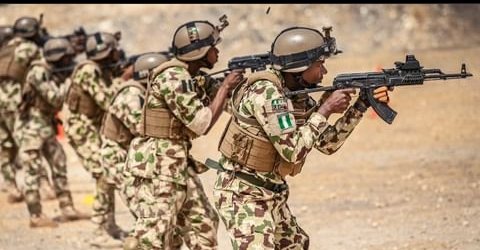
The Nigerian Army has announced that it will begin a systematic rotation of its frontline troops starting in January 2025. This decision aims to address the growing concern of troop fatigue in the ongoing fight against terrorism, banditry, and other criminal activities across the country.
The Chief of Army Staff, Lieutenant-General Olufemi Oluyede, revealed the plan during the opening of the 2024 Chief of Army Staff (COAS) Annual Conference in Abuja on Monday. Oluyede emphasized that the move is necessary to maintain the physical and mental well-being of soldiers, ensuring they are not overstretched in the field.
“The well-being of our troops is a priority,” Oluyede said. “We are committed to relieving personnel who have overstayed in the field and introducing fresh forces into our operational theatres.”
The new rotation plan is expected to improve operational effectiveness, maintain morale, and enhance the army’s overall performance in counter-insurgency operations. Oluyede also highlighted the importance of innovation and strategic thinking in the ongoing fight against criminal elements.
A New Approach to Counter-Insurgency
The Nigerian Army has been engaged in multiple operations across the country, including campaigns against Boko Haram in the North East and armed bandits in the North West. However, the prolonged nature of these operations has raised concerns about the fatigue and mental health of troops on the front lines.
“We are increasing the tempo of our operations against terrorism, banditry, and kidnappings,” Oluyede stated. “Our goal is to continue pushing forward with greater determination and resilience.”
The army’s new approach involves not only kinetic actions, such as military offensives, but also non-kinetic efforts aimed at fostering cooperation with local communities. Oluyede emphasized the importance of intelligence sharing and community engagement to counter the influence of groups like the Lakurawa terror group in the North West.
“In the North West, Operation FASAN YAMMA is intensifying its efforts to dismantle the Lakurawa terror group’s networks,” Oluyede explained. “We are using enhanced intelligence gathering and rapid deployment of special forces to ensure we neutralize threats effectively.”
The Nigerian Army has been focusing its efforts on various regions of the country, including the North East, North West, North Central, South East, and South-South. Each of these regions has been grappling with different security challenges, ranging from terrorism to criminal gangs involved in kidnapping and oil theft.
Oluyede reported that large-scale ground offensives, supported by air and maritime forces, are actively disrupting criminal operations in the North East and North West. He also highlighted the importance of collaboration with other security agencies to contain threats in the North Central, South East, and South-South regions.
“The collaboration between the army and other security agencies has been effective in containing threats across the country,” he said. “We continue to rely on both kinetic and non-kinetic efforts to ensure lasting peace.”
One of the successes of these operations has been the large-scale surrender of terrorists, particularly in the North East and North West. According to Oluyede, this was made possible by a combination of military action and efforts to persuade insurgents to lay down their arms.
“We have seen significant surrenders of terrorists and the submission of a large cache of arms and ammunition,” Oluyede confirmed. “This success is a result of our comprehensive approach, which includes both military offensives and engagement with local communities.”
At the heart of the army’s renewed focus on operational success is strong leadership. Oluyede called on commanders at all levels to lead by example, maintain high levels of discipline, and inspire their troops to stay motivated despite the ongoing challenges.
“Commanders must be actively engaged with their troops,” Oluyede stressed. “They must set a good example, show resilience, and ensure that their soldiers are ready to tackle any challenge head-on.”
The army chief also reiterated the importance of creating an environment that promotes both administrative and operational success. This includes ensuring that soldiers have the resources, support, and leadership they need to carry out their missions effectively.
“Our determination to protect Nigeria’s territorial integrity must be stronger than ever,” Oluyede said. “We will continue to scale up our operations and maintain our commitment to defending the safety and well-being of every Nigerian citizen.”