
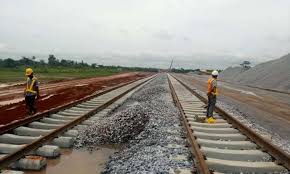
In the face of mounting diplomatic tensions between Nigeria and Niger Republic, the Nigerian government has made it clear that the Kano-Maradi rail project will continue as planned, undeterred by the ongoing row. This reassurance comes despite rising political hostilities between the two countries, a fallout from the military coup in Niger and its subsequent withdrawal from the Economic Community of West African States (ECOWAS).
In recent developments, Niger’s foreign minister, Bakary Yaou Sangare, summoned Nigeria’s chargé d’affaires, accusing the Nigerian government of fuelling efforts to destabilize the junta-led nation. This accusation is part of a broader fallout following Niger’s exit from ECOWAS, a regional bloc that Nigeria leads. The tension between the two countries escalated after ECOWAS, under President Bola Tinubu’s leadership, threatened military intervention to restore the ousted government of Mohamed Bazoum, who was overthrown by a military coup in June 2023.
The crisis within the Sahelian region has been further complicated by the simultaneous coups in Burkina Faso and Mali, both of which joined Niger in withdrawing from ECOWAS in January 2024. Despite calls from regional leaders for the junta to rejoin the bloc, Niger’s military government remains steadfast in its decision to remain outside of ECOWAS, even after the organization lifted sanctions and retracted its military threats.
Despite these diplomatic challenges, Nigeria’s Minister of Transportation, Senator Sa’idu Alkali, has reassured that the crucial Kano-Maradi rail project remains unaffected by the geopolitical rift. Alkali, speaking during a budget defense session in the National Assembly, provided an update on the project’s progress. “The project is ongoing and will be completed in due time,” Alkali said, reinforcing the government’s commitment to delivering the project, which aims to strengthen transportation links between Nigeria and Niger.
The minister’s update included a breakdown of the progress on the rail project, highlighting key achievements. “Over 100 kilometers of earthworks have been completed,” Alkali said. “We have constructed one railway bridge, 125 culverts, and three frame bridges. In addition, 57 kilometers of drainage systems have been developed.” With a substantial portion of the groundwork completed, the project is now 35% finished, Alkali noted, with further work slated for completion as part of the 2025 budget.
Portugal’s Ambassador to Nigeria, Paulo Santos, also offered insight into the progress of the project, noting that it is proceeding according to schedule. “The construction work is ongoing, and we expect the project to be completed by the end of next year,” Santos stated. The ambassador, whose country is home to the project’s contractor, revealed that the work is currently progressing in Dutse, located in Katsina State. Once completed, the rail line will span a distance of 400 kilometers, connecting Kano in Nigeria to Maradi in Niger.
The Kano-Maradi rail project is a major infrastructure initiative with a total cost of over $1.9 billion (approximately N400 billion). The Nigerian government is financing 15% of the project, while the remaining 85% is being funded through loans, which the government intends to repay over a 50-year period. The rail line will consist of 13 stations across three Nigerian states—Kano, Jigawa, and Katsina—and will extend across the border to Maradi, Niger, enhancing economic integration and transportation between the two countries.
The rail project forms a crucial part of Nigeria’s broader strategy to modernize its infrastructure and boost regional connectivity, especially in the northern states. By linking Kano, one of Nigeria’s commercial hubs, to Maradi, the rail project is expected to promote trade and ease the movement of goods and people between the two nations.
The federal government’s resolve to push forward with the project, despite the diplomatic tensions, is a clear message that Nigeria intends to prioritize its infrastructure development plans regardless of external political challenges. This commitment aligns with Nigeria’s long-term vision of improving transport systems, which are critical for economic growth and regional cooperation.
Furthermore, the project’s completion is expected to significantly enhance the movement of goods, improve regional commerce, and provide a much-needed alternative to road transport, which has often been plagued by poor infrastructure and security challenges. Local communities in northern Nigeria, particularly in Kano and Jigawa, are poised to benefit from the improved connectivity, with the potential for increased business activities and job creation during and after the construction phase.
The rail line’s extension into Niger is also a strategic move that aims to further solidify Nigeria’s position as a key player in the West African region. While tensions between Nigeria and Niger have brought diplomatic challenges, the rail project is a powerful example of how infrastructure development can transcend political disputes, fostering cooperation and enhancing bilateral relations through economic means.
Senator Alkali’s statements at the National Assembly underscored the importance of the project in realizing Nigeria’s vision for integrated infrastructure development. “With the 2025 budget, we will ensure that all the outstanding works at the Ministry of Transportation receive adequate attention,” he affirmed. This pledge highlights the government’s commitment to continuing its ambitious infrastructure agenda, even amid ongoing political and diplomatic challenges.
As Nigeria and Niger work through their political differences, the rail project stands as a symbol of the power of economic diplomacy, reinforcing the notion that infrastructure can play a pivotal role in fostering peace, stability, and prosperity in West Africa. The completion of the Kano-Maradi rail project could very well serve as a model for future cross-border transportation initiatives in the region.