
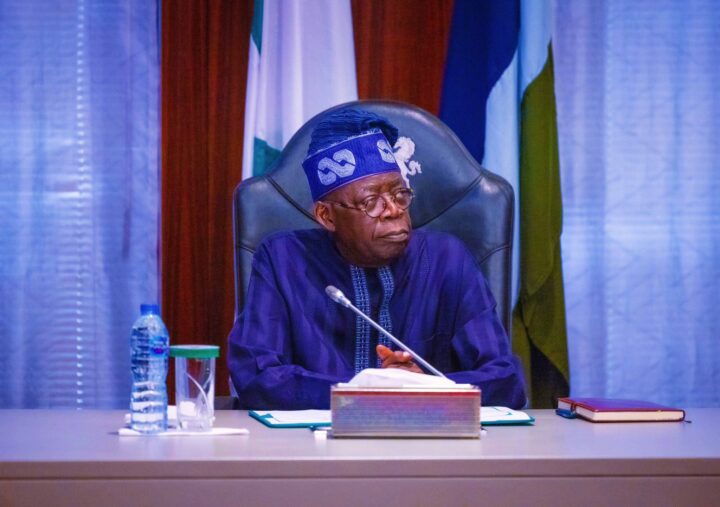
In a move that has sparked controversy, the Federal Government has approved the establishment of the Bola Ahmed Tinubu Federal Polytechnic in Gwarinpa, Abuja. This marks the fourth public institution in less than a year to bear the name of President Bola Ahmed Tinubu.
The decision has drawn sharp criticism from Nigerian civil society group BudGIT, with the co-founder, Oluseun Onigbinde, expressing concern over what he described as an “abuse of norms.” Onigbinde has questioned the reasoning behind renaming various public institutions after the President in such a short span of time.
The Renaming Trend
The most recent instance, reported on Tuesday by The Meteor, is the approval of the Bola Ahmed Tinubu Federal Polytechnic in Gwarinpa, Federal Capital Territory (FCT). The announcement follows a letter dated January 9, 2025, from the Minister of Education, Dr. Tunji Alausa, to the Minister of the Federal Capital Territory, Nyesom Wike. The letter outlined plans to establish a federal polytechnic in Abuja, in line with the Federal Government’s initiative to ensure that each state has at least one federal polytechnic.
Onigbinde, however, is calling for an end to what he sees as a troubling trend. “In less than a year, four public institutions have been named after President Bola Tinubu,” he said. “This abuse of norms is rooted in the sycophantic culture that has grown in recent times. The President should put a stop to this as he’s signaling a culture that’s highly unacceptable.”
Onigbinde’s remarks reflect a growing sentiment among critics who argue that the renaming of institutions is an attempt to further glorify the President and reinforce a personality cult. Many see this as a move that detracts from the importance of institutions and the broader goals they are meant to serve.
A Pattern of Renaming
The naming of the Bola Ahmed Tinubu Federal Polytechnic is not an isolated case. Earlier in 2024, other institutions and projects were also renamed after the President, further fueling the debate.
In May 2024, President Tinubu inaugurated the National Assembly Library and Resource Centre, which was named in his honor. This was followed by the naming of the Southern Parkway in Abuja, a major road that had been under construction for over a decade. The road was named after Tinubu by the FCT Minister, Nyesom Wike, who claimed the project was completed as part of the President’s “Renewed Hope Agenda.”
In another controversial move, in December 2024, the Nigerian Immigration Service named its Command and Control Centre after the President. The complex, now known as the Bola Ahmed Tinubu Technology Innovation Complex, was seen by many as another instance of the government naming key infrastructure after the President. These moves, according to critics, are part of a broader effort to build a legacy around the current administration, while possibly undermining the true purpose of these institutions.
A Divisive Issue
While some supporters of the President have praised these decisions, calling them a reflection of Tinubu’s leadership and influence, others view them as an unnecessary and excessive use of presidential power. Critics argue that public institutions and projects should be named based on merit and their contribution to national development, rather than being used to create a lasting personal tribute to any one individual.
BudGIT, a prominent civil society organization focused on budget and governance issues, has been vocal about its disapproval of such practices. According to the group, the renaming of these institutions is a clear indication of the growing trend of sycophantic behavior among government officials and institutions. Onigbinde’s statement reflects the concerns of many Nigerians who believe that the government’s actions are becoming increasingly centered around one individual rather than the collective good of the nation.
The Bigger Picture
This debate over the naming of public institutions is also seen as part of a larger conversation about governance, accountability, and transparency in Nigeria. In a country where public resources are often mismanaged, many Nigerians are questioning the priorities of the government. Instead of focusing on improving infrastructure, education, and healthcare, critics argue, the government is more interested in consolidating power and creating a legacy around the figure of President Tinubu.
The renaming of institutions and the ongoing celebration of the President’s leadership come at a time when Nigeria is grappling with significant economic challenges. From rising inflation to security issues, many Nigerians feel that the government’s focus should be on solving these pressing problems rather than on self-promotion.
At the heart of this criticism is a call for the government to focus on governance rather than political showmanship. For many, the renaming of public institutions reflects a misplaced sense of priority, where the President’s personal brand is being elevated over the needs of the country.
A Culture of Praise
The issue of renaming public institutions is not new in Nigeria, but the speed with which it has occurred under President Tinubu’s leadership has raised eyebrows. In the past, similar actions have been seen as a way to honor leaders for their contributions to the nation. However, the rapid pace at which this has been happening, coupled with the growing list of institutions bearing the President’s name, has led to accusations of a personality cult taking root within the government.
While it is not uncommon for public infrastructure projects to be named after sitting presidents or national figures, critics argue that the trend in recent months has been excessive. The concern is that such practices erode the trust in public institutions and promote a culture of adoration rather than accountability.
A Call for Reflection
In response to these concerns, it is clear that there is a need for reflection on the naming practices of public institutions. BudGIT and other civil society groups are calling for a return to naming institutions based on their contributions to national progress, rather than for the personal glorification of political figures. They argue that such practices are a distraction from the real issues facing Nigeria and do little to address the country’s numerous challenges.
As the debate continues, Nigerians are left to question whether the renaming of public institutions is a fitting tribute to the President or whether it is a misuse of power that will have long-lasting implications for the nation’s political and cultural landscape.