
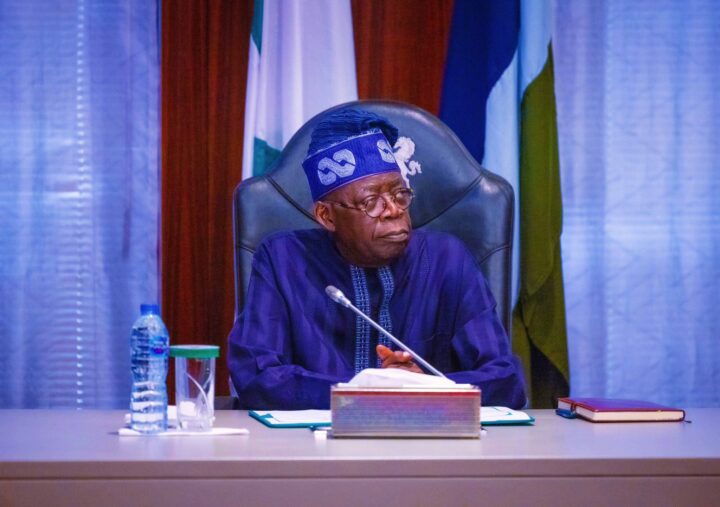
The Debt Management Office (DMO) has dismissed claims that Nigeria’s public debt under President Bola Ahmed Tinubu was ₦21 trillion, stating instead that the actual figure as of June 30, 2023, stood at a staggering ₦87.38 trillion.
This clarification, issued in a statement on Monday, aims to correct what the agency described as “misleading” reports circulating in the media. The DMO noted that the debt figure represents obligations not just of the Federal Government of Nigeria (FGN) but also of the 36 states and the Federal Capital Territory (FCT).
Public Debt Clarified
“As a matter of fact, the Total Public Debt Stock as at June 30, 2023, which was the first published debt data after President Bola Ahmed Tinubu assumed office (on May 29, 2023), was ₦87.38 trillion and not ₦21 trillion as reported in the media,” the statement read.
The agency further highlighted that the debt stock encompasses both external and domestic borrowings, providing a comprehensive picture of Nigeria’s fiscal obligations.
Misleading Reports Create Confusion
Recent publications in the media claimed that Nigeria’s debt stock rose sharply to ₦142 trillion from a baseline of ₦21 trillion under President Tinubu’s administration. The DMO called this narrative “inaccurate” and emphasized the need for journalists to rely on verified data to prevent misinformation.
“The Debt Management Office (DMO) wishes to notify the general public that the news headline circulating in the media titled, ‘How Nigeria’s Debt Rose from ₦21 trillion to ₦142 trillion under Tinubu’ is inaccurate,” the statement added.
Nigeria’s Debt Profile: A Breakdown
The clarified debt figure underscores Nigeria’s growing financial commitments, with obligations spread across all levels of government. These debts are composed of external borrowings from institutions like the International Monetary Fund (IMF) and World Bank, alongside domestic instruments such as bonds and treasury bills.
To ensure accuracy, analysts stress the importance of contextualizing debt data, considering both the size of borrowings and the mechanisms for managing repayments.
Rising Debt Servicing Costs
Nigeria’s debt servicing burden has become a growing concern, especially as external obligations to international creditors dominate the fiscal landscape. Payments to multilateral institutions like the IMF and World Bank accounted for 88.2% of total debt service expenditure in the third quarter of 2024, while bilateral creditors, including China, made up the remaining 11.8%.
The specifics of Nigeria’s multilateral debt servicing in Q3 2024 include:
- International Monetary Fund (IMF): $406.98 million
- World Bank (IDA): $218.77 million
- African Development Fund: $62.86 million
- African Development Bank: $14.84 million
- Islamic Development Bank: $2.67 million
Altogether, Nigeria spent $712.66 million servicing multilateral debts, with $593.87 million allocated for principal repayments and $117.68 million for interest payments.
Tinubu’s Budget Focus
President Tinubu’s administration is grappling with the twin challenges of declining revenue and increasing debt obligations. In the proposed 2025 national budget, currently before the National Assembly, the government plans to allocate ₦16.33 trillion—or nearly a third of the total proposed expenditure of ₦49.7 trillion—towards debt servicing.
This staggering allocation underscores the financial pressure on Nigeria’s economy as the government seeks to meet its obligations while delivering essential services.
A Glimmer of Investor Confidence
Despite these challenges, the DMO highlighted a recent success story: the issuance of $2.2 billion in Eurobonds. The offering received an overwhelming subscription of over $9 billion, which the agency described as a testament to investor confidence in Nigeria’s financial instruments.
“This achievement demonstrates that, despite the challenges, investors believe in Nigeria’s economic potential and ability to honor its commitments,” the DMO stated.
Analysts Call for Strategic Reforms
Economic analysts have stressed the urgent need for reforms to address Nigeria’s mounting debt burden. Suggestions include broadening revenue sources, cutting government waste, and implementing measures to enhance debt sustainability.
One expert noted, “The government must take proactive steps to diversify the economy and reduce reliance on borrowing. Without such measures, Nigeria risks falling into a cycle of perpetual debt.”