
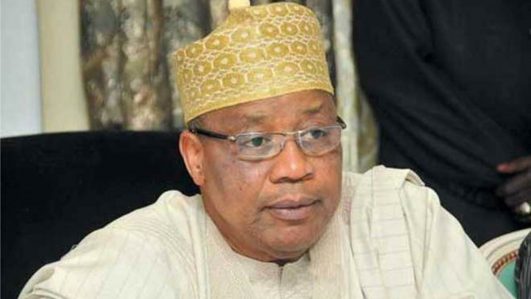
The Committee for the Defence of Human Rights (CDHR) has called for the prosecution of General Ibrahim Badamasi Babangida, the former military ruler, for his role in the annulment of Nigeria’s landmark June 12, 1993, presidential election, which is widely regarded as the freest and fairest in the nation’s history.
This renewed call for justice follows Babangida’s recent public admission of his involvement in the annulment, which led to years of political instability, human rights abuses, and economic hardship for the Nigerian people. In a statement issued by the CDHR President, Debo Adeniran, the organization described Babangida’s actions as a “brazen sociopolitical and moral assault” on the Nigerian people, undermining democracy and denying Chief MKO Abiola the presidency he had rightfully won.
The June 12, 1993, election, in which MKO Abiola emerged as the clear victor, is remembered as a high point of Nigeria’s democratic journey. However, just as the results were on the verge of being formally announced, Babangida, in an unprecedented move, annulled the election, citing irregularities and other concerns. This decision left the nation in turmoil, as millions of Nigerians who had cast their votes were denied the chance to see their will reflected in the leadership of the country.
In its statement, the CDHR expressed profound disappointment in Babangida’s recent remarks, which they described as an attempt to manipulate public opinion. The organization emphasized that Babangida’s belated admission of his role in the annulment was an attempt to obscure the true nature of his actions, which they considered to be a coup against the democratic process.
“The recent admission by General Babangida is an attempt to hoodwink Nigerians into believing that he acted in good faith,” said Debo Adeniran, CDHR President. “However, the facts are clear. What Babangida did was nothing short of a coup d’état. He stole the people’s mandate, and the aftermath of that action has led to grave injustices, loss of lives, and widespread human suffering.”
Adeniran also stated that while the June 12 election had its share of controversies, including the manipulation of political parties and candidates, the annulment was the ultimate betrayal of the Nigerian people. He noted that the election had been regarded as a beacon of hope for the country’s democracy, and Abiola’s victory was seen as a unifying force for a country beset by political strife.
The CDHR’s statement further condemned the widespread human rights violations that followed the annulment. According to the organization, the annulment triggered a series of political killings, arbitrary arrests, and suppression of free speech. Pro-democracy activists were targeted, and the press was muzzled, further deepening the democratic deficit in the country.
The call for Babangida’s prosecution is not only a response to his recent public admission but also an effort to hold him accountable for the far-reaching consequences of the annulment. Adeniran stressed that the former dictator’s actions met the threshold for crimes against humanity, as they directly resulted in human rights abuses, political instability, and economic hardship for the Nigerian people.
“The annulment of June 12 was not just an illegal act. It was a violent attack on the very essence of democracy,” said Adeniran. “Babangida’s actions led to political upheaval, civil unrest, and the loss of countless lives. We demand justice for the victims of this heinous crime against the Nigerian people.”
In his statement, Adeniran also called on President Bola Ahmed Tinubu to take decisive action by ordering the prosecution of Babangida for crimes against humanity. The CDHR contended that the evidence was irrefutable, citing Babangida’s own public confessions and his infamous book, “A Journey in Service,” which detailed his role in the annulment of the election.
The CDHR further urged the Nigerian judiciary, anti-corruption agencies, and international human rights organizations to hold Babangida accountable for his actions, which they claimed not only betrayed the Nigerian people but also set the stage for years of authoritarian rule and military dominance in the country.
“The culture of impunity must come to an end,” said Adeniran. “Babangida should not be allowed to walk free while the people he wronged continue to suffer. This is not just about one man—it’s about justice for all Nigerians who were denied their right to choose their leaders.”
The CDHR also reminded President Tinubu that his administration had a unique opportunity to right the wrongs of the past by officially recognizing MKO Abiola as a former president of Nigeria. Abiola, who was never allowed to assume office after winning the election, passed away in custody in 1998 under the regime of General Sani Abacha. Despite his death, Abiola’s legacy as a pro-democracy icon has endured.
“A true hero of the June 12 struggle would ensure that Abiola’s memory is honored,” Adeniran continued. “President Tinubu has the chance to restore justice by posthumously declaring Abiola as a Nigerian president and giving his family the full privileges that come with that status.”
In addition to calling for the prosecution of Babangida, the CDHR also demanded that those who benefited from the annulment, including former interim government leader Chief Ernest Shonekan, be held accountable. The organization proposed that the national honors conferred on these individuals be revoked, and any financial benefits paid to their families be discontinued.
Adeniran called on the Nigerian people to stand united in the fight for justice, reminding them that the struggle for democracy is not just about the past but also about securing the future. “Justice for June 12 is justice for democracy. It is about ensuring that the Nigerian people’s right to choose their leaders is never again taken from them.”
The CDHR’s demand for accountability has reignited the national conversation about the events of June 12, 1993, and the consequences of military rule in Nigeria. As the country continues to navigate its democratic journey, the organization’s call for justice serves as a reminder of the need to confront the dark chapters of Nigeria’s history and ensure that those responsible for undermining democracy are held to account.
In the coming days, it remains to be seen how President Tinubu and the Nigerian government will respond to these calls for justice. Will the government act to ensure that the long-overdue prosecution of General Babangida is realized, or will the specter of impunity continue to haunt Nigeria’s quest for true democracy?
The time for accountability, as the CDHR insists, is now.