
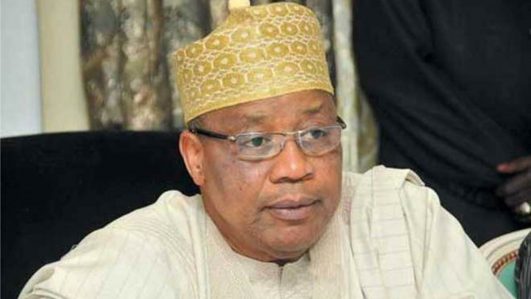
In a dramatic revelation, former military president General Ibrahim Babangida has explained the circumstances behind the overthrow of Major General Muhammadu Buhari in 1985. According to Babangida, Buhari’s personal style of leadership, marked by arrogance and a disconnect from both the military and the civilian populace, led to his eventual ousting.
Speaking candidly in his memoir A Journey in Service, Babangida, who ruled Nigeria from 1985 to 1993, described Buhari’s administration as one that had become increasingly alienated from the people. Despite initially being heralded as a hero following the December 1983 coup that ousted then-President Shehu Shagari, Buhari’s leadership quickly became controversial.
A Nation on the Brink
By 1985, Nigeria was on the edge of crisis. Babangida recalled that the mood in the country was grim, and there were growing fears of the nation’s future. The economic situation had deteriorated further, with shortages of essential goods and economic policies that led to increasing hardship for the average citizen. “The citizenry had become apprehensive about the future of our country,” Babangida wrote in his memoir. “The atmosphere was precarious, fraught with ominous signs of clear and present danger.”
Babangida went on to explain that despite the army’s initial intervention in 1983 to restore order, the situation had only worsened under Buhari’s leadership. “By the beginning of 1985, the armed forces had become deeply divided,” Babangida noted. “Our rescue mission had largely miscarried, and if the armed forces split, the nation would follow suit.”
The Personalization of Power
One of the core reasons for the breakdown of Buhari’s administration, according to Babangida, was the personal nature of Buhari’s rule. Both Buhari and his deputy, Brigadier General Tunde Idiagbon, became increasingly detached from the military establishment and the people they were meant to serve. They began to view themselves as infallible, adopting a “holier-than-thou” attitude that distanced them from the realities faced by ordinary Nigerians.
“There was a growing perception that our leadership was not collective but personal,” Babangida asserted. “Buhari and Idiagbon had become too focused on their own authority, disregarding the unity and the collective responsibility of the armed forces. This led to a significant loss of trust within the military and, by extension, the country.”
The personal style of leadership displayed by Buhari, Babangida argued, was incompatible with the needs of the nation. His administration, once viewed as a military solution to a corrupt civilian government, became increasingly authoritarian. The army, once a symbol of national unity, was now split and undermined by internal strife.
Civilian Discontent and Growing Hardship
At the heart of the 1985 coup was growing civilian discontent with Buhari’s policies. The public, already suffering under economic hardship, found themselves subject to even harsher decrees. Babangida recalled how Buhari’s government adopted draconian measures that restricted civil liberties, including the arbitrary detention of individuals for minor infractions and the stifling of free expression.
“Buhari and Idiagbon’s administration was presiding over a society that was frightened of us. The people were no longer hopeful but fearful,” Babangida noted. “Instead of delivering justice, their rule was marked by the pursuit of mechanical legalism, where punishment was handed out without regard for natural justice.”
The economic policies under Buhari were particularly harsh, with the government imposing strict controls on basic goods and services, leading to severe shortages. Babangida recounted that the public was becoming increasingly resentful of a government that was seemingly indifferent to their plight.
The Breaking Point
Babangida described how, within the military, there was a growing sense of frustration with Buhari’s leadership. Tensions within the armed forces reached a breaking point, with many officers feeling alienated and frustrated by the leadership’s autocratic style.
“As the Chief of Army Staff, I was under tremendous pressure from the rank and file,” Babangida recalled. “The morale of the military was declining, and the very integrity of the armed forces was being questioned. Senior officers felt that their concerns were being ignored, and I could no longer remain silent.”
This dissatisfaction among the military led to a broad consensus that a change in leadership was necessary. Babangida revealed that a group of senior and middle-level officers came together to discuss the future of the nation. “It was clear that the situation could not continue as it was,” Babangida stated. “We had to act to prevent further damage to the country.”
On the night of August 26, 1985, Babangida and his fellow officers executed the coup that would remove Buhari from power. By the morning of August 27, Babangida had assumed control of the country, determined to steer Nigeria away from the brink of disaster.
Babangida’s Vision for Nigeria
Despite the turmoil surrounding his rise to power, Babangida was adamant that the change of leadership was not motivated by personal ambition but by a genuine desire to save Nigeria from collapse. “I had no illusions about the challenges that lay ahead,” Babangida said. “But I was convinced that we could steer the country toward a more stable future.”
In his first address to the nation, Babangida made it clear that his administration was committed to ending the cycle of political instability that had plagued the country for decades. He emphasized the need for unity and national healing, as well as a renewed focus on the welfare of ordinary Nigerians.
Babangida’s eight-year tenure as military president would later be marked by a series of political and economic reforms, including attempts to transition Nigeria to civilian rule. However, his rule would also face its own share of controversies, particularly in relation to his handling of the annulled 1993 presidential election.
The Legacy of 1985
Reflecting on the events of 1985, Babangida acknowledged that the military’s intervention in Nigerian politics had come at a great cost. However, he maintained that the decision to remove Buhari from office had been a necessary one to prevent further disintegration of the nation.
“Sometimes, leadership requires difficult decisions,” Babangida concluded. “The decision to take action in 1985 was not taken lightly, but it was the only way to ensure that Nigeria did not descend into chaos.”
For Babangida, the events of 1985 marked the beginning of a new chapter in Nigerian politics, one that would see both progress and setbacks, but always with the goal of moving Nigeria forward.