
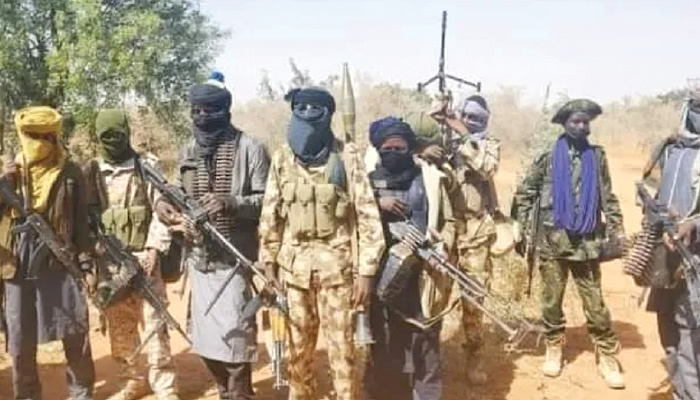
Residents of Jibia, Batsari, and Safana local government areas (LGAs) in Katsina State are beginning to experience a return to normal life after community leaders successfully negotiated a peace deal with bandit leaders operating in their regions.
The agreement, which was brokered by local leaders and bandit kingpins, aims to put an end to the constant attacks, kidnappings, and displacement that have plagued these areas for years. According to sources, the latest negotiation took place in Jibia on Friday, February 28, following similar discussions in Batsari and Safana. These areas have suffered persistent attacks due to their proximity to the notorious Ruggu Forest, a known hideout for bandits.
How the Peace Deal Came About
The negotiations were reportedly initiated by Audu Lankai, a prominent bandit leader in the region. Lankai expressed frustration over the prolonged conflict and reached out to community leaders to discuss possible peace terms. While the Katsina State government was not directly involved, a senior government official gave the initiative his backing, provided it was carried out under certain conditions.
“The governor has consistently maintained that he will not negotiate with bandits unless they surrender under pressure,” a source familiar with the discussions revealed. “However, our local leaders spoke to a top government official, and he agreed to support the peace talks as long as it was done on our terms.”
Among the key conditions laid out by the Jibia communities were an immediate halt to attacks on travellers and villages, an end to kidnappings, free movement for farmers and residents, and the release of captives. In return, the bandits sought assurances that they could move freely into the communities without facing attacks from security personnel or local vigilantes.
So far, the agreement has resulted in the release of 11 kidnapped victims and the surrender of two rifles by the bandits, sources confirmed.
The Bandits’ Demands and Justifications
As part of the peace deal, the bandits insisted that they should be allowed to move around freely without fear of being attacked. They also pushed for a gradual disarmament process, arguing that they needed weapons to defend themselves against rival criminal groups that refused to be part of the agreement.
A video that went viral recently showed a bandit identified as Bala Wuta addressing a gathering at Kwari Primary School. In the footage, he lamented the losses suffered by both sides and urged the government to provide basic amenities such as schools, water points, and healthcare facilities for herders. He claimed that the lack of these necessities had contributed to the crisis, as many of the armed groups felt abandoned by society.
A community leader from Jibia, who chose to remain anonymous, defended the peace talks, stating that they were in line with historical practices. “Even Prophet Muhammad (PBUH) entered into peace treaties, which means this is something that God permits. There is no benefit in conflict if both sides are willing to end it,” he said.
The Impact of the Agreement on Local Communities
Residents of the affected areas have welcomed the peace initiative, saying that they are beginning to see positive changes. Many villages that were previously considered too dangerous are now accessible again, and farmers are gradually returning to their fields.
Malam Yahuza Aliyu, the deputy village head of Wagini in Batsari LGA, recounted the horrors that his community had faced before the peace talks. “I vividly remember a terrifying day when, at around 4 pm, armed men stormed our village, firing indiscriminately. Women gave birth while running for their lives, and children fled barefoot to Batsari town. Many families were torn apart,” he recalled.
Aliyu noted that kidnappings were rampant, and many villagers had to pay huge ransoms to secure the release of their loved ones. “About two years ago, our village suffered a brutal attack. Over ten people were abducted, and some lost their lives. But today, I can confirm that none of our people remain in captivity. For the past year, we have not heard a single gunshot. This is a significant change from the past when we lived in constant fear.”
Similarly, Malam Habibu Maihula, a resident of Kirtawa village, said that the situation had improved remarkably. “Just look at the market. People are going about their daily activities without fear. A few years ago, this was unimaginable. We thank Almighty Allah for restoring peace, and we also appreciate Governor Dikko Radda for his efforts in addressing insecurity,” he said.
Maihula, however, urged the government to do more to support communities still affected by the crisis, especially those on the fringes of the forest. “There are still villages where farm produce is being destroyed by bandits. We appeal to the authorities to extend their security efforts to these areas.”
Calls for Government Support and Infrastructure Development
While residents appreciate the improved security situation, many believe that more needs to be done in terms of infrastructure development. Schools, healthcare facilities, and roads in these conflict-affected areas remain in deplorable conditions.
Malam Sule Sada Bakon Zabo, a resident of Bakon Zabo village in Batsari LGA, confirmed that the village had not experienced an attack in several months. “Many lives were lost, and countless people were kidnapped, but for the past few months, things have been relatively peaceful. Farmers can now go to their fields without fear of being abducted,” he said.
Another resident, Umar Garba, emphasized the need for government intervention in education and healthcare. “Our children are studying in classrooms without roofs, sitting on bare floors. Our healthcare centre is in ruins. We appeal to Governor Radda to help us rebuild these facilities so that our children can have a proper learning environment,” he said.
In Safana LGA, a similar situation is unfolding. Residents of Gimi village, once considered nearly uninhabitable due to repeated attacks, are slowly returning home. Many are working to rebuild their homes and restart their businesses.
“Our village was deserted for months because of constant raids,” one resident said. “Now, people are returning, but we still lack essential services. We need support from the government to fully recover.”
The Road Ahead: Will the Peace Last?
While many residents remain hopeful that the peace deal will hold, some security experts warn that the agreement is fragile. Previous peace pacts in the region have collapsed due to violations by one side or the other. The concern remains that some bandits who were not part of the deal may continue their criminal activities, which could reignite tensions.
Government officials have yet to make a formal statement on the peace agreement, but sources indicate that authorities are closely monitoring the situation. Many believe that for the peace to be sustained, the government must invest in long-term solutions such as education, job creation, and community policing.
For now, the people of Jibia, Batsari, and Safana are enjoying a much-needed break from violence. Only time will tell if this community-led initiative will finally bring lasting peace to a region that has suffered for too long.