
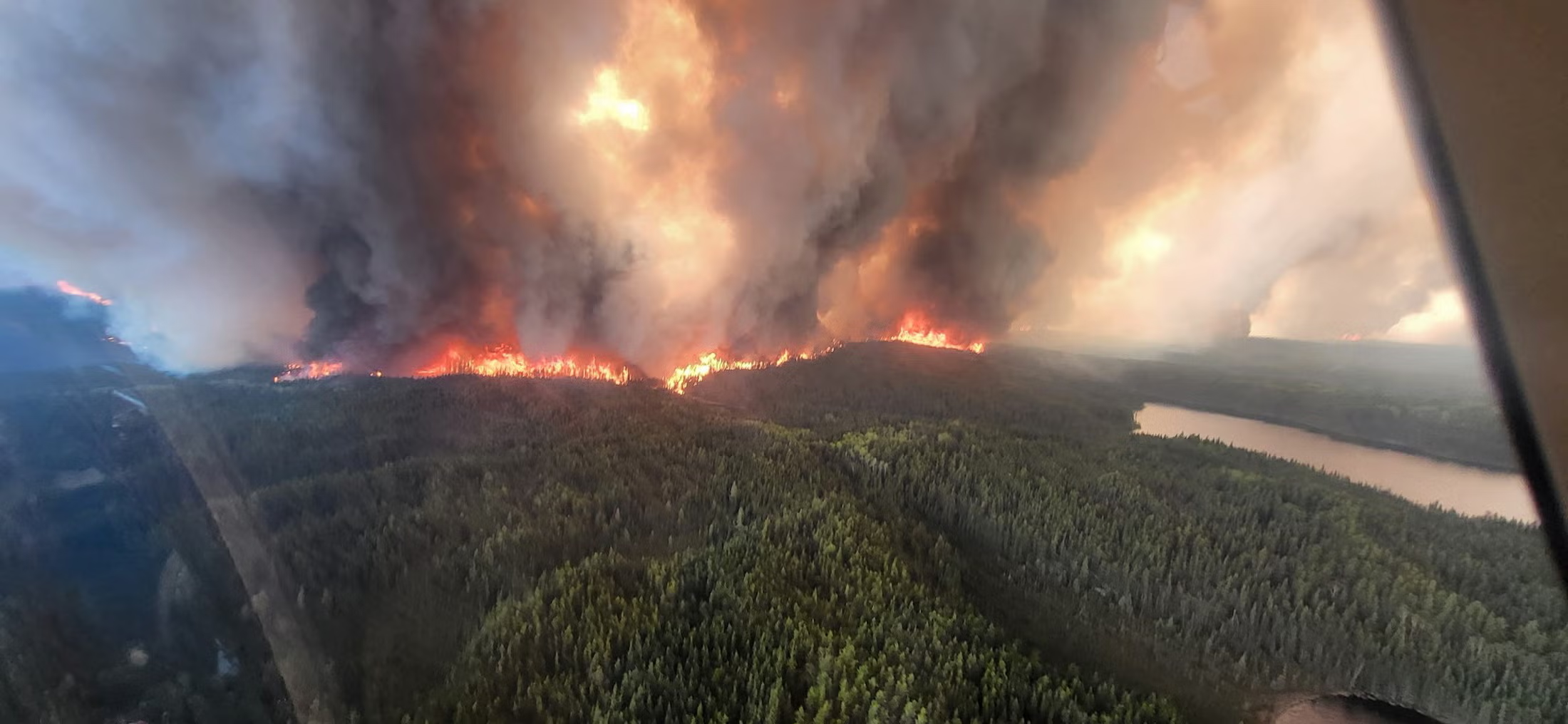
A fast-spreading wildfire in Canada’s Manitoba province has forced over 17,000 people to flee their homes, prompting the government to declare a state of emergency. Officials say this is the largest evacuation Manitoba has experienced in recent history.
Manitoba Premier Wab Kinew confirmed during a press conference on Wednesday that the fire situation has become “out of control.” The Canadian Armed Forces have been deployed to support evacuation efforts and firefighting. Military aircraft are expected to speed up the evacuation process, moving people out “in hours instead of days.”
“This is a moment of fear and uncertainty,” Kinew said. “But Manitobans will come together. We will get through this, just like we always do — united.”
The fires have devastated several rural areas, including communities near Winnipeg. Earlier this month, two residents, Sue and Richard Nowell, tragically died after being trapped by a fast-moving blaze in Lac Du Bonnet. A fundraiser has since been launched to support their children.
Evacuees are being sheltered in sports complexes and community centres in Winnipeg and other towns. In Flin Flon, one of the most affected cities, residents described scenes of panic and thick smoke. Elsaida Alerta, who was preparing to leave the town, told CBC News: “The town is absolutely smoked out. We’re just kind of in a panic here.”
A resident from nearby Creighton, Dawn Hlady, described the mass evacuation as “surreal,” saying, “Just seeing everybody leave the community in a convoy was very emotional.”
Other communities close to the fire zones have been advised to stay on high alert and be ready to evacuate at short notice.
In the neighbouring province of Saskatchewan, First Nations leaders are urging the government to declare a state of emergency as fires continue to spread there as well.
Nationwide, the Canadian Interagency Forest Fire Centre reported that over 166 wildfires are currently burning, with 84 classified as “out of control.” Provinces like Alberta, Ontario, and British Columbia are also battling serious fire outbreaks.
Smoke from the fires is expected to drift into the northern United States, bringing poor air quality to cities including Minneapolis, Detroit, and Chicago by Friday.
Experts have linked the increasing intensity and frequency of wildfires in Canada to climate change. The country, which is warming at twice the global average, experienced its worst wildfire season on record in 2023, when over 42 million acres of land burned — an area larger than the size of England.
As fire crews work around the clock, Canadians brace for what could become another devastating wildfire season.