
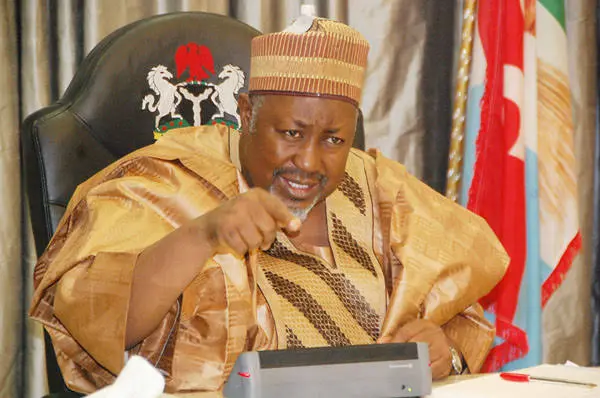
The Minister of Defence, Alhaji Mohammed Badaru Abubakar, has attributed the recent surge in Boko Haram attacks in the North-East, particularly Borno State, to the broader instability in the Sahel region. He said the insurgents are making renewed efforts to destabilise countries including Nigeria, Niger Republic, Mali, and Burkina Faso.
Badaru made this known on Tuesday in Kaduna during a press briefing after his two-day tour of key military institutions in the state. His visit included stops at the Nigerian Defence Academy (NDA), the Postgraduate School, Buffalo Engineering Technical Services, and the Air Force Institute of Technology (AFIT).
He assured Nigerians that despite the renewed threats, the Armed Forces have stepped up their operations and are regaining momentum. According to him, “If you look at the last one or two weeks, our troops have neutralised many insurgents, and attacks on military camps have reduced to the barest minimum.”
The minister acknowledged that the resurgence in attacks is not isolated to Nigeria alone but part of a broader trend in the Sahel region, where terrorists are attempting to extend their influence. “There is a renewed vigour by the insurgents to destabilise the Sahel,” he said. “But we are countering them. Our troops are doing wonderfully well.”
He expressed confidence that the military, with support from both the federal and state governments, will restore peace. “It’s a new threat, but we are tackling it. By the grace of God and your prayers, normalcy will return,” he stated.
Commenting on other security challenges across the country, Badaru said each region faces different issues. He noted that in Benue, the conflict is mainly between farmers and herders, which requires community engagement rather than only military force. “We are working to ensure herders stay within designated grazing areas and reduce tensions with farmers,” he explained.
In Kaduna State, particularly Birnin Gwari and nearby communities, the minister said both kinetic and non-kinetic strategies have paid off, resulting in the reopening of markets and improved security along major roads.
Badaru also used the opportunity to assess the progress of local military production and research. He expressed satisfaction with the ongoing work at military institutions, noting that Nigeria is moving toward self-sufficiency in the production and maintenance of military equipment.
“The institutions are doing very well in research and development,” he said. “We’ve seen impressive innovations such as Mine-Resistant Ambush Protected (MRAP) vehicles and Unmanned Aerial Vehicles (UAVs). These efforts support President Tinubu’s vision for local military capacity.”
He added that locally repairing and producing military platforms means Nigeria will gradually reduce dependence on foreign suppliers. “We are shifting from importation to self-reliance,” he said.
Badaru also highlighted the importance of training in strengthening the military and promised that the Federal Government would continue to support the Nigerian Defence Academy in producing highly skilled and disciplined officers.
Earlier, the Commandant of the NDA, Major General Abdul-Khalifa Ibrahim, praised the Federal Government for its support in upgrading infrastructure and advancing the academy’s mission. He also commended the minister’s leadership and commitment to Nigeria’s security and military advancement.
The Defence Minister’s visit comes at a critical time, as security remains one of the top concerns for many Nigerians, especially in the face of rising terrorism, banditry, and communal clashes in various parts of the country.