
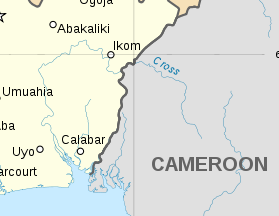
There is growing concern in Calabar, the Cross River State capital, following a sharp rise in the prices of fish, crayfish, and other seafood in the past week. The cause? The recent kidnap of seven fishermen in nearby Cameroonian waters.
The incident reportedly took place in the Bakassi Peninsula, close to the maritime boundary between Nigeria and Cameroon. Some of the kidnapped fishermen are said to be Nigerians who regularly fish in those waters.
Since the abduction, many fishermen in Cross River State have become fearful and are now avoiding fishing trips, especially in border areas. This has resulted in reduced seafood supply in Calabar markets.
A visit to several markets in Calabar, including Watt Market and Marian Market, showed that stalls selling fish, crayfish, crabs, and periwinkle had less stock than usual. Prices of available items have also gone up, leaving traders and customers frustrated.
Mrs. Grace Effiom, a housewife in Calabar South, expressed her frustration: “There have been shortages of new fish and crayfish since last week. This has led to high demand and high prices. A small bowl of crayfish that used to sell for ₦1,200 now goes for ₦1,800 or more.”
She said fish traders told her that the kidnapping of fishermen was the reason behind the sudden scarcity.
“I was told some fishermen were kidnapped last week in Cameroon. That’s why many of them are now afraid to go to sea. Even the ones who still go don’t go far, so they don’t catch much,” she added.
Another trader, Mrs. Ekaette Udo, who sells seafood in Watt Market, confirmed the situation. “Since we heard of the kidnap, many of our suppliers have stopped going out to fish. Those who dare to go charge more because of the risk. That’s why prices are high,” she said.
While the kidnapping has had a direct impact on markets in Calabar, the Cross River State Police Command has clarified that the incident did not happen in Nigerian waters.
Deputy Public Relations Officer of the Command, Igri Ewa, said: “The kidnap was in Cameroon waterways, not our jurisdiction, please.”
However, despite the clarification, the effect of the incident is being felt strongly in Calabar and surrounding areas.
Many fishermen in Cross River State often go beyond Nigerian borders to fish in more productive areas of the Atlantic, including the waters around the Bakassi Peninsula — a region that has seen its share of security challenges over the years.
In 2002, the International Court of Justice ruled that the oil-rich Bakassi Peninsula belongs to Cameroon, and the area was officially handed over in 2008. Since then, several Nigerian communities in the area have complained about poor protection and increasing insecurity, especially from sea pirates and militant groups.
Traders and residents are now calling on the Nigerian government and regional security bodies to do more to protect fishermen, even when they operate close to international borders.
Mrs. Udo said, “Fishermen are important to our economy. Government should help protect them so they can do their work without fear.”
For now, the fear remains, and until security improves, residents in Calabar may continue to pay more for their seafood, if they can find it at all.