
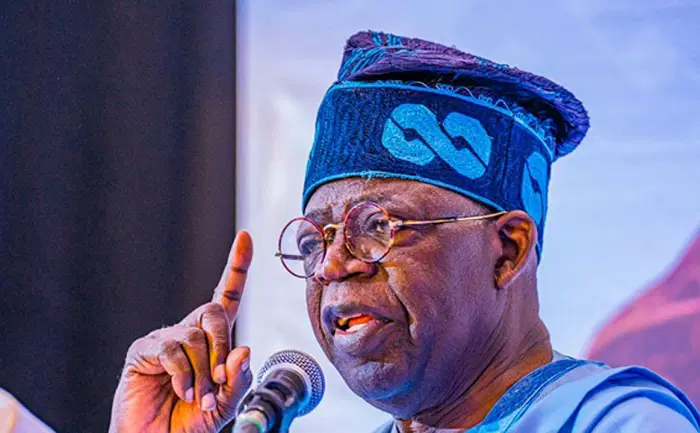
The Special Adviser to President Bola Tinubu on Policy Communication, Daniel Bwala, says the Federal Government will soon disclose the names of individuals and groups sponsoring terrorism in Nigeria. He made the statement on Sunday during an interview on Television Continental (TVC), where he also assured Nigerians that significant steps are being taken to reduce insecurity across the country.
Bwala’s remarks come at a time when the nation continues to struggle with rising cases of kidnapping, bandit attacks, communal violence and activities of extremist groups in different regions. Many Nigerians have long demanded transparency on those behind the operations of armed groups, especially the financiers who provide money, weapons and logistics.
Speaking during the interview, Bwala said Nigerians should expect major developments soon. He noted that the government was putting together what he called “far-reaching decisions,” and expressed confidence that the impact would soon become visible.
“At home, the government is making far-reaching decisions, and in the coming days we will know who the terrorists and their financiers are,” he said.
His comment suggests that the government may unveil findings from ongoing investigations into the networks supporting terrorist groups. For years, Nigerians have questioned why previous administrations failed to publicly name individuals suspected of financing terrorism, despite claims that such lists existed.
Nigeria has battled terrorism for more than 14 years, starting with the rise of Boko Haram in the North-East. The group gained international attention in 2009 and has since been responsible for thousands of deaths, mass displacement, and widespread destruction.
Over the years, splinter groups like the Islamic State West Africa Province (ISWAP) have emerged, deepening insecurity in Borno, Yobe, and Adamawa states.
Beyond the North-East, bandit groups and kidnappers in the North-West and North-Central have become major threats, attacking villages, abducting students, and disrupting economic activities, especially farming. Many security analysts argue that these groups benefit from well-organised financial networks involving individuals both within and outside the country.
Bwala’s statement therefore reflects renewed pressure on the Federal Government to address the financial backbone of these criminal organisations.
During the TVC interview, Bwala highlighted that terrorism is not just a Nigerian problem but a global challenge. He traced its modern spread to the September 11, 2001 attack on the World Trade Center in the United States, arguing that the incident marked a turning point for global security.
“Terrorism became a global issue since the incident of the World Trade Center in the United States on September 11, 2001,” he said.
According to him, countries around the world now recognise that terrorism in one region can easily spread to another if not tackled collectively.
He added that several terrorist organisations initially concentrated in the Middle East have gradually expanded their operations into Africa, especially the Sahel region.
“They were in the Middle East, and gradually they are coming towards the Sahel to create a hub of terrorism,” Bwala stated.
He said this development places additional responsibility on global leaders to collaborate with Nigeria and other African nations facing similar threats.
Bwala stressed that governments across the world must cooperate with Nigeria in confronting terrorism. His comments highlight concerns that groups operating in the Sahel—such as those linked to ISIS and Al-Qaeda—have been trying to build strongholds in West African countries.
The Sahel region, which includes Mali, Niger, Chad and Burkina Faso, has become one of the world’s most dangerous zones due to armed groups, political instability and weak border control.
Security experts warn that Nigeria, sharing long borders with Niger and Chad, faces increased risk as terrorist groups spread.
Bwala said global cooperation is important not only for intelligence sharing and surveillance, but also for disrupting financial channels that fund militants.
He explained that “any part where there is terrorism, it is the concern of the rest of the world,” making it necessary for international partners to work with Nigeria.
Nigerians have reacted to Bwala’s remarks with a mix of hope and scepticism. Some welcome the idea that sponsors of terrorism may finally be named, but others question whether the government will follow through.
Past administrations, including the Muhammadu Buhari government, promised to identify terror financiers but never publicly released names.
Although several arrests were made and cases were quietly prosecuted, the lack of transparency left many citizens dissatisfied.
President Tinubu has made security one of his key priorities, but incidents of kidnapping, killings and attacks have continued. Recent high-profile cases—such as widespread kidnappings in the North-West and attacks on farmers in the Middle Belt—have fuelled demands for stronger action.
Bwala’s comments appear intended to reassure Nigerians that the administration is not only aware of the frustrations but is working on concrete solutions.
Since taking office, President Tinubu has introduced a series of security reforms, including changes in military leadership and the restructuring of some security agencies.
The government has also taken steps to improve coordination between the police, military and intelligence units.
However, insecurity remains widespread. Many communities in northern states have been displaced, with thousands of families living in camps. Farmers in several states have abandoned their farmlands due to the threat of bandit attacks, worsening food supply challenges nationwide.
While Bwala did not give details or a specific timeline, his statement suggests that the Federal Government may soon release findings from ongoing investigations.
Possible measures could include:
Public listing of individuals or organisations funding terrorism
Freezing of bank accounts and assets linked to the networks
Arrests or prosecution of suspects
International partnerships for tracking cross-border financial transfers
If successful, these steps could mark a major turning point in Nigeria’s long struggle with insecurity.
For now, Nigerians are waiting to see whether the latest promises will lead to real results. With insecurity affecting daily life, from travel to farming to business, many citizens say they are tired of repeated announcements without tangible progress.
Bwala, however, insisted that the Tinubu administration is committed to delivering solutions.
He said the government’s recent decisions will “soon be noticeable,” and urged Nigerians to be patient as new security strategies unfold.