
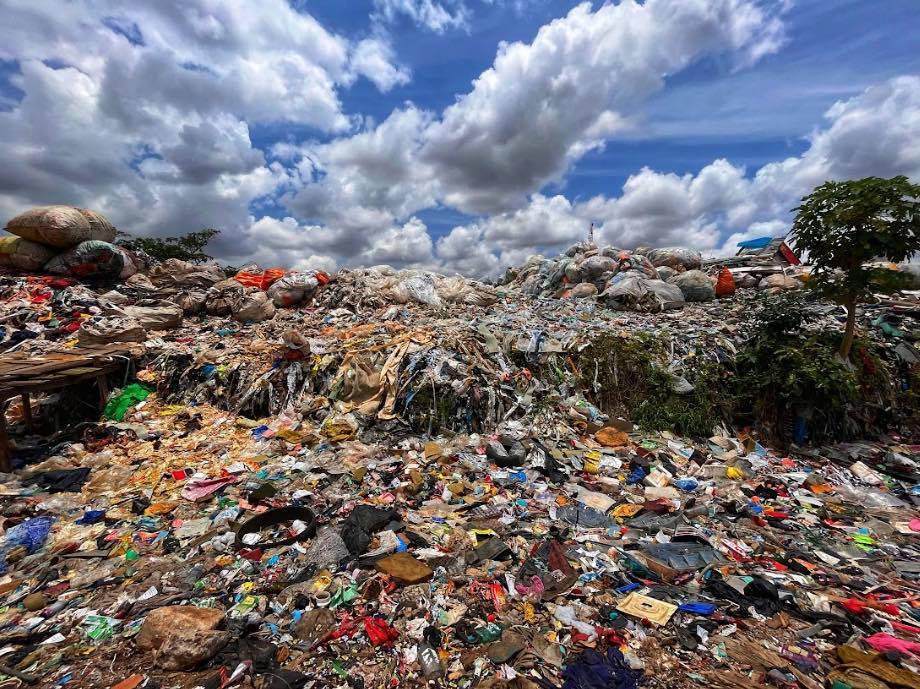
The Lagos State Government has revealed plans to decommission the Olusosun landfill in Ojota and the Solous 3 dumpsite in Igando within the next 18 months. The move is part of the state’s broader efforts to improve waste management, protect the environment, and safeguard the health of residents living near the sites.
Commissioner for Environment and Water Resources, Tokunbo Wahab, made the announcement during an inspection tour of the two facilities on Saturday. The inspection, which also included representatives from the Lagos State Waste Management Authority (LAWMA) and private waste operators, is aimed at upgrading the state’s refuse disposal system and preparing for the opening of new, modern landfill locations.
Wahab disclosed that the government is developing new landfill sites in Badagry, Ikorodu, and Epe, which will meet international environmental standards. He assured residents that these sites would be designed to prevent the health risks that have historically affected communities living near older dumpsites.
“Conversations around the future of Olusosun and Solous 3 have featured consistently at various levels, including meetings with the governor and deliberations at the Executive Council,” Wahab said. “It has become necessary for us to come here and conduct a physical assessment, especially as we prepare to open new landfill locations.”
He confirmed that the decommissioning process for Olusosun and Solous 3 is already underway. “Within the next 18 months, the full decommissioning program will commence,” he noted, emphasizing that the closure would follow global best practices.
The Commissioner highlighted the role of Zoom Lion, the state’s partner in the waste-to-wealth initiative. He explained that once operations begin at the material recovery facility, the capping and closure of Olusosun will start immediately. A similar process will be implemented at Solous 3.
Under this initiative, a large portion of waste will be recycled or converted into compost fertilizer, while combustible materials will be used to generate energy. Only a small fraction of waste will eventually reach the landfill, representing a significant shift from the old linear model of waste management to an integrated and sustainable system.
“Lagos is moving from treating waste as mere refuse to treating it as a resource,” Wahab said. “The new facilities will operate with modern safeguards to prevent the problems of the past and ensure the safety of nearby communities.”
The inspection also revealed infrastructural challenges, particularly the deteriorating access roads to both Olusosun and Solous 3. While Olusosun sits on a rigid pavement, Solous 3 lacks such infrastructure. Wahab described this as “unacceptable” and said the state has concluded plans to rehabilitate all routes leading to the dumpsites.
He warned waste operators against indiscriminate parking of collection trucks, saying it undermines ongoing improvements and disrupts traffic flow. “This place is clean, and we must maintain order. The alternative exit route previously used will also be reconsidered to ease traffic until the full decommissioning is completed,” he added.
Residents living near the old landfills have long complained about unhygienic conditions, foul odours, and health risks, including respiratory issues and contamination of local water sources. The government has assured them that the new landfills will operate under strict environmental safeguards to prevent such problems.
Under the new model, waste will be treated systematically. Materials suitable for recycling or composting will be separated, while combustible waste will be converted to energy. This approach, Wahab said, will reduce the environmental footprint of waste management in Lagos and protect the health of neighbouring communities.
“The full decommissioning of Olusosun and Solous 3 represents a major milestone in Lagos State’s commitment to sustainable waste management,” he said.
The closure of Olusosun and Solous 3 is part of Lagos State’s long-term strategy to modernize waste management and urban sanitation. Olusosun, one of Africa’s largest landfills, has been operational for decades and has long been criticized for its impact on the environment and public health. Solous 3, serving parts of Alimosho and surrounding areas, has faced similar complaints.
By investing in new landfills and waste-to-wealth facilities, the state aims to minimize health hazards, generate energy from waste, and promote recycling and composting. The government also hopes to alleviate traffic congestion caused by trucks servicing the old dumpsites, while ensuring orderly waste disposal in all affected communities.
Residents and environmental advocates have welcomed the announcement but stressed the importance of timely implementation and transparency. The success of the plan depends on adherence to safety standards, efficient management of the new landfills, and public cooperation in waste segregation.
“The Lagos State Government is demonstrating that it is possible to combine economic development with environmental sustainability,” said one environmental activist. “If implemented correctly, the new landfills and waste-to-wealth initiative will greatly improve the quality of life for residents.”
The Commissioner concluded by reiterating the government’s commitment to closing the old dumpsites within the stated timeframe, urging all stakeholders to cooperate in the transition. “We are committed to a cleaner, safer Lagos. The days of open, unmanaged dumpsites are numbered,” Wahab said.