
Northern governors have again raised the alarm over the worsening insecurity in the region, saying the situation has grown from a local problem into a major national threat. They renewed their demand for the creation of state police as an urgent step toward addressing the crisis.
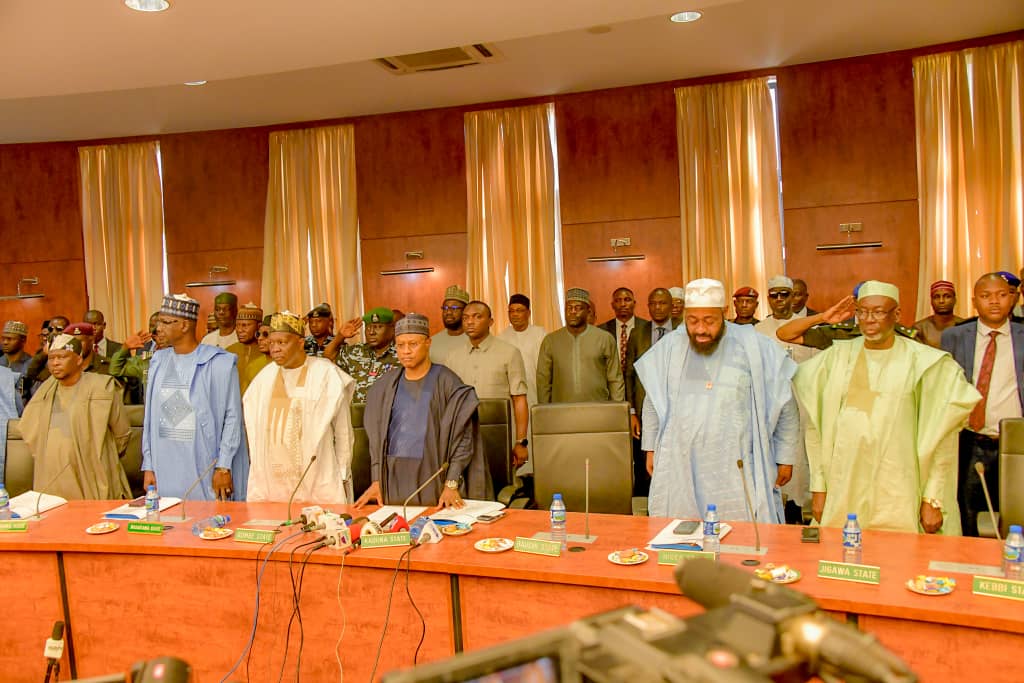
The call was made by the Chairman of the Northern States Governors Forum and Governor of Gombe State, Muhammad Inuwa Yahaya, during a joint security meeting held at the Sir Kashim Ibrahim House in Kaduna. The meeting brought together all 19 northern governors, alongside first-class emirs and traditional rulers from across the region.
Yahaya said insecurity in the North has reached a dangerous level, affecting communities, schools, farmlands, and major highways. He noted that the existing security structure is overstretched and cannot effectively protect the region, which covers a vast landmass with many hard-to-reach areas.
He said the establishment of state police has become critical, arguing that it is one of the most effective ways to respond quickly to local threats. According to him, security challenges in the North—such as banditry, kidnapping, farmer-herder clashes, and terrorism—require solutions that are closer to the communities where the problems occur.
“The insecurity in the North has escalated from a local challenge to a national threat,” Yahaya said. “Putting up state police remains a very critical and effective mechanism to address the present security challenges facing the country.”
Governor Yahaya explained that several factors have contributed to the rising insecurity in northern Nigeria. These include underdevelopment, widespread poverty, illiteracy, poor infrastructure, high unemployment, environmental degradation, and weak resource management.
He said these problems have created fertile ground for criminal groups to recruit young people, especially in rural areas where government presence is limited. In many northern communities, basic services such as schools, hospitals, and clean water are lacking, further widening the gap between citizens and government.
“The region must confront the underlying issues fueling insecurity if we want lasting peace,” Yahaya said. He urged northern leaders to work together and make deliberate efforts to reverse the trend before it becomes uncontrollable.
Security analysts have long warned that northern Nigeria’s combination of a youthful population, economic hardship, and weak institutions makes it vulnerable to persistent insecurity. In recent years, states such as Kaduna, Zamfara, Niger, Katsina, Plateau, and Benue have suffered repeated attacks by bandits, armed groups, and Boko Haram insurgents.
Despite the challenges, Governor Yahaya commended President Bola Ahmed Tinubu for the federal government’s recent efforts in securing the release of several kidnapped victims in the region. He encouraged the president to remain committed until all abducted persons are rescued.
He reaffirmed the northern governors’ readiness to work closely with the federal government, security agencies, and local authorities to ensure the protection of lives and property. He also emphasized the importance of securing school environments, noting that many children in the North have been deprived of education due to frequent attacks on schools.
Also speaking at the meeting, Kaduna State Governor Uba Sani said northern governors have begun adopting collective strategies aimed at improving governance and boosting development across the region. One such strategy, he said, is a peer review mechanism that allows states to share experiences, identify weaknesses, and learn from one another’s successes.
According to Sani, good governance is a major tool for fighting insecurity, as many criminal activities thrive in places where government presence is weak. He said northern states must focus on delivering quality services, building strong institutions, and ensuring fairness in public administration.
Governor Sani also highlighted the important role of traditional rulers in nation-building. He said traditional institutions help promote unity, settle disputes, and maintain communal harmony. He urged traditional leaders to continue using their influence to help stabilize communities and discourage violence.
In his remarks, the Sultan of Sokoto, His Eminence Muhammad Sa’ad Abubakar III, who is also Chairman of the Northern Traditional Rulers Council, assured the governors of the full support of the traditional institutions.
He said traditional rulers, who are closer to the grassroots, understand the concerns of communities and can help provide early warnings before conflicts escalate. The Sultan emphasized that restoring peace in the North requires cooperation between political leaders, traditional rulers, security agencies, and community members.
He also urged governors to ensure effective service delivery rooted in good governance, stressing that citizens are more likely to trust government when they see clear improvements in their daily lives.
The North has been grappling with serious security issues for more than a decade. Boko Haram insurgency in the Northeast, banditry in the Northwest, herder-farmer conflicts in the North Central, and rising cases of kidnapping have left thousands dead, displaced millions, and disrupted economic activities.
Agriculture, which is the region’s main economic backbone, has suffered heavily as many farmers cannot access their farmlands safely. Schools have also been targeted in mass kidnappings, causing parents to withdraw their children from school in some communities.
The meeting in Kaduna ended with a renewed commitment to strengthen collaboration among northern governors and traditional rulers. Participants agreed that the security situation requires immediate action, especially through the creation of state police, enhanced intelligence gathering, and community-based security partnerships.
As insecurity continues to affect the daily lives of millions in northern Nigeria, residents hope that the latest promises by leaders will translate into real change on the ground. The call for state police, now repeated many times, appears to be gaining stronger political backing and may soon become a major national debate.