
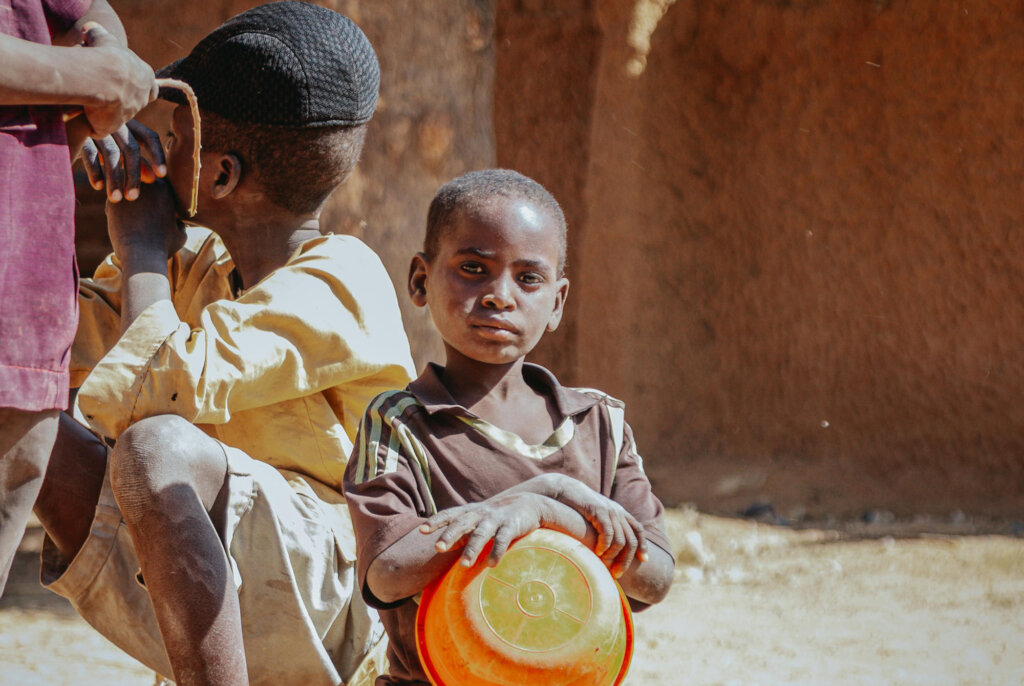
A new report by Save the Children International has raised serious alarm across Nigeria, warning that more than 96,000 children may die from acute malnutrition in six northern states before the end of the year. The organisation says the situation is becoming a major public health emergency that requires urgent action from government at all levels.
The report, released during a press briefing in Abuja, shows that children in Adamawa, Borno, Katsina, Sokoto, Yobe, and Zamfara states are at the highest risk. According to the findings, over 1,000 children could die every day between October and December this year if immediate steps are not taken to provide lifesaving nutrition.
Save the Children presented the findings alongside partner organisations such as PLAN International, Action Against Hunger, and Oxfam. The groups warned that northern Nigeria is heading toward a humanitarian disaster driven by food shortages, insecurity, and economic hardship.
The Country Director of Save the Children International, Duncan Harvey, told journalists that Nigeria is currently facing “a nationwide emergency” caused by food insecurity and widespread malnutrition. He explained that more than 31 million Nigerians are expected to face acute food insecurity in 2025, making it one of the largest hunger crises in the world.
Harvey also revealed that about 5.4 million Nigerian children already suffer from acute malnutrition, while 3.5 million children under the age of five are battling Severe Acute Malnutrition. He said 1.2 million of these children need urgent treatment to survive.
“It is predicted that between October and December 2025, an estimated 600,000 children under the age of five will be at risk of Severe Acute Malnutrition in the six northern states,” Harvey said. He added that more than 800,000 pregnant and breastfeeding women are also at risk, putting thousands of infants in danger.
He stressed that hunger is not only a food problem but also a human rights issue. According to him, food security and nutrition must be treated as “non-negotiable” for child survival and healthy development.
At the briefing, experts from partner organisations explained the scale of the crisis and what must be done to prevent mass deaths. The Country Director of Action Against Hunger Nigeria, Thierno Samba Diallo, called for increased funding for nutrition treatment, including the local production of Ready-to-Use Therapeutic Food (RUTF) and therapeutic milk used to save severely malnourished children.
Diallo warned that severe malnutrition has long-term effects on physical growth, brain development, and productivity. He said Nigeria’s future workforce could be badly affected if the government does not act quickly.
He urged authorities to strengthen social safety nets, support pregnant and breastfeeding mothers, and expand food assistance in areas affected by insecurity.
PLAN International’s Director of Programme Quality, Dr. Helen Idiong, added that hunger should never be seen as normal or acceptable. She called for joint efforts between state governments, federal agencies, and international partners to protect children and families from preventable deaths.
“Hunger is a violation of dignity, health, and the right to a future,” she said. “No child should die from malnutrition—not today, not tomorrow, not ever.”
The report has triggered nationwide discussions about the root causes of the food crisis and why malnutrition is rising so quickly. Some experts believe the situation may be even worse than the report suggests, arguing that malnutrition is quietly spreading to states not listed in the study.
States in the North-Central region—such as Benue, Plateau, Niger, Kogi, and parts of Kaduna—are said to be at growing risk due to increased attacks by kidnappers and militant herdsmen. These attacks have forced thousands of farmers away from their farmlands, disrupting food production and worsening hunger.
Many Nigerians argue that insecurity is the biggest driver of the looming food crisis. They say that unless farmers can safely return to their farms, food will remain scarce and expensive, and more children will fall into malnutrition.
The President of the Middle Belt Forum, Dr. Pogu Bitrus, said the hunger crisis is already visible across the country and that the report may even be an “under-representation” of the real situation. According to him, bandit attacks have reached a level where farming is nearly impossible in many rural communities.
“We know this is the reality,” he said. “If farmers cannot go to their farms, there will be no food. And when there is no food, children will suffer malnutrition and death.”
He urged the federal government to take stronger action against terrorists and bandits so that farmers can return to farming.
In Katsina State, an educationist, Abdullahi Umar, said hunger is now a year-round problem in parts of the North-West due to insecurity and rising living costs. He explained that areas that used to experience seasonal food shortages are now facing severe hunger throughout the year.
He warned that the removal of fuel subsidy and the rising price of food have made it almost impossible for many families to feed their children adequately.
A lawyer and public affairs analyst, Nnanna Nwkamma, said that while insecurity is a major cause of the crisis, the country’s economic policies have also worsened the situation. He argued that fuel subsidy removal, multiple taxes, and high inflation have pushed millions of families deeper into poverty.
Nwkamma explained that the cost of baby food has become unbearable for many Nigerian households. For example, a can of infant formula that previously sold for a little over ₦1,000 now costs more than ₦10,000, making it inaccessible for poor families.
“When parents cannot afford quality food for their babies, malnutrition becomes inevitable,” he said.
He called on the government to immediately distribute food and nutrition supplements to vulnerable families in the six affected states and to urgently restore security across rural communities.