
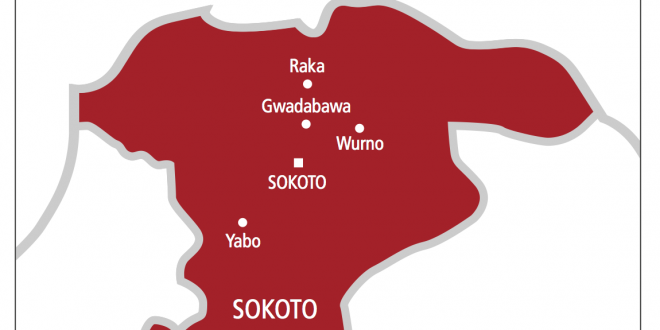
The Sokoto State Police Command has announced the arrest of three suspected financiers of banditry, alongside several others linked to motorcycle theft across Sokoto and parts of Zamfara State. The arrests followed two separate intelligence-driven operations carried out by specialised units of the command. Police say the operations are part of an ongoing effort to disrupt the activities of criminal networks involved in cattle rustling, kidnapping, banditry, and cross-border theft in the North-West.
The police also recovered four rustled cows and two stolen motorcycles during the operations. The development marks another major security breakthrough in a region badly affected by bandit attacks, kidnappings, and the theft of livestock and motorcycles—crimes that have continued to fuel violence in rural communities.
The Public Relations Officer of the command, DSP Ahmad Rufai, confirmed the arrests in a statement on Friday. He said the successful operations reflected improved intelligence gathering, stronger community engagement, and a renewed commitment by security forces to dismantle bandit networks and restore peace in the state.
According to Rufai, the first operation was carried out on Wednesday in Tangaza Local Government Area after the Anti-Kidnapping Unit attached to the Criminal Investigation Department (CID) received actionable intelligence about suspicious movements linked to bandit operations.
Based on the intelligence, officers raided a location in Gidan-Madi, where they arrested one Ruwa Ginyo, described as a key broker, along with two others believed to be part of a financing ring that supports a notorious bandit group operating in Sokoto and neighbouring states.
Investigations revealed that the suspects allegedly served as intermediaries between armed bandits and cattle markets in the region. Their job was to receive cattle stolen by bandits from villages and herders, sell the animals in markets, and return the proceeds to the criminals.
Rufai stated:
“Investigations revealed that the suspects allegedly received rustled cattle from armed bandits, sold them in markets, and remitted the proceeds to the criminals.”
He added that the suspects had confessed to the crime during interrogation. Police officers recovered four rustled cows from them as they were preparing to move the animals for sale, confirming their connection to the bandits who had stolen the livestock.
In a separate operation carried out in Talata Mafara Local Government Area of Zamfara State, the Sokoto Police Command moved across state lines to apprehend a group of suspects linked to motorcycle theft, receiving stolen property, and criminal conspiracy.
The operation was part of ongoing efforts to track items stolen in Sokoto but quickly moved across state borders by criminal gangs. Such cross-border crimes have been common in the North-West, where dense forests and porous boundaries allow criminal groups to evade arrest by fleeing from one state to another.
Rufai disclosed that two stolen motorcycles were recovered during the raid. Preliminary investigations showed that the motorcycles were connected to a case previously reported in Sokoto. The PPRO added that the cross-border operation was successful due to close collaboration between the Sokoto and Zamfara police authorities.
The North-West region of Nigeria—covering states such as Sokoto, Zamfara, Katsina, Kebbi, and Kaduna—has in recent years become a hotbed for banditry and related crimes. Unlike Boko Haram insurgency in the North-East, banditry in the North-West is driven largely by criminal groups seeking money through kidnapping, cattle rustling, illegal mining, and extortion.
Cattle rustling has historically been a major source of income for bandits. Communities dependent on farming and animal rearing have suffered massive losses due to frequent raids on villages. This often leads to displacement, food shortages, and economic instability.
In addition, motorcycles are essential tools for both farmers and bandits. While ordinary citizens rely on them for transportation, many bandit groups use them for mobility during attacks. This has made motorcycle theft a critical component of their supply chain.
The recent police operations target these supply chains, which security experts say is key to weakening the financial and operational strength of bandit groups.
The Commissioner of Police in Sokoto State, Ahmed Musa, praised the officers involved for their professionalism and dedication. He said the operations—one within Sokoto and another across the border in Zamfara—show how strategic intelligence, collaboration, and community reporting can support policing efforts.
Musa highlighted that the battle against banditry requires strong partnerships between the police and local residents, urging the public to provide credible and timely information.
He assured that all reports would be treated with maximum confidentiality and that the police remain committed to maintaining law and order.
The police confirmed that all suspects arrested during the two operations are currently in custody. Investigators are working to identify more individuals connected to the financing networks and theft syndicates.
Police believe the arrests could lead to more breakthroughs, including the identification of major players who help arm, fund, or protect bandit groups.
DSP Rufai said the command is determined to “unravel the wider criminal networks” involved in both cattle rustling and motorcycle theft in the state, insisting that dismantling criminal financing remains a top priority.
Residents of affected communities welcomed the news of the arrests, describing them as a relief for villages that have suffered repeated attacks. Many farmers and herders hope the recovery of rustled cattle signals a shift in the fight against banditry.
For now, the Sokoto Police Command says it will continue to work with neighbouring states to pursue criminals who attempt to escape justice by crossing borders—a challenge that has historically slowed law enforcement efforts in the region.