
A protected witness of the Department of State Services (DSS) on Thursday gave a chilling account of how suspected Al-Shabab terrorists carried out the deadly attack on St Francis Catholic Church in Owo, Ondo State, on June 5, 2022. The violent attack, which shocked the entire country and drew international condemnation, led to the death of more than 40 worshippers and left over 100 others with serious injuries.
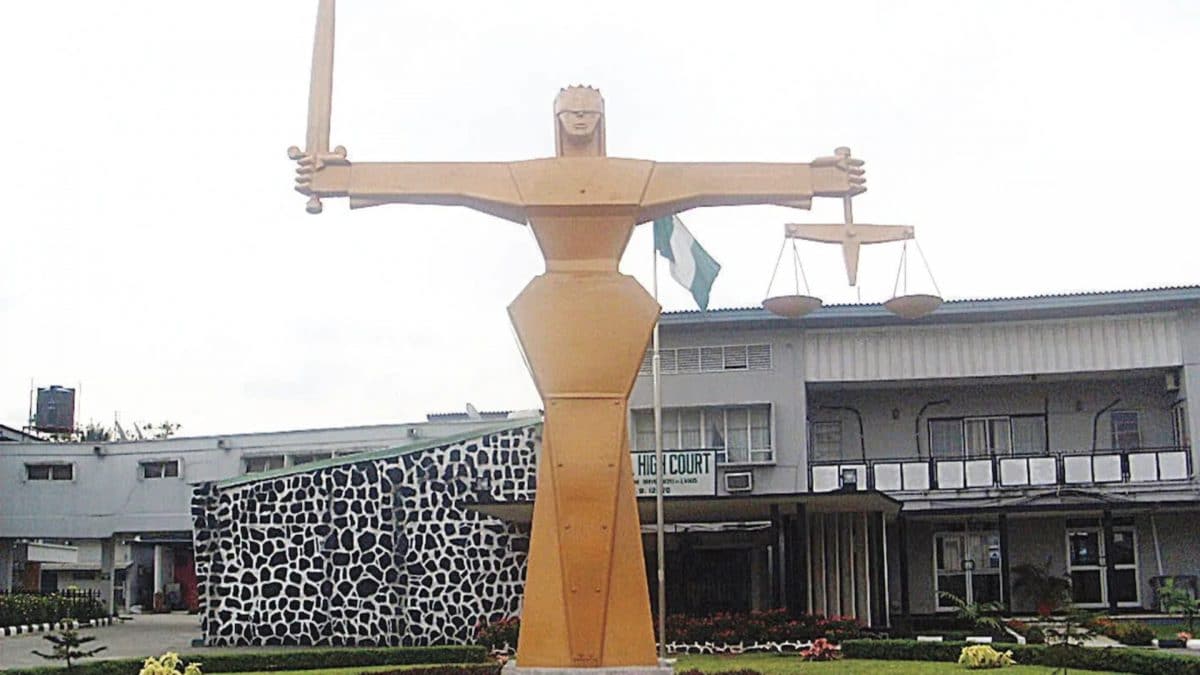
Testifying before Justice Emeka Nwite of the Federal High Court in Abuja, the witness, a clergyman identified only as “SSA” for security reasons, said the assailants bombed the church three times after opening fire on worshippers. He told the court that he was coordinating the mass on the day of the incident and that the attack happened just as the service was about to end.
The DSS is prosecuting five suspects—Idris Abdulmalik Omeiza, Al-Qasim Idris, Jamiu Abdulmalik, Abdulhaleem Idris, and Momoh Otuho Abubakar—over alleged involvement in the massacre. The agency claims the men are members of an Al-Shabab cell operating in Nigeria, with roots in Kogi State.
Narrating the events of that day, the clergyman said the first sign of danger was the sound of sporadic gunshots inside the church compound.
“I was in the church on June 5, 2022, coordinating mass. It was at the tail end of the mass that, all of a sudden, we started hearing sporadic shooting of guns within the church premises,” he said.
He explained that confusion immediately broke out as worshippers tried to run for safety. Despite the chaos, he said he summoned the courage to go to the children’s hall to protect the young ones from the attackers. He then moved them into a restroom where they remained during the assault.
While hiding with the children, he heard three heavy explosions. He said the third bomb was so close that “the impact felt like the ground caved in,” suggesting that the device was extremely powerful.
“The deadly attack led to the instant death of over 40 worshippers, and several others suffered various degrees of injury and were moved in ambulances to hospitals,” the witness added.
His testimony matches earlier accounts from survivors who described the attack as one of the deadliest terror incidents in southern Nigeria in recent years. Many had said the attackers used both explosives and guns, leaving victims trapped inside the church.
The Owo church attack sent shockwaves across Nigeria in 2022 because the South-West had previously seen fewer terrorist-style bombings compared to the North-East and parts of the North-West. The assault raised major security concerns about the spread of extremist groups beyond their traditional strongholds.
At the time, the Ondo State Government said the attackers must have had external support, given the level of coordination, firepower, and explosives used. The incident also intensified national debates over intelligence gathering, border control, and the movement of armed groups across states.
DSS later announced the arrest of several suspects, saying they belonged to an emerging Al-Shabab cell operating inside the country. The service claimed the group was planning more attacks before its members were apprehended.
The suspects face multiple terrorism charges under the Terrorism (Prevention and Prohibition) Act, 2022. The charges include membership of a terrorist group, possession of improvised explosive devices (IEDs), murder, causing grievous bodily harm, and planning and executing the June 5 attack.
According to the charge sheet, the DSS alleges that the suspects held planning meetings on May 30, June 3, and June 4, 2022, in Kogi and Ondo States, where they discussed and finalised the attack on St. Francis Catholic Church.
The defendants were accused of attacking worshippers with IEDs and AK-47 rifles, holding people hostage, killing over 40 persons, and injuring more than 100 others. Some named victims include Ayodele Onileke, John Blessing, Nselu Esther, and Ogungbade Peter.
The charges also state that the defendants detonated explosives inside the church “with intent to further their religious ideology.”
Justice Nwite had earlier, on September 10, denied the bail applications filed by the defendants. In his ruling, the judge said the charges against them were capital in nature and carried severe punishment under Nigerian law.
He agreed with the DSS that the accused persons posed a flight risk and could intimidate witnesses or interfere with the trial if released on bail. The judge added that the defendants failed to present credible sureties that could guarantee their appearance in court.
According to the court, the prosecution’s evidence appeared strong enough that releasing the defendants would amount to what he called a “judicial risk.” Since the defence did not challenge these claims, the court upheld the DSS position and dismissed the bail request.
After hearing the testimony of the protected witness on Thursday, Justice Nwite adjourned the trial to January 13 and 14, 2026. More witnesses are expected to testify for the prosecution, including security agents, forensic analysts, and survivors of the attack.
Meanwhile, families of victims continue to seek justice for their loved ones. Many have expressed hope that the trial will bring closure after years of waiting. Some survivors who still live with physical and emotional scars say they want the full truth about the attack to be revealed.
Three years after the tragedy, Owo town is still recovering from the trauma. St Francis Catholic Church has since rebuilt parts of its structure, but many worshippers say the memories remain painful. Community leaders have organised memorial services every year to honour the victims and support their families.