
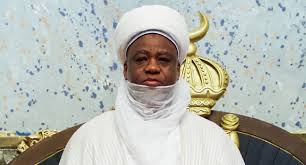
The Sultan of Sokoto, Alhaji Muhammadu Sa’ad Abubakar III, has stated clearly that it is completely wrong for Christians to be dragged before Sharia courts or made to follow Islamic religious practices. He made this position known on Wednesday, December 10, 2025, during the opening session of the 2025 triennial meeting of the Nigeria Inter-Religious Council (NIREC) in Abuja.
The meeting, themed “Collaboration of Inter-Religious Council with Government to Promote Peace in Nigeria,” brought together top religious, political and community leaders to discuss the country’s rising insecurity, growing distrust, and the need for peace-building partnerships.
Speaking at the event, the Sultan stressed that Nigeria must respect the religious rights of all citizens, adding that Sharia law applies only to Muslims and must never be imposed on non-Muslims.
The Sultan, who has long been regarded as one of Nigeria’s strongest voices for peaceful coexistence, noted that the constitution does not permit the government to adopt any religion as a state religion.
He explained that while Nigeria is often described as a secular state, it is more accurate to call it a multi-religious nation because of its population diversity.
He said, “It is totally wrong for Christians to be dragged or subjected to Sharia law or court. Sharia is 100 per cent for Muslims. Christians should not be made to dress or pray like Muslims.”
He emphasised that both Islamic and Christian communities enjoy full freedom to practise their faiths without interference, and the government has always supported the development of the two major religions in the country.
The Sultan also criticised recent calls for the abolition of Sharia law, arguing that such debates were unnecessary and could fuel division. He said Muslims have the right to practise their religion peacefully, just as Christians do.
The place of Sharia law in Nigeria has been a sensitive issue for more than two decades.
From 1999 onward, several northern states adopted Sharia legal systems for their Muslim populations, sparking national debates about whether the system infringed on the rights of non-Muslims.
Although the constitution allows states to establish Sharia courts of appeal, it also protects the rights of every Nigerian—Muslim or Christian—to freedom of thought, conscience and religion.
The Sultan’s statement comes at a time when tensions around religion have resurfaced in public debates, especially with extremist groups attempting to use faith to justify violence and division. His comments were therefore seen as an important reassurance to many Nigerians who fear religious persecution.
Also speaking at the meeting, the Speaker of the House of Representatives, Hon. Abbas Tajudeen, said that deeper collaboration between NIREC and the Federal Government was necessary to strengthen peace efforts across the country.
He noted that the conference was taking place at a time when violent extremist groups were attacking communities and using religion to spread false narratives.
“The need for synergy between the council and the government cannot be over-emphasised,” he said. “We must promote peaceful coexistence among people from diverse ethnic and religious backgrounds.”
The Speaker warned against stereotypes and false narratives that claim one religion is being deliberately targeted or eliminated, describing them as “false and misleading.”
He promised the support of the National Assembly for any policies and initiatives that promote peace, unity and fair treatment of all Nigerians.
The Secretary to the Government of the Federation (SGF), Senator George Akume, said that Nigeria was currently facing many challenges, including insecurity, political tension and eroding trust among communities.
He added that the country was also facing international pressure due to misrepresentation of its security situation.
Akume assured that the Federal Government remained committed to protecting the lives and property of all citizens, as provided for in the constitution. He called on religious leaders, traditional rulers and other respected voices to continue preaching peace and unity.
“We have survived past crises, including a civil war, and emerged stronger,” he said. “Our independence and sovereignty are non-negotiable. We cannot allow terror or division to sink the ship of state.”
The SGF stressed that these challenges made it even more important for NIREC to work closely with government to promote peace and stability.
The President of the Christian Association of Nigeria (CAN), Archbishop Daniel Okoh, also addressed the gathering. He said that Nigeria was at a critical point in its history, with insecurity threatening national unity and survival.
He noted that religious institutions are among the most trusted organisations in Nigeria and can therefore play a strong role in encouraging peace, dialogue and cooperation.
Okoh called for stronger collaboration between government and faith-based organisations, especially NIREC, to mobilise communities, address grievances and promote tolerance.
He warned that insecurity was spreading fear and weakening social bonds, and said religious leaders must guide their followers towards peace rather than division.
Earlier in his remarks, the Executive Secretary of NIREC, Rev. Fr. Cornelius Omonokhua, said that collaboration between government, religious leaders and community organisations was necessary to overcome terrorism, banditry and other threats.
According to him, every life is precious to God, and protecting citizens should be a collective responsibility.
He also prayed for God to give leaders the wisdom to govern with fairness and for criminals to have a change of heart and become law-abiding.
Omonokhua called for moral and mental “re-engineering” across society, saying Nigerians must move away from negative values and embrace honesty, tolerance and responsibility.
The 2025 NIREC meeting brought together representatives of both Christianity and Islam, along with government officials and civil society leaders.
The council has played a major role for many years in reducing religious tension, especially during times of crisis.
This year’s meeting comes as the country continues to grapple with kidnappings, terrorist attacks, economic hardship and mistrust among citizens.
Speakers repeatedly stressed that Nigeria’s strength lies in its diversity and that no religion or ethnic group must be made to feel excluded.
The Sultan’s strong stand against subjecting Christians to Sharia law set the tone for the meeting, demonstrating that major religious leaders agree on the need to protect the rights of all Nigerians.