
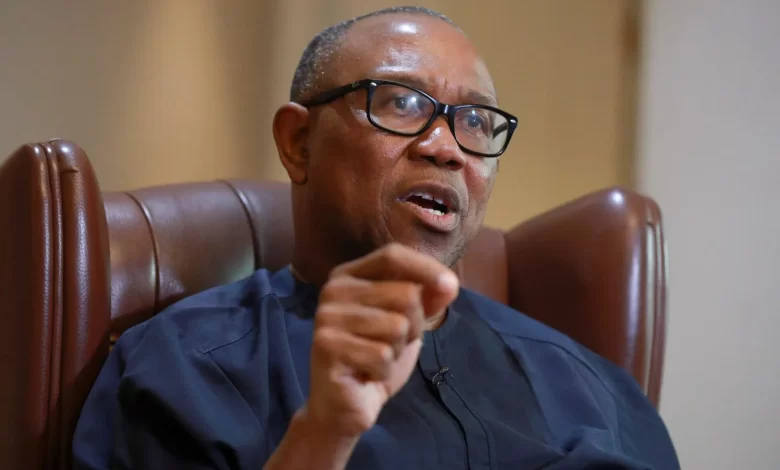
Former Labour Party presidential candidate, Peter Obi, has urged the Federal Government to halt what he described as fiscal rascality, warning that uncontrolled borrowing is endangering Nigeria’s economic future. Obi’s call came in reaction to reports that the government plans to borrow approximately ₦20 trillion to finance the 2026 budget.
In a post on his verified X handle on Friday, Obi expressed concern that borrowing is increasing at an unprecedented rate, yet revenues from previous budgets remain unaccounted for. He noted that debt servicing alone is projected to consume nearly half of Nigeria’s national revenue, highlighting the growing risk to the nation’s economic stability.
According to Obi, Nigeria’s borrowing requirement has surged by over 72%, a trend he said is worrying given the persistent challenges Nigerians face, including unemployment, inflation, and insecurity. He questioned why the government would discuss massive borrowing for the 2026 budget while the 2025 budget has yet to be fully implemented.
“At a time when Nigerians are struggling under unprecedented hardship, insecurity, and unemployment, we must ask the most important and logical questions: Where is the revenue from 2025?” Obi wrote. He warned that the continued practice of borrowing without clear investment in productive sectors could mortgage the future of Nigerian children.
Obi has long advocated for fiscal prudence and transparency. He argued that governments cannot borrow their way into prosperity, emphasizing that national development is achieved through production, value creation, and strong institutions that ensure accountability and efficient use of public funds.
Nigeria’s debt profile has been a topic of concern for economists and civil society groups. According to the Debt Management Office (DMO), Nigeria’s total public debt rose to over ₦60 trillion in 2025, with domestic borrowing accounting for a significant portion. Experts warn that high debt levels could crowd out investments in infrastructure, education, and healthcare if not managed carefully.
Obi criticised the government for presenting increasing revenues while simultaneously approving higher levels of borrowing. He described this approach as misleading, arguing that governance must be built on transparency rather than propaganda. “We cannot build a new Nigeria on the foundation of misleading figures, rising debts, shrinking production, and continuous hardship,” he said.
A key point in Obi’s message was that borrowed funds should be invested in sectors that drive economic growth, such as agriculture, manufacturing, and technology. He stressed that borrowing to finance consumption rather than productive investment undermines long-term development.
“Nations do not develop by consuming more than they produce. They develop by producing, exporting, and creating value, while building strong institutions,” he said. Obi’s remarks echo long-standing concerns that borrowing without strategic planning has not delivered tangible improvements in the country’s economic well-being.
Obi’s warning resonates with many Nigerians who have experienced the impact of rising debt on everyday life. High inflation, fluctuating exchange rates, and a growing cost of living have heightened concerns about how the government manages public finances.
Historically, Nigeria has relied heavily on borrowing to finance budget deficits. While some borrowing has been used for capital projects, critics argue that a significant portion has gone into recurrent expenditure, leaving little for infrastructure or productive investments. Obi’s message underscores the need for a shift in fiscal strategy to ensure that borrowing translates into tangible development.
Beyond criticizing borrowing levels, Obi stressed the importance of accountability and transparency in governance. He highlighted that citizens have the right to know how public funds are used, and that budget implementation should be monitored and evaluated to prevent waste and mismanagement.
He questioned the government’s claims of exceeding revenue targets, suggesting that without proper accounting and reporting, such claims lack credibility. Obi urged the Federal Government to provide clear records of revenue and expenditure to build public trust and encourage responsible borrowing.
If Obi’s warnings are not heeded, experts say the nation risks a debt trap where borrowing to service existing debts becomes the primary focus, leaving little room for investment in sectors that create jobs and drive economic growth. This could exacerbate unemployment, poverty, and insecurity, which are already pressing challenges in the country.
Economists argue that borrowing must be aligned with development priorities. Investments in agriculture, technology, education, and energy have the potential to boost domestic production, reduce dependency on imports, and generate revenue to service debt sustainably. Obi’s call for a focus on productive sectors aligns with these expert recommendations.
Peter Obi has consistently advocated for prudent financial management, transparency, and the prioritization of investments that stimulate economic growth. During his 2023 presidential campaign, he highlighted reducing wasteful spending, controlling borrowing, and ensuring that government funds are used effectively to benefit citizens.