
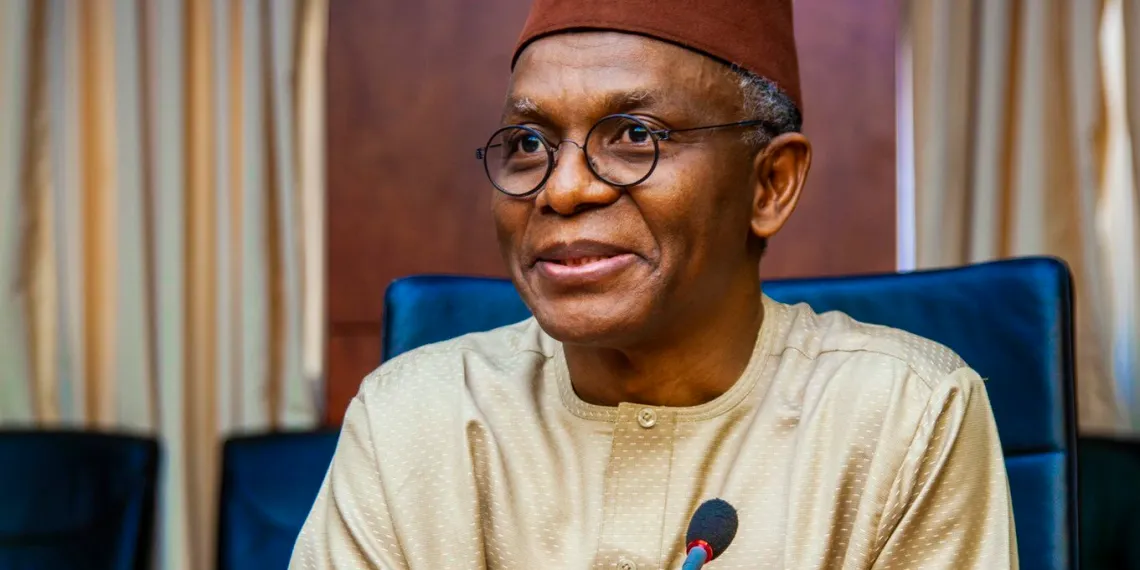
A former governor of Kaduna State, Malam Nasir Ahmad El-Rufai, has appealed to Nigerians to allow late President Muhammadu Buhari to “rest in peace” following renewed debates triggered by the launch of a new book on the former leader’s life and legacy.
El-Rufai made the call in a public statement issued from Cairo, Egypt, on December 17, 2025, after reports and images from the book launch began circulating widely in the media and on social platforms. According to him, the event has reopened old political divisions and raised concerns about how Buhari’s legacy is being presented to the public.
The book, titled Soldier to Statesman: The Legacy of Muhammadu Buhari, was recently unveiled in a high-profile ceremony attended by several political figures, government officials, and public commentators. The launch was meant to honour Buhari, who served Nigeria both as a military head of state from 1983 to 1985 and later as a democratically elected president from 2015 to 2023.
However, El-Rufai said what should have been a sober moment of reflection and respect has instead become a platform for political positioning and selective storytelling.
In his statement, El-Rufai noted that the people who dominated the book launch reflected the same divisions that existed around Buhari while he was alive. He observed that one faction from Buhari’s former political circle was clearly visible, while other individuals who were also close to the late president were absent.
He described this selective representation as troubling, saying it gives the impression that Buhari’s legacy is being shaped to suit the interests of a few rather than to reflect a balanced historical record.
El-Rufai also questioned the choice of location for the event, suggesting that both the venue and the list of speakers sent signals that some voices were deliberately left out. According to him, this approach risks deepening old wounds instead of promoting unity and honest reflection.
One of the strongest points in El-Rufai’s statement was his criticism of individuals who, during Buhari’s lifetime, were among his loudest critics but now appear at the forefront of praising him.
He expressed discomfort at seeing some current office holders deliver what he described as “glowing but fake” tributes to Buhari. These were people, he said, who once blamed Buhari’s administration for many of Nigeria’s problems but now speak as if they were his strongest supporters.
El-Rufai suggested that this sudden change of tone may be driven by political interests, including attempts to rewrite history or shift blame for current challenges facing the country.
“For many Nigerians, these public displays raise questions about sincerity,” he implied, adding that Buhari was known for his strong personal convictions and clear views about loyalty and respect.
El-Rufai, who worked closely with Buhari for more than a decade in opposition politics and later in government, said the late president was a man who valued discipline, integrity, and loyalty. According to him, Buhari did not easily forget political or personal disrespect and was careful about whom he trusted.
He therefore found it disturbing that some individuals who, in his view, neither enjoyed Buhari’s trust nor respect while he was alive are now presenting themselves as close allies in death.
While admitting that he has not yet read the book, El-Rufai cautioned against relying on selective media reports and supposed “revelations” attributed to Buhari. He said presenting one-sided accounts of the thoughts and actions of a complex leader, especially when he is no longer alive to respond, is unfair and misleading.
President Muhammadu Buhari remains one of the most influential and controversial figures in Nigeria’s modern history. As a former military ruler, he was known for his strict discipline and anti-corruption stance. Decades later, he returned to power through democratic elections, winning the presidency in 2015 after several failed attempts.
Many Nigerians supported Buhari because of his reputation for personal integrity and his promise to fight corruption, insecurity, and economic mismanagement. His election marked the first time an incumbent president was defeated at the polls in Nigeria.
However, Buhari’s eight years as civilian president attracted mixed reactions. While his supporters praised his anti-corruption drive and infrastructure projects, critics pointed to rising insecurity, economic hardship, and concerns about governance style and appointments.
El-Rufai acknowledged that Buhari was not a perfect leader and that many who supported him expected better results from his civilian administration. Still, he argued that many of the failures recorded during Buhari’s time in office were caused by powerful individuals around him rather than by Buhari himself.
According to El-Rufai, some members of Buhari’s inner circle—relatives, advisers, and senior officials—did not always share his values of discipline and public service. He suggested that their actions and decisions weakened the administration and affected its overall performance.
This view reflects a long-standing debate in Nigerian politics about Buhari’s leadership style, especially accusations that he relied too heavily on a small group of trusted associates and did not always act decisively against underperforming officials.
Despite these criticisms, El-Rufai maintained that Buhari remained, until his last days, a deeply religious man, committed to personal discipline and driven by love for Nigeria.
At the heart of El-Rufai’s message is a call for restraint and fairness. He urged Nigerians—both supporters and critics of Buhari—to resist the temptation of using the former president’s name for political gain.
He stressed that history should be allowed to judge Buhari in a balanced and honest manner, free from opportunism and revisionism. According to him, true honour for the late leader does not lie in loud praises or selective stories but in upholding the values Buhari stood for.
“These values,” El-Rufai noted, “include simplicity, integrity, humility, and service to the nation.”
As Nigeria continues to face economic, security, and political challenges, the debate over Buhari’s legacy reflects broader struggles over leadership, accountability, and national direction.
For many Nigerians, Buhari remains a symbol of discipline and personal honesty, even as questions remain about the outcomes of his presidency. The controversy surrounding the new book and its launch shows that his impact on the country is still deeply felt.
El-Rufai concluded his statement with a prayer, asking Allah to grant Buhari eternal rest. His appeal, he said, is not about silencing debate but about encouraging respect, balance, and truth as Nigerians remember a leader who shaped the nation’s history in significant ways.