
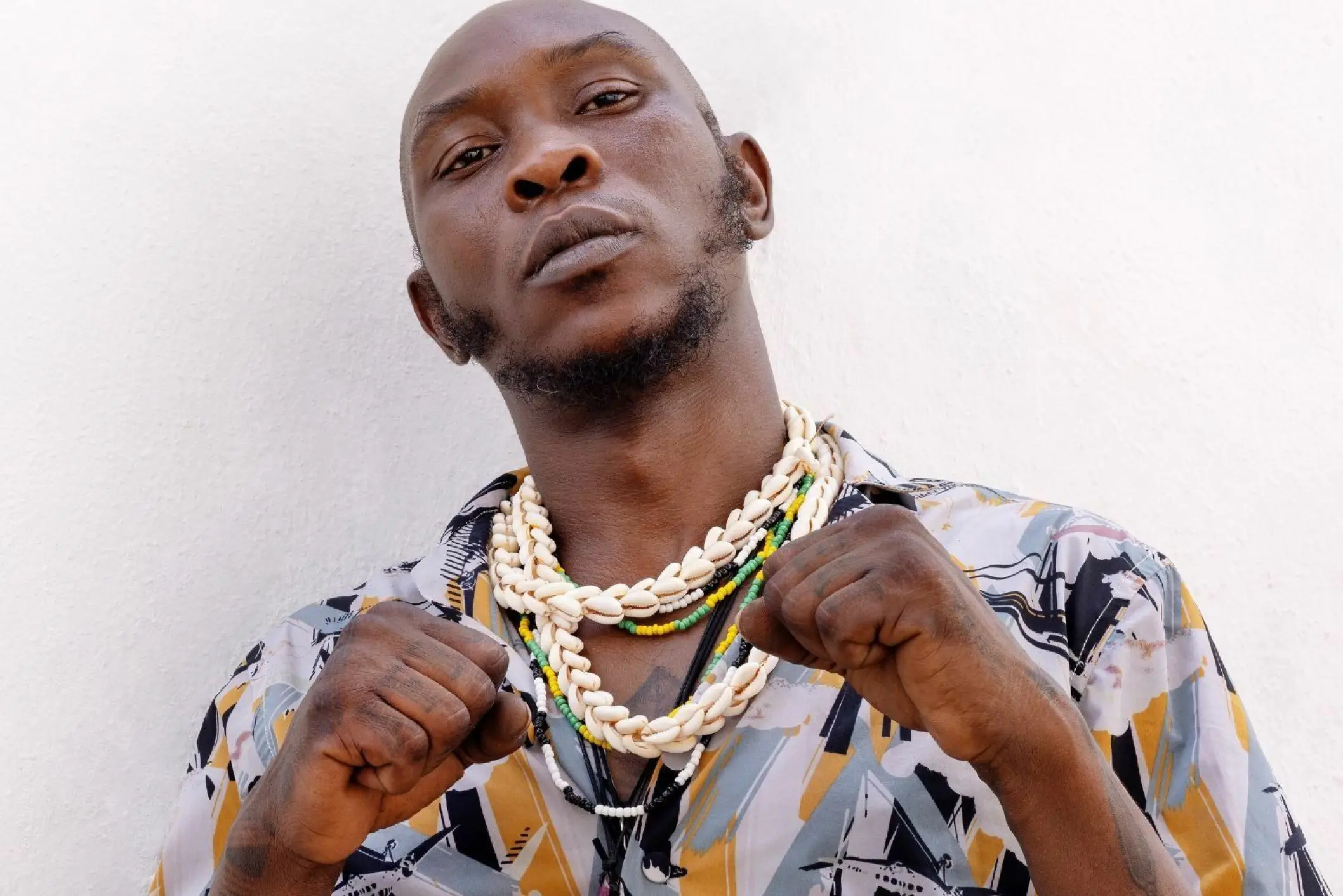
Afrobeat star, Seun Kuti, has sparked discussion after revealing that he has never prayed in his life and does not believe in the traditional practice of prayer. In a recent video shared on his Instagram account, Kuti described prayer as “childish” and emphasized that a person’s choices and actions are what truly shape their life.
The musician, who is the youngest son of Afrobeat legend Fela Kuti, explained that he relies on personal effort rather than seeking divine intervention. He argued that prayers, especially when performed publicly, amount to little more than “eye service.”
“I have never prayed before in my life. I don’t know how to pray. I don’t believe it works. Your life is your prayer. Praying in the public or aloud is eye service. It is childishness,” Kuti said.
He elaborated that a person’s actions—how they live, the choices they make, and how they solve problems—should be considered a form of prayer. “Your life is the prayer. What you do with your life is your prayer. That is the only prayer. Your action is prayer,” he added.
Seun Kuti’s statements also included a critique of the conventional understanding of God and religious institutions. He argued that the way prayer is taught and practiced in many religious settings is flawed and often used for exploitation.
“This concept of God that most people have is why prayer is even now completely void. Because this God you talked about, you claimed he has already written down what is going to happen from the beginning to end; his will must be done. So, except your prayer aligns with his will… If your prayer does not align with the will of this your God, then your prayer will not be answered,” Kuti explained.
He further criticized clerics and religious leaders, suggesting that they often encourage prayer not as a means of solving problems, but as a tool for personal gain. “But clerics won’t tell you this because they want to exploit you,” he added.
Kuti highlighted his belief in self-reliance, stating that he deals with challenges through personal effort rather than prayer. “I solve my problems. I don’t pray over my problems. If prayer solves problems, prisons and hospitals would be empty,” he said.
His stance highlights a broader philosophy that prioritizes action over ritual. Kuti is known not only for his music but also for his outspoken views on social, political, and cultural issues. He has frequently used his platform to question societal norms, government policies, and religious practices.
Seun Kuti is the youngest son of Fela Anikulapo Kuti, the legendary musician and political activist who created Afrobeat. Seun has continued his father’s legacy both musically and socially, often using his music and public statements to address issues affecting Nigeria and Africa at large.
Afrobeat, known for its combination of jazz, funk, and traditional African rhythms, has historically been a vehicle for social commentary. Like his father, Seun Kuti has used his platform to challenge authority, question corruption, and provoke public debate.
Since posting the video, Seun Kuti’s remarks have generated a mix of reactions. Supporters have praised him for advocating personal responsibility and critical thinking, while critics argue that his views undermine faith and religious practices that provide comfort to millions.
Some commentators have pointed out that Kuti’s rejection of conventional prayer aligns with a growing trend among younger Nigerians who question traditional authority and seek alternative ways to navigate life’s challenges. Others, however, feel his comments could be seen as disrespectful to those who find strength in faith and spirituality.
Nigeria is a deeply religious country, with large Christian and Muslim populations. Prayer is a central part of daily life for many Nigerians, often used in personal devotion, public worship, and social ceremonies. Religious leaders wield significant influence in shaping moral and social behavior, and many Nigerians turn to prayer for guidance and comfort in times of difficulty.