
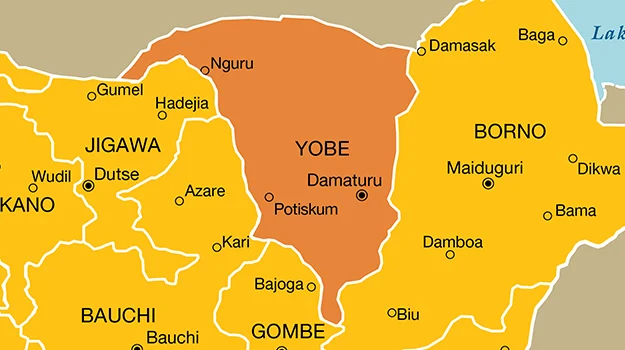
Suspected Islamic State West Africa Province (ISWAP) terrorists launched coordinated attacks on two communities in Yobe State on Sunday, leaving a village head injured, abducting a driver, and looting a local health facility. The attacks targeted Ja Jibiri and Ladu villages in the early hours of December 27, 2025, according to security sources.
The raid on Ja Jibiri village began around 12:20 a.m., when armed assailants stormed the area. Lawan Hassan, 45, the village head, was reportedly shot in the left shoulder during the attack. Hassan was quickly rushed to Geidam Hospital, where he is receiving medical treatment. Local residents described the attackers as heavily armed and ruthless, creating panic in the community.
After the assault on Ja Jibiri, the terrorists reportedly moved to Ladu village, where they abducted a 40-year-old driver, Madu Kura, who was driving a Toyota Hilux at the time. Witnesses said the attackers used extreme violence to intimidate villagers and seize control of the area for a brief period.
In addition to the abduction, the militants targeted the Primary Health Care Medical Centre in Ladu, looting medical consumables, other valuables, and a Golf motor vehicle. The raid has disrupted healthcare services in the area, raising concerns among residents about the safety of essential services and the vulnerability of rural communities to armed attacks.
Security operatives in Yobe State have been placed on high alert following the attacks. Local authorities confirmed that efforts are ongoing to track and apprehend the attackers, as residents remain anxious about further raids.
ISWAP is an offshoot of the Boko Haram insurgency, which has been active in northeast Nigeria for over a decade. The group is known for targeting villages, government installations, and aid facilities, often using hit-and-run tactics to evade security forces. Yobe State, along with Borno and Adamawa states, has been particularly vulnerable to these attacks, which frequently result in deaths, abductions, and displacement of residents.
In recent months, ISWAP has increased its attacks on rural communities, often focusing on strategic locations such as healthcare centres, schools, and local government offices. Analysts note that these attacks aim to disrupt governance, weaken public trust in security agencies, and generate fear among civilians.
The attacks on Ja Jibiri and Ladu villages have heightened fear among residents, many of whom live in isolated areas with limited security coverage. Lawan Hassan, the injured village head, is a key figure in local governance, and his injury underscores the risks faced by traditional leaders in regions targeted by insurgents.
The abduction of Madu Kura adds to the growing list of kidnappings by ISWAP militants, which are often used for ransom or to exert pressure on communities. Meanwhile, the looting of the health centre threatens the delivery of critical medical services, particularly in rural areas that already struggle with inadequate healthcare infrastructure. Residents have appealed to state and federal authorities for immediate action to secure their communities and prevent further attacks.
Yobe State security officials have reassured the public that measures are being taken to contain the threat posed by ISWAP. Security operatives are reportedly monitoring roads and key entry points, while mobile units have been deployed to trace and intercept the attackers. The Nigerian military and police continue to coordinate intelligence and response efforts in the region.
The attacks on Ja Jibiri and Ladu highlight the ongoing challenge of insurgency in northeast Nigeria. Despite government efforts to combat terrorism, militants continue to exploit weaknesses in rural security coverage. Analysts warn that continued attacks could undermine development efforts, disrupt local economies, and increase displacement in affected areas.