
In what many Nigerians have described as a rare and inspiring act of honesty, a woman identified as Aisha Isah Yelwa has returned the sum of ₦330 million that was mistakenly credited to her bank account.
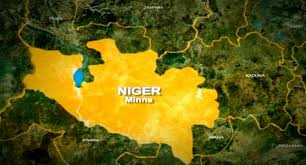
Mrs Yelwa, a small-scale trader based in Lapai, Niger State, discovered the huge amount in her First Bank account on Monday, December 29, 2025. According to her, the discovery came as a shock and caused her fear, as she immediately knew the money did not belong to her.
The incident has since drawn widespread attention across the country, especially on social media, where many Nigerians have praised her integrity and sense of responsibility.
Mrs Yelwa explained that she noticed the unusual balance at about 3:49 p.m. on the day of the incident. Earlier that day, she had visited her bank branch to complain about repeated deductions from her account.
She said the deductions were linked to loans she had taken in the past to support her small business. According to her, the deductions were becoming a burden, and she wanted the bank to clarify and resolve the issue.
After leaving the bank, she later decided to check her account to confirm whether the deductions had stopped. It was during this routine check that she noticed a balance far beyond anything she had ever owned.
“I was only checking to see if the loan deductions had stopped when I saw the money,” she said. “I was confused and scared.”
She explained that she initially thought there must have been a mistake, as she had never handled such an amount in her life.
What made the situation even more troubling for her was the fact that there was no credit alert to explain the source of the money. She said there was no message from the bank, no transaction details, and no description showing where the funds came from.
“There was no alert and no explanation,” she said. “I did not know where the money came from, and that made me very worried.”
Mrs Yelwa said she immediately realised that the money was not hers and that keeping it could put her in serious trouble.
Rather than spending or withdrawing any part of the money, Mrs Yelwa said she chose to return to the bank to report what she had seen. She explained that she believed doing the right thing was the only safe and moral option.
She promptly informed bank officials about the unusual credit and made herself available to cooperate fully with the bank to ensure the money was returned to its rightful owner.
Sources familiar with the matter said the bank officials were surprised by her action and began internal processes to trace the source of the funds.
Mrs Yelwa stressed that she never considered keeping the money, despite the fact that she is a small trader who struggles daily to keep her business running.
“I know the money is not mine,” she said. “Keeping it would only bring problems.”
News of Mrs Yelwa’s action quickly spread on social media, where many Nigerians described her as a symbol of honesty and integrity.
Several commentators noted that returning such a huge amount is not easy, especially for someone who is not wealthy. They praised her for choosing honesty over temptation at a time when financial crimes and fraud are common.
“This woman has shown that integrity still exists in Nigeria,” a social media user wrote. “₦330 million is life-changing money, yet she returned it.”
Another commenter said her action should be celebrated and rewarded.
“She is a small trader, yet she returned what many people would not,” the commenter said. “She deserves national recognition.”
Nigeria has continued to battle issues of fraud, corruption, and financial crimes. Reports of cyber fraud, identity theft, and illegal withdrawals have become common, making Mrs Yelwa’s action stand out even more.
Following the incident, many Nigerians have called on banks, government agencies, and private organisations to recognise and reward Mrs Yelwa for her honesty.
Some have suggested that the bank involved should offer her a reward or support her business as a sign of appreciation.
Others believe her story should be used to teach young people about honesty and accountability.
“This is the kind of story our children need to hear,” a teacher in Minna said. “It shows that doing the right thing still matters.”
As of the time of filing this report, First Bank has not issued an official statement explaining how the error occurred or confirming the full recovery of the funds.
Mrs Yelwa is known in her community as a hardworking trader who depends on small loans to support her business. Like many small business owners in Nigeria, she faces daily challenges such as rising costs, low profit margins, and loan repayments.
People close to her say she lives a modest life and has never been involved in any form of financial misconduct.
A neighbour described her as “simple, honest, and God-fearing.”
“She struggles like everyone else,” the neighbour said. “That is why her action is shocking in a good way.”
While attention remains on how the bank will respond, many Nigerians hope that Mrs Yelwa’s action will inspire others to act honestly in similar situations.
For now, Aisha Isah Yelwa has earned the respect and admiration of many across the country, not because of wealth or power, but because she chose to do the right thing.
Her story stands as a reminder that integrity, even in difficult times, still has a place in Nigerian society.