
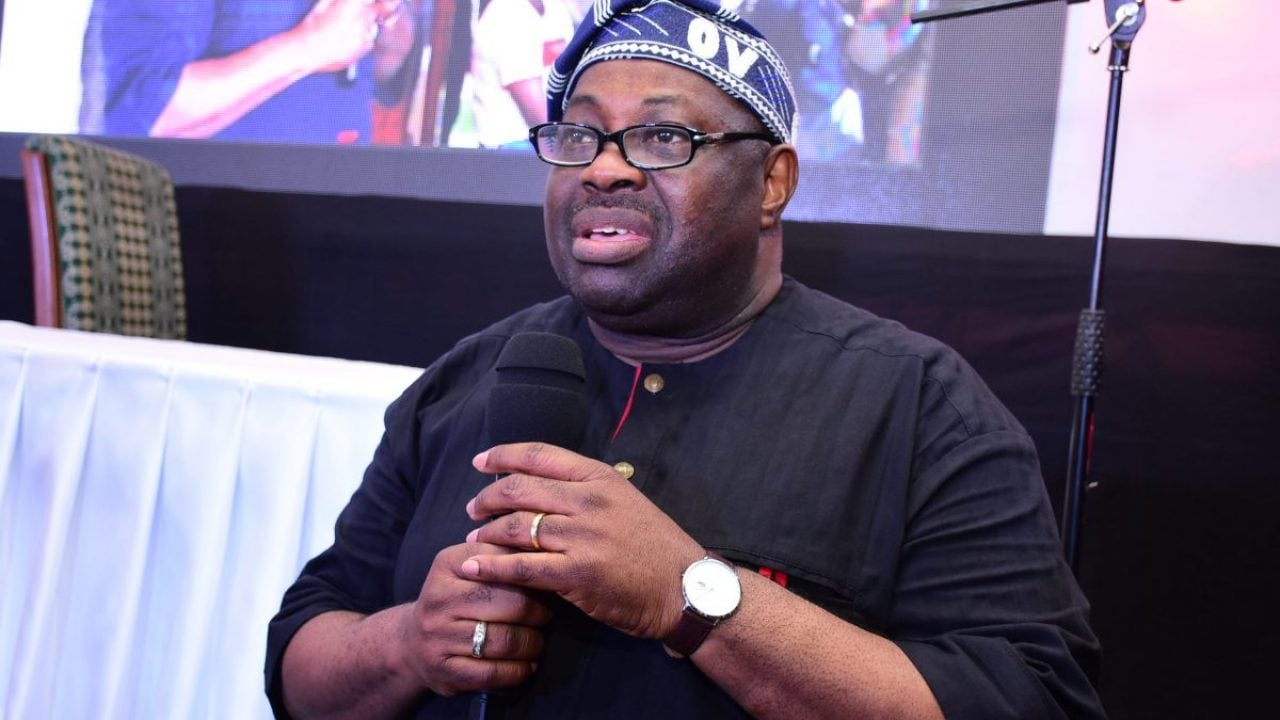
A chieftain of the African Democratic Congress (ADC), Dele Momodu, has denied claims that he told supporters not to back former Labour Party presidential candidate, Mr Peter Obi, who recently defected to the ADC. His reaction followed a debate on social media over Obi’s age and suitability as a future presidential candidate.
The clarification came after an X user, identified as @judeski007, posted a comment questioning the idea of projecting an elderly candidate for national leadership. The user said he supported the emerging ADC coalition but was uncomfortable with the possibility of an 80-year-old candidate leading the party into a presidential election.
In his post, the user wrote: “Bob Dee, I hope you see this. I have been rooting for the ADC coalition and rightly so. However, note that we cannot be projecting an 80-year-old man as a candidate unless it’s for your own future personal gains. I will definitely root for Tinubu should Atiku emerge.”
The comment quickly gained attention, especially among political supporters and observers who are closely following movements ahead of the 2027 general elections. Many Nigerians have continued to debate issues such as age, capacity, and political direction as politicians reposition themselves for future contests.
Reacting to the comment on Sunday through his official X handle, Momodu made it clear that he never told anyone to stop supporting Peter Obi. He stressed that Obi was not his enemy and that people were free to make their own political choices.
“There is nowhere I told you not to route for OBI. He’s not my enemy,” Momodu said. “But it is my right to state the facts and historical evidence that are available to me. My choice is also mine. We do not have to trade insults. In this game of numbers, every participant is important.”
Momodu’s response appears aimed at calming tensions within opposition circles, especially as political alliances begin to take shape ahead of the next general election. His statement also reflects the growing sensitivity around discussions of age, leadership, and political strategy in Nigeria.
Peter Obi, a former governor of Anambra State, was the Labour Party’s presidential candidate in the 2023 election. He gained massive support, especially among young voters, under the popular “Obidient” movement. Although he did not win the election, his performance changed Nigeria’s political conversation and strengthened the role of third-force politics.
Obi’s recent defection to the ADC has sparked fresh discussions across the political space. Supporters see the move as part of efforts to build a stronger coalition capable of challenging the ruling All Progressives Congress (APC) and the Peoples Democratic Party (PDP). Critics, however, have raised concerns about internal disagreements, leadership direction, and candidate selection.
The ADC, though not one of Nigeria’s biggest parties, has in recent times positioned itself as a platform for coalition politics. Several political figures and groups dissatisfied with the two major parties have shown interest in using the ADC as a rallying point ahead of 2027.
Age has remained a major topic in Nigerian politics. President Bola Tinubu is in his 70s, while former Vice President Atiku Abubakar, who has contested the presidency multiple times, is also in his late 70s. This reality has led many young Nigerians to demand younger leadership, arguing that the country needs fresh ideas and energy to tackle economic hardship, insecurity, and unemployment.
However, others believe experience and political structure matter more than age alone. They argue that Nigeria’s challenges require leaders who understand the system and have built strong networks over time.
Momodu’s statement reflects this wider debate. While he did not openly reject Obi, he insisted on his right to share facts and historical experiences based on his understanding of Nigerian politics. He also called for mutual respect among political actors and supporters.
The mention of President Tinubu and Atiku in the social media exchange also highlights how deeply divided voter loyalty remains. Tinubu of the APC won the 2023 presidential election and is expected to seek a second term in 2027. Atiku, the PDP candidate in 2023, has not ruled out another attempt, fueling speculation and debate within opposition ranks.
As political activities slowly pick up, many Nigerians are watching to see whether the ADC and other opposition groups can truly unite. The comments and responses exchanged online show that while there is interest in a coalition, there are also strong opinions that could either shape or threaten its future.
For now, Momodu’s message is clear: supporting Peter Obi is a personal choice, and disagreements should not turn into insults.