
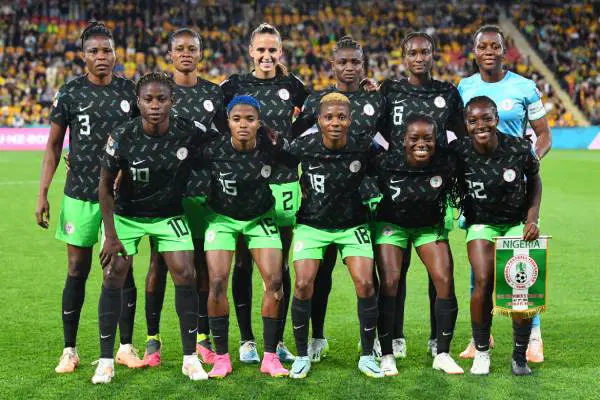
Nigeria’s Super Falcons have been drawn in Group C of the 2026 Women’s Africa Cup of Nations (WAFCON), where they will face Zambia, Egypt, and Malawi. The draw sets the stage for another challenging campaign as the defending champions aim to extend their dominance in African women’s football.
The tournament will be hosted by Morocco for the second consecutive time, with matches scheduled to run from 17 March to 3 April. Group C games, including all of Nigeria’s fixtures, will be played at the Larbi Zaouli Stadium in Casablanca.
The Super Falcons, who are the most successful team in the history of the competition, will be chasing a record-extending 11th WAFCON title. Nigeria has won the tournament more times than any other country since it began in 1998 and remains the standard bearer for women’s football on the continent.
Nigeria’s head coach, Justine Madugu, will be leading the team into the tournament with high expectations from fans at home and abroad. The Super Falcons are current champions, having lifted the trophy at the last edition of the competition, also hosted by Morocco.
One of the key fixtures in Group C will be Nigeria’s clash with Zambia. The two teams have met in recent tournaments, developing a competitive rivalry. At the 2024 edition of WAFCON, Nigeria defeated Zambia 5-0 in the quarter-finals, a result that underlined the Falcons’ strength and experience at the highest level.
Zambia, however, has continued to grow in women’s football and is expected to pose a serious challenge. The Zambian team is known for its pace and attacking style, and many analysts believe they will be eager to respond after their heavy defeat to Nigeria in the last tournament.
The Super Falcons will also be playing Malawi for the first time in the history of the Women’s Africa Cup of Nations. This fixture presents a new challenge, as Malawi’s women’s team is still developing and has limited experience at the continental level.
Despite their inexperience, Malawi earned qualification and will be looking to make an impression in their group. For Nigeria, the match will be an opportunity to assert their authority, but the Falcons will be careful not to underestimate a team playing without pressure.
Egypt is the fourth team in Group C and is no stranger to the competition. The North African side has featured regularly in WAFCON over the years, although they have not enjoyed the same level of success as Nigeria.
Egypt’s women’s team has improved in recent years, supported by growing investment in women’s football. Playing on home soil in Morocco may also work in their favour, as they will be familiar with the conditions and climate.
The 2026 edition of WAFCON will feature 16 countries for the first time, marking an expansion of the tournament. This increase reflects the growth of women’s football across Africa and the efforts of the Confederation of African Football (CAF) to make the competition more competitive and inclusive.
With more teams involved, the tournament is expected to be more demanding, both physically and tactically. Teams will need depth in their squads and careful planning to navigate the group stage and progress to the knockout rounds.
Nigeria’s Super Falcons are known for their experience in such situations. Many of the players in the squad have featured in multiple WAFCON tournaments and major international competitions, including the FIFA Women’s World Cup and the Olympic Games.
Over the years, the Super Falcons have produced several stars who have gone on to play in top leagues in Europe, Asia, and North America. This exposure has helped raise the level of the team and maintain Nigeria’s strong position in African women’s football.
The Larbi Zaouli Stadium in Casablanca, where Group C matches will be played, is one of Morocco’s modern football venues. It is expected to host large crowds, especially for matches involving top teams like Nigeria.
Football fans in Nigeria are already looking forward to the tournament, with hopes that the Super Falcons will once again bring pride to the country. Success at WAFCON also plays an important role in boosting the profile of women’s football at home and inspiring young girls to take up the sport.