
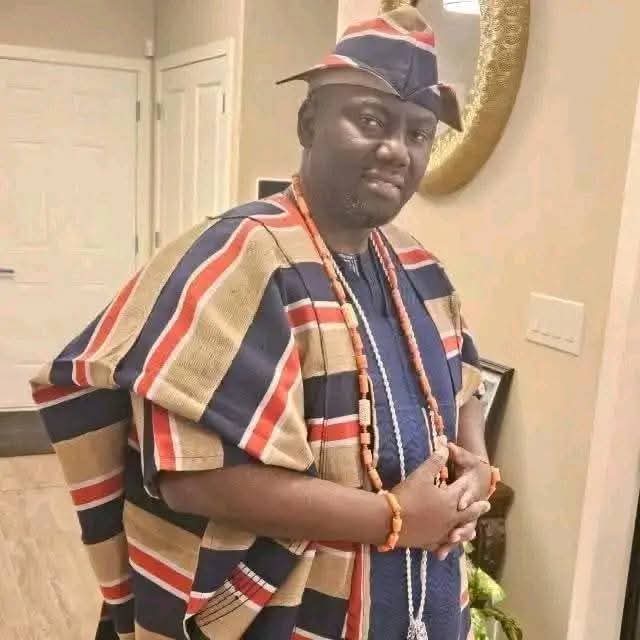
The long-awaited inauguration of the Oyo State Council of Obas and Chiefs has sparked controversy, following the absence of the Alaafin of Oyo, Oba Akeem Owoade, and his rejection of Governor Seyi Makinde’s claim that the chairmanship of the council was agreed to be rotational among top traditional rulers in the state.
Governor Makinde, on Thursday, inaugurated the council at the House of Chiefs, Parliament Building, Secretariat, Ibadan. The event marked the first time in 15 years that the statutory council was formally inaugurated. At the ceremony, the Olubadan of Ibadanland, Oba Rashidi Ladoja, emerged as the first chairman of the council.
However, the absence of the Alaafin of Oyo, one of the most prominent traditional rulers in Yorubaland, cast a shadow over the event. His palace later issued a statement rejecting the governor’s explanation on how the chairmanship was decided.
Speaking at the inauguration, Governor Makinde said the chairmanship of the council would rotate among the three leading traditional rulers in the state: the Olubadan of Ibadanland, the Alaafin of Oyo, and the Soun of Ogbomoso. According to the governor, the decision was reached after consultations and an agreement with the monarchs.
Makinde explained that the rotation would begin with the Olubadan, who would serve as chairman for two years.
“No matter how hard an issue is, we will definitely resolve it,” the governor said. “My three fathers, the Alaafin of Oyo, the Olubadan and the Soun of Ogbomoso, agreed that we will start the rotation with the Olubadan of Ibadanland.”
The governor stressed that the revival of the council was important for governance and development in the state. He noted that the council last met formally in 2011 and that its absence had weakened the role of traditional institutions in advising the government.
“It is a shame that for 15 years we did not have a Council of Obas and Chiefs,” Makinde said. “If we don’t have a council, how do we play an active role as a state? What we had before was just an ad hoc arrangement.”
He added that since his administration came into office in 2019, efforts had been made to restore the council. According to him, the House of Assembly passed a law to that effect, which he signed in August 2025.
Makinde also argued that strong traditional institutions had contributed to the achievements of his administration, especially at the grassroots level.
“You come to me, we discuss what is happening in your communities. I get most of the information from you,” he told the monarchs present. “That is why our traditional institutions must be strengthened.”
Despite the governor’s assurances, the Alaafin of Oyo strongly disagreed with the claim that he was consulted or that he endorsed a rotational chairmanship.
In a statement issued by his media aide, Bode Durojaye, the Alaafin said there was never any meeting between him, the governor, and the other traditional rulers on the issue.
“The attention of the Alaafin’s palace has been drawn to a statement credited to His Excellency, Governor Seyi Makinde, that he consulted with the three traditional rulers in the state on the rotational chairmanship of the State Council of Obas and Chiefs,” the statement said.
“The palace hereby states clearly that there was no time His Imperial Majesty, the Alaafin of Oyo, held any meeting with either the governor or the two traditional rulers mentioned.”
The statement further said the Alaafin did not give approval or make any statement supporting rotational leadership of the council among the three monarchs.
It added that the position of the Alaafin and the Oyo community had already been clearly stated in a memorandum submitted to the governor by the Oyo Council of Elders.
The disagreement has revived long-standing sensitivities around traditional hierarchy in Oyo State. Historically, the Alaafin of Oyo is regarded as one of the most powerful and influential Yoruba monarchs, tracing his authority to the old Oyo Empire, which once controlled large parts of the South-West and beyond.
The Olubadan of Ibadanland, on the other hand, presides over Ibadan, the capital of Oyo State and the largest city in West Africa by landmass. The Soun of Ogbomoso is also a first-class monarch with strong influence in his domain.
Over the years, debates have arisen over ranking, protocol, and leadership within councils involving these traditional rulers. These issues partly contributed to the long delay in reconvening the Oyo State Council of Obas and Chiefs.
The council is a statutory body expected to advise the state government on chieftaincy matters, security, culture, and community relations. It also serves as a platform for traditional rulers to work together in addressing issues affecting their communities.
In his remarks after being inaugurated as chairman, Oba Rashidi Ladoja urged residents of the state to have confidence in the council. He described the inauguration as the beginning of serious work, not an achievement.
“This inauguration is not an achievement in itself; it marks the beginning of work,” Ladoja said. “After our first meeting, people will begin to have confidence in us.”
He stressed that members of the council were united by a common purpose and not driven by rivalry or personal interest.
“We are not in competition with one another. We are not here to fight,” he said. “Our sole concern is to ensure that our domains remain safe and peaceful, and that the state continues on the path of progress.”
Ladoja added that the council’s focus would be on peace, security, and making Oyo State a good place for all residents.
Earlier, the Commissioner for Local Government and Chieftaincy Matters, Ademola Ojo, highlighted the importance of traditional rulers in governance. He described them as custodians of culture and key partners in maintaining peace and development at the grassroots.
“As we formally inaugurate this council, it is my hope that it will remain a beacon of harmony and constructive dialogue,” Ojo said. “It should be a strong partner in our shared quest for peace, security, and socio-economic development.”
.