
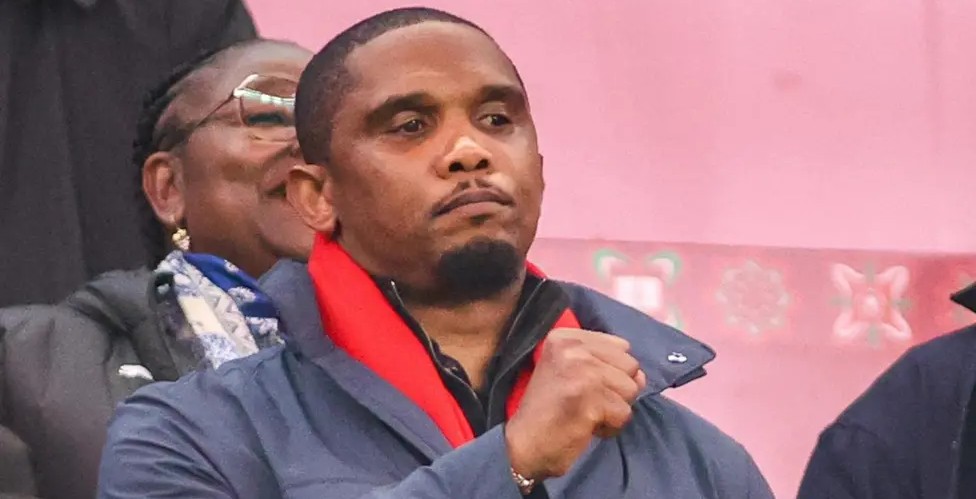
The Confederation of African Football (CAF) has handed a four-match ban and a fine of $20,000 to former Cameroon football star Samuel Eto’o over misconduct during the Africa Cup of Nations (AFCON) tournament.
CAF announced the decision in a statement, saying Eto’o violated the principles of sportsmanship during the quarter-final match between Cameroon and Morocco at the 2026 AFCON. The game was played in Rabat, where host nation Morocco defeated Cameroon 2-0 to knock the Indomitable Lions out of the competition.
Eto’o, who is the current president of the Cameroon Football Federation (FECAFOOT), was found guilty of inappropriate behaviour directed at match officials during the game. According to CAF, the former striker made angry gestures and reacted aggressively to several decisions taken by the referees.
CAF president, Patrice Motsepe, was present at the stadium during the match and reportedly witnessed Eto’o’s conduct. His presence is believed to have influenced the seriousness with which the incident was treated.
In its statement, CAF said Eto’o’s actions went against the values of fair play and respect that the organisation expects from football officials, especially those holding leadership positions.
The disciplinary action followed an earlier announcement by CAF on Monday, when it confirmed that it had opened investigations into what it described as “violent confrontations and unacceptable behaviour” involving some players and officials during the quarter-final matches of the tournament.
CAF said it would not tolerate misconduct at any level and stressed the need to protect the integrity of African football competitions.
However, FECAFOOT has strongly rejected CAF’s decision. In a statement issued on Wednesday, the federation said the disciplinary process raised “serious reservations about the fundamental requirements of a fair trial.”
FECAFOOT described the sanction against its president as unfair and suggested that CAF did not follow proper procedures before reaching its decision. The federation also expressed full support for Eto’o and hinted that an appeal would be filed to challenge the ban and fine.
“The Cameroon Football Federation reserves the right to challenge this decision, which we believe does not reflect the principles of justice and fairness,” the statement said.
Eto’o, one of Africa’s most successful footballers, has been president of FECAFOOT since 2021. His election was widely celebrated at the time, as many believed his experience and status in world football would bring positive change to the administration of the sport in Cameroon.
During his playing career, Eto’o won multiple trophies with top European clubs, including Barcelona and Inter Milan. He also enjoyed great success with the Cameroon national team, winning the Africa Cup of Nations twice and an Olympic gold medal in 2000. He is regarded as one of the greatest African footballers of all time.
Despite his achievements on the pitch, Eto’o’s time as FECAFOOT president has been marked by controversy. Since taking office, he has faced several accusations, including claims of improper conduct, leadership disputes, and governance problems within the federation.
Some football stakeholders in Cameroon, including former players and administrators, have openly criticised his leadership style. They accuse him of running the federation in a manner that lacks transparency and consultation.
There have also been reports of internal conflicts within FECAFOOT, including disagreements with coaches, referees, and government officials over the management of football in the country.
Eto’o, however, has consistently denied any wrongdoing. He has defended his leadership, insisting that he is committed to reforming Cameroonian football. According to him, his administration has taken steps to improve youth development, strengthen domestic competitions, and restore discipline within the football system.
Supporters of Eto’o argue that he has been unfairly targeted because of his strong personality and willingness to challenge old structures. They believe his passion for the game sometimes puts him at odds with football authorities but insist that his intentions are good.
The latest sanction from CAF adds to the challenges facing Eto’o as a football administrator. The four-match ban means he will not be allowed to perform certain official duties during CAF matches, while the fine adds financial penalty to the punishment.
It remains unclear how the ban will affect his role at FECAFOOT in the short term, but observers say it could further deepen tensions between the Cameroonian football body and CAF.
The 2026 AFCON itself has been closely watched, with several controversial incidents reported during the knockout stages. CAF’s decision to take disciplinary action is seen by some as part of a broader effort to enforce discipline and improve conduct at African football tournaments.
As FECAFOOT prepares to appeal the decision, many football fans across the continent will be watching closely to see how the situation develops. The outcome of the appeal could have wider implications for how CAF handles misconduct involving senior football officials.